𝙍𝙚𝙖𝙙𝙈𝙤𝙧𝙚👉 My Brother-in-Law Thought I Was Just Another Guest Until One Emergency Exposed How Dangerous His Need to Be Right Had Become
part2
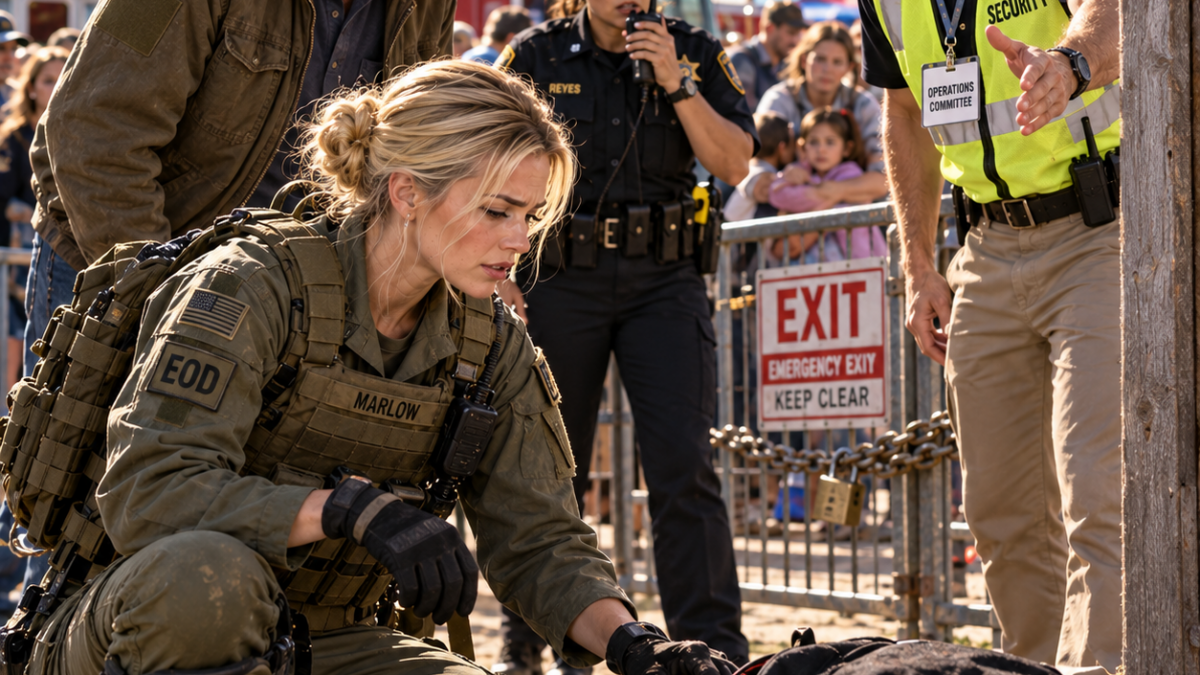
The first people to reach the locked gate included an elderly man pushing a woman in a wheelchair.
I could see them through a narrow opening between vendor trailers. The man shoved his shoulder against the metal frame while people pressed behind him. A little girl in a pink jacket cried beside the wheelchair. Somebody farther back yelled that they were trapped. A firefighter finally pushed through and began redirecting everyone toward a service road behind the livestock barns.
Deputy Reyes was trying to create order from contradictory information.
The north exit was partially blocked by delivery vehicles.
Several families had returned toward the food tents looking for missing children.
Volunteers were giving different instructions depending on which committee member they had heard most recently.
And Graham was still talking.
He kept issuing directions through his radio, sometimes duplicating what law enforcement had already ordered and sometimes contradicting it completely.
I took the radio out of his hand.
“One person controls this response.”
His eyes widened.
“And it is not you.”
Sofia looked at me.
“Agreed.”
She kept the radio.
Graham turned toward her.
“I am chairman of the Safety and Operations Committee.”
“Then start by following the emergency plan,” she said.
For perhaps the first time in his adult life, Graham experienced a situation where his title made him less relevant instead of more.
Everett stayed close enough to hear but far enough to respect the threat area.
I explained what I had observed.
He listened.
No ego.
No interruption.
That was one of the reasons I had trusted him with my life years earlier.
“The response team’s still too far away,” he said.
“I know.”
“You don’t have to prove anything here.”
I looked toward the barns.
The last groups of visitors were moving away.
“That isn’t why I’m staying.”
There are parts of that afternoon I will never describe in detail.
Not because they make an exciting secret.
Because dangerous procedures should not become instructions hidden inside a story.
What mattered was simple.
The area was cleared as well as we could clear it.
Sofia understood my assessment.
Everett understood my limitations.
I made a judgment using training I had once hoped never to need again.
I remember the gravel pressing through the knees of my jeans.
The smell of diesel from the grain wagons.
A fly landing on the crate where my abandoned funnel cake remained.
And my father’s voice.
Every action gets its own moment, Leah.
He had worked around industrial explosives at a limestone quarry for twenty-three years.
When I was little, I thought the danger was what made his job impressive.
It was not.
What stayed with me was how seriously he treated repetition.
Checklists.
Protective equipment.
Measurements.
The same questions every morning.
When I once complained that I had heard his checklist a thousand times, he said, “Familiarity is useful right up until it convinces you to stop paying attention.”
I kept hearing that sentence at Briar Glen.
Slow.
Verify.
Do not let other people’s panic set your pace.
Everett spoke through the radio occasionally.
Nothing dramatic.
Short words.
Calm.
The kind of voice that reminded me of dusty roads and deployments I rarely discussed at family dinners.
Eventually, I backed away.
“The immediate threat appears contained,” I told Sofia. “Nobody goes near it until the state team confirms everything.”
She stared at me.
“Safe?”
“No.”
That mattered.
“Under control is not the same thing as safe.”
She nodded.
Good deputy.
When the state bomb squad arrived, their lead technician was Captain Nolan Pierce, a compact gray-haired man who asked clear questions and did not waste time pretending he knew what he had not yet examined.
He confirmed the backpack contained a genuine explosive threat.
The criminal investigation began immediately.
Before anyone started congratulating the wrong people, I told him about the teenage volunteer.
“The kid who raised the alarm needs to be found.”
His name was Colin Hayes.
Seventeen years old.
I found him sitting behind the closed pie tent holding his orange volunteer vest in both hands.
He looked terrified.
“I moved it,” he said before I could introduce myself.
“Moved what?”
“The backpack.”
His voice cracked.
“It was in the walkway. People kept stepping around it. I dragged it over near the grain wagons because I thought someone forgot it.”
He rubbed his face.
“Then I saw something through the torn bottom.”
“You warned people.”
“After I moved it.”
I sat on an overturned bucket.
“Colin, listen carefully. You made a mistake because nobody taught you what to do with an unattended bag.”
He looked at me.
“Then you recognized that something was wrong and called for help.”
His eyes filled.
“Both can be true.”
He stared at his shoes.
“Mr. Bennett said I caused the panic.”
“Mr. Bennett is wrong.”
That sentence seemed to surprise him.
He told me volunteers received about twenty minutes of orientation.
Lost children.
Ticket disputes.
Heat emergencies.
Traffic.
No suspicious packages.
No clear threat-response guidance.
Then he said something that bothered me more.
“I asked him about emergencies before the fair.”
“Graham?”
He nodded.
“There’s a storage-building door that gets chained sometimes. And the east gate. I asked what happens if people need to get out.”
“What did he say?”
“That it wasn’t my job.”
Colin had needed volunteer hours for a small scholarship available to local graduating seniors.
Graham threatened to remove him from the roster if he kept asking about committee responsibilities.
Will found me sitting beside Colin twenty minutes later.
He had taken June to his parents’ farmhouse.
She was safe.
Watching cartoons.
Eating crackers.
Normal things.
Will helped me stand.
“You’re shaking.”
“Not yet.”
The shaking started inside our minivan.
My hands trembled so badly the keys rattled against the steering column.
Will got into the passenger seat.
He did not tell me to calm down.
He knew calmness during an emergency was something I borrowed until everybody else was safe.
When the shaking finally eased, he took my hand.
“June asked if you were coming home.”
I swallowed.
“What did you tell her?”
“That you always try.”
That broke me.
Not dramatically.
Just tears I had postponed until my body decided delay was over.
By the time we reached his parents’ farmhouse, the sky had turned the color of bruised peaches.
Graham’s truck was already there.
Through the dining-room window, I saw him standing at the table telling the story.
His version.
Of course.
Will stopped the minivan.
“You don’t have to go in.”
I looked toward June’s bicycle leaning against the porch.
“She’s inside.”
We walked in.
Graham was halfway through describing how his committee had prevented a catastrophe.
When he saw me, he smiled tightly.
“Leah. We were just explaining how fortunate it was that everyone followed the safety procedures.”
I remembered Colin behind the pie tent.
The wheelchair at the locked gate.
The contradictory radios.
Then I asked:
“What procedures, Graham?”
His face changed.
Around the table sat Marianne, my mother-in-law; Robert, my father-in-law; Graham’s wife Beth; and two cousins.
June slept under a blanket in the living room.
Graham set down his tea.
“We had an evacuation plan.”
“The east gate was locked.”
“That was temporary.”
“During an evacuation.”
“You were there for one afternoon,” he snapped. “I worked on this event for six months.”
“I know.”
“Then stop pretending you understand everything.”
I could have told him exactly what I had done in the Army.
The deployments.
The years in EOD.
The training.
The medal sitting inside a cloth pouch in my dresser.
But I was tired.
More important, none of that was necessary to establish that an emergency exit should not be locked.
“Colin warned you about the gate.”
Graham’s eyes narrowed.
“That kid talks too much.”
“He tried to tell you.”
“He’s a volunteer.”
Will stepped forward behind me.
“Apparently volunteers also aren’t supposed to tell you not to pick up a bomb.”
Silence.
Graham stared at his brother.
Will had spent most of his life smoothing things over.
Not that night.
Marianne folded her napkin.
“That’s not fair.”
Will turned toward her.
“He tried to pick up the backpack.”
“He didn’t know what it was.”
“That’s the reason not to touch it.”
Marianne looked wounded.
I had seen this dynamic for nine years.
Graham created discomfort.
Marianne treated the discomfort as the problem.
Somebody challenged him.
She asked them to keep the peace.
The peace always required someone else to swallow the insult.
Robert finally asked, “What about the gate?”
Graham said authorities were reviewing things.
Robert frowned.
“And the grant?”
Beth glanced at Graham.
Fast.
Almost invisible.
I noticed.
Graham explained that the county safety grant paid for improvements that were not always obvious.
Robert asked who did the work.
Graham changed the subject.
That exchange meant nothing to me then.
Six days later, it would mean everything.
I carried June outside.
She woke against my shoulder.
“Did you fix the bad backpack, Mommy?”
“I helped keep people away.”
“Was it scary?”
“Yes.”
She thought about that.
“Were you scared?”
“Very.”
Her small hand went around my neck.
“You didn’t look scared.”
I kissed her hair.
I did not know how to explain that looking calm and feeling calm are unrelated skills.
The next morning Everett came for coffee before driving home.
His grandson played with June in the living room.
Will sat across from us.
Everett asked him, “Did Leah ever tell you why we called her Metronome?”
Will smiled.
“She said she was irritatingly consistent.”
Everett laughed.
“Basically.”
Then his expression became more thoughtful.
“We were training in Florida. Everybody started rushing when exercises got stressful. Leah didn’t.”
He looked at me.
“Same pace every time.”
Will glanced toward me.
Everett continued.
“It wasn’t that she wasn’t afraid. She just refused to let fear make her careless.”
My father would have liked that description.
He died when I was seventeen.
Heart attack at the quarry.
No warning.
The company sent his metal lunchbox home with a condolence card.
For months I could not open it.
I joined the Army the next year partly because I needed to escape every road that reminded me of him.
Eventually I found EOD.
Or it found me.
Everett became the closest thing I had to my father’s voice during training.
Years later, during a deployment, a routine route-clearance mission turned into a prolonged emergency involving multiple hazards and too many people waiting for answers.
I kept the radio cadence steady.
Observation.
Pause.
Instruction.
Pause.
Verify.
That mission ended without injuries.
Somebody started calling me Metronome afterward.
The Army awarded me a Bronze Star Medal with Valor.
I never hung it anywhere.
Graham had never seen it.
He thought I gave PowerPoint presentations.
That had never bothered me enough to correct him.
Until now.
Everett covered my hand with his.
“You did enough yesterday.”
I looked at him.
“Don’t make yourself responsible for everything that was broken before you arrived.”
I wanted to believe him.
By Monday, Briar Glen was full of television trucks.
The fairground remained closed.
Investigators confirmed publicly that the threat had been genuine.
Several people had been injured during the evacuation, including sixty-eight-year-old pie vendor Rosa Delgado, who fractured her wrist.
Graham appeared on local television that evening wearing his committee jacket.
He described the response as largely successful.
He called the locked gate “an unfortunate crowd-management complication.”
He praised his volunteers.
Not Colin.
When asked about me, he said I was “a family member with some military background who happened to be nearby.”
Will switched off the television.
“He’s not going to stop.”
“No.”
Thursday, Colin’s mother called.
Angela Hayes worked as an emergency-room nurse.
The fair board had summoned Colin for a review.
Graham apparently intended to examine whether Colin had caused unnecessary panic by moving the bag and shouting.
Angela asked for training records.
The committee told her those records were confidential.
I agreed to go with them if Colin wanted me there.
Then, Friday afternoon, Deputy Reyes called.
“Do you remember the east gate?”
“Yes.”
“We found an inspection report.”
I drove to the county administration building.
A state investigator named Dana Walsh placed a document on the table.
Inspection certificate.
Three weeks before the fair.
EAST EMERGENCY EXIT TESTED AND FULLY OPERATIONAL.
At the bottom:
Graham Bennett.
His signature.
The county auditor, Rebecca Cole, explained that Briar Glen’s fair association had received a $168,000 safety grant.
Emergency gates.
Signs.
Radios.
Crowd-control equipment.
The certificate listed a contractor.
Ridgefield Event Systems.
According to the records, the work had been completed and paid for.
I stared at Graham’s signature.
“Did the county independently verify the gate?”
Rebecca hesitated.
“We’re reviewing the verification process.”
That was all she could say.
The criminal investigation remained separate.
Somebody had intentionally left the dangerous backpack.
Whatever Graham had done or failed to do did not make him responsible for that crime.
That distinction mattered.
Everett reinforced it later when he called.
“There can be more than one guilty person in a story.”
“I know.”
“Do you?”
I almost snapped at him.
Then stopped.
Because I understood.
One person could be responsible for intentionally creating a threat.
Another could be responsible for making the emergency response more dangerous.
Those truths could coexist.
Families dislike complicated guilt.
They want one villain.
One explanation.
One person everyone else can blame.
I was beginning to suspect Briar Glen would not get that convenience.
A photograph of the east gate appeared online Saturday.
Heavy chain clearly visible.
Firefighters standing beside it.
The comments exploded.
Graham called me.
“You need to help clear this up.”
“How?”
“Tell people the gate wasn’t the real problem.”
I looked through the kitchen window.
June was drawing a chalk rainbow in the driveway.
Graham continued.
“Tell them nobody would’ve been hurt if that idiot kid hadn’t started screaming.”
My grip tightened around the phone.
“Colin raised the alarm after recognizing something dangerous.”
“He moved the bag.”
“Because your volunteers weren’t trained.”
His breathing changed.
“You enjoy making me look incompetent.”
“I haven’t said anything publicly.”
“Then keep it that way.”
He hung up.
I stared at the phone.
He had not asked once about June.
Not about Rosa.
Not about the injured visitors.
Not whether I was sleeping.
Only reputation.
That same evening, Everett told me investigators had been examining a former vendor named Perry Slade.
Perry ran a generator-rental company and had been banned from the fair after confrontations with Graham involving money and safety complaints.
He had made threatening statements.
“Does that mean he did it?”
“No.”
Everett’s answer was immediate.
“It means they have reason to investigate him.”
Then he told me Perry had also complained about locked exits.
Apparently fair officials sometimes secured gates during operating hours to prevent visitors from entering without paying.
Again, two facts.
Perry could have legitimate complaints.
Perry could also have committed an unforgivable crime.
Graham could have been wrong about safety.
That did not make Graham responsible for planting anything.
The truth did not owe us simplicity.
Will visited his parents Monday.
Marianne asked why I was cooperating with investigators “against Graham.”
Will told her I was answering questions.
She said family should be supporting him.
“What about the people who couldn’t get out?” Will asked.
According to him, Marianne answered that Graham had already suffered enough humiliation.
Will came home without the tool he had gone to collect.
The next morning, Beth called me.
Graham’s wife.
She almost never challenged him.
Her voice sounded wrong.
“Can we meet somewhere he won’t know?”
We met at a diner forty minutes away.
Beth placed a yellow envelope between us.
Her hands shook.
Inside was a payment authorization for Ridgefield Event Systems.
Her signature appeared on it.
“The money wasn’t spent on what the invoice says.”
I looked up.
“What are you telling me?”
She swallowed.
“Graham made me sign for equipment that never arrived.”
The first suspicious invoice had appeared months earlier.
Eighteen emergency radios.
Lighting upgrades.
Work on the east gate.
Graham told Beth signing only confirmed receipt of paperwork.
Later she discovered her signature had been submitted as verification that equipment was delivered.
“How many radios did you see?”
“Eight.”
“The others?”
“He said storage.”
“The gate?”
“He said the contractor inspected it.”
Beth looked out the window.
“I asked questions.”
“What happened?”
“He told me I was undermining him.”
The pattern was becoming painfully familiar.
Colin asked.
Shut down.
Beth asked.
Shut down.
Inspector asks.
Ignored.
Family member questions.
Accused of betrayal.
“Why are you bringing this to me?”
“Because Graham says you’re destroying him.”
She looked at me.
“And I think he was hiding something before the fair ever happened.”
I gave her Dana Walsh’s contact information and told her to get her own attorney before discussing documents bearing her signature.
I was not a financial investigator.
That mattered too.
Know your lane.
Recognize when expertise ends.
Leave evidence to people trained to follow it.
The next day, I went with Colin and Angela to the board meeting.
Graham sat at the head of the table beneath a framed photograph of last year’s Harvest Queen.
He thanked everyone for service.
Then said the board needed to examine “individual decisions contributing to unnecessary panic.”
Angela opened her notebook.
One board member asked whether volunteers had received suspicious-package training.
Graham replied that common sense should have been sufficient.
Angela raised her hand.
“Then why did your orientation checklist tell volunteers to remove unattended belongings from public walkways?”
The room went silent.
She read directly from the training document.
Colin had followed the only written instruction he had.
Move abandoned items out of walkways.
No distinction between harmless lost property and suspicious items.
Graham tried to say everyone knew the rule applied only to normal belongings.
Angela asked:
“How was a seventeen-year-old supposed to know that?”
Graham looked at me.
“Maybe Mrs. Bennett would like to give us another military lecture.”
“No.”
I met his eyes.
“I’d like you to answer his mother.”
He did not.
A county representative attending the meeting reminded the board that no volunteer should be blamed before the official investigation concluded.
The meeting ended early.
Outside, Angela hugged me.
“Colin says you told him he did the right thing.”
“He raised the alarm.”
“He’s having nightmares.”
That stopped me.
“He thinks moving it caused everything.”
I understood that kind of guilt.
People can spend decades trying to identify the single moment when catastrophe might have been prevented.
“Get him help,” I said. “Not someone telling him to toughen up. Somebody who knows trauma.”
She nodded.
That evening, authorities arrested Perry Slade.
Briar Glen exhaled.
People wanted to believe the story was over.
Perry’s picture appeared on television.
Residents talked about his anger toward the fair committee.
Former customers described arguments.
Law enforcement said evidence connected him to the device.
The criminal case would continue.
Graham called Will.
“They caught him. Maybe your wife can stop treating the committee like criminals.”
Will put the call on speaker.
“The arrest doesn’t explain the locked gate.”
“Here we go.”
“Or missing safety equipment.”
Pause.
“What missing equipment?”
Will looked at me.
Neither of us had told Graham about Beth’s documents.
“Why don’t you tell me?” Will said.
Graham ended the call.
Two days later, Will returned from his parents’ house carrying a small cardboard box.
Inside were old fair programs.
Meeting notes.
And a letter from a local building inspector dated months before the grant work was certified.
The inspector listed deficiencies in several emergency access routes.
He specifically warned against certifying the safety improvements until work was independently verified.
At the bottom, in red ink:
Graham says unnecessary. Handle internally.
I recognized the handwriting.
Marianne.
Will stared at it.
His mother had not merely defended Graham after the disaster.
Before the disaster, she knew someone had raised concerns.
Will did not sleep.
The next morning he visited his parents.
Robert came back with him.
My father-in-law sat at our kitchen table and admitted knowing the inspector had concerns.
“I didn’t know Graham ignored the follow-up.”
Will looked exhausted.
“Mom wrote the note.”
“I know.”
“Why?”
Robert folded his hands.
“She thought the inspector was making the project more expensive.”
“And you?”
“I trusted Graham.”
That sentence bothered me.
Trust was not permission to stop verifying safety.
Robert had spent decades around farm machinery.
He knew inspections mattered.
“Why keep the letter?”
I asked.
“Because I wasn’t convinced.”
“Then why do nothing?”
No answer.
Will called Marianne.
She arrived twenty minutes later already crying.
When Will placed the letter in front of her, she looked at her handwriting and sat down.
“That was months ago.”
“Before people got hurt,” Will said.
“I didn’t know something like this would happen.”
“You knew there was a problem.”
“I knew Graham disagreed with an inspector.”
“And you automatically believed Graham.”
Marianne started explaining his financial stress.
His agricultural supply business was struggling.
He feared disappointing Robert.
He had worked so hard for the fair.
“One mistake shouldn’t erase everything good he’s done.”
I listened.
Then she called the gate a minor administrative issue.
That was where I stopped her.
“Rosa Delgado broke her wrist trying to leave.”
She looked down.
“A man pushing his wife in a wheelchair hit a locked gate while people crowded behind him.”
No answer.
“Colin is having nightmares because Graham blamed him for following the training Graham’s committee gave him.”
“I didn’t know.”
“You could have asked.”
She cried.
I did not comfort her.
That may sound cruel.
It was not intended that way.
For nine years, whenever Graham insulted somebody, Marianne needed comforting.
Whenever Graham created conflict, somebody reassured Marianne.
Comfort became a mechanism for preventing accountability.
I had participated in it.
Not anymore.
Will leaned forward.
“June won’t be coming to your house while you’re defending this.”
Marianne stared.
“You’re keeping my granddaughter away?”
“I’m keeping my daughter away from people who refuse to take her safety seriously.”
Robert shut his eyes.
No one softened it.
The financial investigation expanded.
Beth cooperated with auditors and law enforcement while represented by her own counsel.
Missing equipment.
Unsupported invoices.
Gate work that did not match what had been billed.
Then investigators found payments to a subcontractor Graham had recommended.
Bennett Agricultural Supply.
Graham’s business.
Will learned the connection and sat in our garage for nearly an hour.
I found him holding an old photograph.
Two boys beside Robert’s first tractor.
Graham, fifteen.
Will, twelve.
Both muddy.
Both smiling.
“Graham taught me to drive that tractor.”
I sat beside him.
“I drove it into the fence.”
Despite everything, he smiled.
“Dad was furious. Graham told him he was driving because he didn’t want me punished.”
“That was kind.”
“It was.”
He stared at the photograph.
“I keep trying to find that guy.”
I took his hand.
“He may have been that person.”
Will looked at me.
“And now?”
“Now he may also be someone who made terrible choices.”
Both could be true.
Again.
Will put the photograph down.
“I don’t want June learning that loving someone means covering for them.”
“Then don’t teach her that.”
Three days later, Graham was suspended from fair operations.
He blamed Beth.
Blamed auditors.
Blamed me.
Left Will a voicemail saying I had manipulated the entire family.
Will saved it in case investigators needed it.
Then blocked his number.
He looked relieved.
Then immediately ashamed of the relief.
“You’re allowed to miss him and not want him near you,” I said.
He nodded.
“Sounds like one of those annoying therapist statements.”
“Probably.”
The criminal case against Perry Slade continued separately.
Investigators had evidence tying him to the threat.
They also discovered something else.
Before the fair, Perry had sent Graham a message warning that the committee would “remember what happened this year.”
Given previous confrontations, the message was disturbing.
Graham did not report it.
He worried law enforcement involvement would create bad publicity and hurt attendance.
He discussed the message with another committee member and kept it out of formal incident records.
When Deputy Reyes told me, I stood in my hallway holding the phone.
Everything about Graham’s behavior near the backpack suddenly made more sense.
Not innocence.
Not calm.
Denial.
He had received a threat.
Dismissed it.
Then needed the abandoned backpack to be harmless because acknowledging danger would mean admitting he had ignored a warning.
His hand reaching for the strap had not only been arrogance.
It had been desperation to preserve the story he already told himself.
Six weeks after the fair, the county held a public hearing.
Reporters filled the room.
Vendors.
Volunteers.
Families.
Committee members.
Graham arrived in a dark suit beside his attorney.
Marianne sat behind him holding tissues.
Robert chose a seat near the aisle.
Beth came alone.
No wedding ring.
The county auditor presented preliminary findings.
Tens of thousands in unsupported expenditures.
Equipment paid for but unaccounted for.
Questionable transfers connected to Bennett Agricultural Supply.
Safety improvements certified as complete despite conditions that contradicted the records.
Graham’s attorney correctly reminded everyone that poor records did not automatically prove criminal intent.
I appreciated that.
Evidence mattered more when both directions received the same standard.
Then the county produced an email from Graham.
One week before the fair.
Committee members had complained visitors were sneaking through the east gate without paying admission.
Graham ordered volunteers to keep it secured during operating hours.
Someone asked whether that conflicted with the evacuation plan.
His reply:
The gate can be opened if necessary. Lost ticket revenue is an immediate problem.
I read it twice on the projector screen.
The locked gate had not resulted from confusion.
He had chosen to secure it.
Not because he expected anyone to be hurt.
Because he assumed no real emergency would happen.
That is how dangerous shortcuts survive.
Yesterday was fine.
Therefore today will be fine.
Rosa Delgado spoke during public comment.
Her wrist remained in a brace.
She stood at the microphone wearing a blue cardigan.
“I paid my booth fee,” she said. “I followed your rules.”
Her voice shook.
“When somebody told us to evacuate, I believed there would be a way out because you told us there would.”
She raised her injured arm slightly.
“I don’t need sympathy.”
Then pointed toward the screen.
“I need you to fix the gate before another family needs it.”
Nobody applauded.
Good.
Some moments deserve silence.
Colin spoke next.
Angela stood beside him.
His hands shook around three pages of notebook paper.
He admitted moving the backpack.
Said he regretted it.
Then explained that he had asked for better emergency guidance before the fair and had been told to stop causing problems.
“I wasn’t trying to make anyone look bad,” he said.
His voice became steadier.
“I was trying to learn how to do my job.”
Graham stared at the table.
When my turn came, I walked to the microphone wearing a navy sweater and black trousers.
No uniform.
No medals.
No proof of expertise displayed on my chest.
I spoke as Leah Bennett.
Resident.
Mother.
Emergency-preparedness instructor.
Former EOD.
I described what I observed.
What I did not observe.
The difference mattered.
I explained why clear authority matters during evacuation.
Why volunteers need usable instructions.
Why a safety plan is not complete simply because someone prints one.
One board member asked whether my military background made me unfairly demanding toward civilian volunteers.
“No.”
I looked toward Colin.
“Civilian volunteers deserve better guidance precisely because they do not have military training.”
The responsibility belonged to leadership.
Not the seventeen-year-old expected to invent policy during an emergency.
Graham’s attorney asked whether I personally witnessed Graham lock the gate.
“No.”
“Can you prove better training would have prevented Perry Slade’s alleged actions?”
“No.”
“So you cannot say Mr. Bennett caused the incident.”
“I have never said he did.”
The attorney paused.
I continued.
“The person who placed the device is responsible for placing it.”
Then I looked toward the committee.
“The people who made the evacuation more dangerous are responsible for those decisions.”
Two questions.
Separate answers.
Both necessary.
I left the microphone.
The following week, the fair association permanently removed Graham from the operations committee.
The county referred questionable transactions for further investigation.
Future safety grants would require independent verification.
Several committee members resigned after admitting they approved paperwork without reviewing the supporting records.
Graham did not apologize.
He wrote Will a long letter instead.
How much he had done for him.
How he protected Will at school.
Helped him buy his first truck.
How family had abandoned him.
How Beth betrayed him.
How I humiliated him.
Nothing about the locked gate.
Nothing about Colin.
Nothing about Rosa.
Will read it once.
Folded it.
Put it in a drawer.
Three days before Thanksgiving, another letter arrived.
Marianne.
Inside was a photograph.
June beside a pumpkin display at the fair.
Red sweater.
Caramel apple.
Graham standing behind her with one hand on her shoulder.
Less than an hour before the evacuation.
On the back, Marianne had written:
I finally understand what I almost helped him take away from you.
Her letter was three pages long.
She admitted knowing Graham ignored warnings.
Admitted discouraging Robert from challenging him.
Admitted his struggling business had made her desperate to believe his explanations.
Then she wrote about me.
For years, she had watched Graham dismiss my work.
Mock me.
Call me a paperwork person.
She repeatedly asked me to overlook it because family peace mattered.
Now she understood what that peace actually required.
The same person absorbing the insult every time.
Silence had become a family habit.
And eventually, the habit escaped family dinners.
It affected safety warnings.
Inspection questions.
Financial paperwork.
“I cannot undo what I helped excuse,” she wrote. “I can only stop excusing it.”
Will read the letter twice.
“Do you believe her?”
“I believe she understands something now.”
“That’s not what I asked.”
“No.”
He waited.
“I don’t know yet.”
He nodded.
“Do you want to see her?”
“Not now.”
“Me neither.”
We sent a short reply.
Thank you for telling the truth.
We need distance.
Any future relationship with June will depend on sustained changes, not guilt.
No argument.
Because we did not invite one.
By January, Beth filed for divorce.
She moved closer to her sister.
I saw her when she picked up boxes Will had stored in our garage.
She looked exhausted.
Lighter too.
“I keep wondering what I should’ve noticed.”
I considered lying kindly.
Instead I said, “Enough to ask harder questions sooner.”
She nodded.
“I know.”
“But his decisions are still his.”
“I signed those papers.”
“And then you told investigators what happened.”
She looked toward her car.
“I wish I had done that before people got hurt.”
“So do I.”
Not comforting.
True.
Beth later volunteered with a nonprofit helping small organizations improve financial reporting.
She said she wanted work where pretending everything was fine was not part of the job.
Perry Slade’s criminal case moved through the next year.
Evidence established that he deliberately targeted the fair after escalating resentment toward its leadership.
He was convicted and received a lengthy prison sentence.
His complaints about the committee did not excuse what he did.
That mattered.
Graham’s case was different.
Investigators traced unsupported grant money through Ridgefield Event Systems and Bennett Agricultural Supply.
False completion records.
Public funds used improperly.
Equipment that existed on invoices but not in inventory.
Graham eventually pleaded guilty to felony theft and related record-falsification offenses.
Restitution.
Prison.
The fair association pursued additional recovery.
Will attended sentencing.
I did not.
When he came home, he sat beside me on the porch.
“What did he say?”
Will stared across the yard.
“That his business was failing. That he felt pressure to keep Dad’s company alive. That he was ashamed.”
“Anything about the gate?”
Will shook his head.
“He still talks about that like it was bad luck.”
“Colin?”
“No.”
“June?”
“No.”
We sat quietly.
Our marriage had survived deployments.
Separations.
My injury.
My medical retirement.
The adjustment to civilian life.
I once worried our post-Army life was too ordinary.
That day I understood how much labor goes into creating ordinary peace.
We did not need crisis to prove our strength.
The next Briar Glen Harvest Fair opened under a new operations committee.
Smaller crowd.
Independent safety inspections.
Documented volunteer training.
Clearer evacuation procedures.
Emergency routes physically verified before the first ticket was sold.
I had no interest in serving on the committee.
I agreed to help with training.
Everett drove up from Tennessee for the first session.
His pickup sounded like it was slowly disassembling itself.
He criticized my slides.
I criticized his reading glasses.
Colin came too.
Eighteen now.
Preparing for college.
Considering public safety work.
Months of counseling had helped him understand something important.
Fear did not mean he failed.
At volunteer orientation, he stood in front of forty teenagers.
He told them what happened.
No dramatic hero version.
He explained moving the bag because that was what his training led him to believe he should do.
Then recognizing something wrong.
Then raising the alarm.
He emphasized distance.
Reporting.
Limits.
Letting trained responders handle danger.
Then he looked toward me.
“Leah told me being afraid didn’t mean I failed.”
His voice shook slightly.
“It meant I understood something mattered.”
My eyes burned.
Everett leaned closer.
“Metronome getting emotional?”
“Don’t.”
“Wouldn’t dream of it.”
Opening day arrived.
Will, June, and I went back.
I almost refused.
Several nights before, I dreamed about the backpack again.
Woke with my heart racing.
Will said we could leave whenever I wanted.
June promised she would not complain if we skipped every ride.
We agreed to try one hour.
The midway looked almost the same.
That bothered me at first.
Then I noticed the differences.
Emergency-information booth.
Clear evacuation maps.
Volunteers who actually knew where routes led.
Wider passage beside the pie tent.
Rosa Delgado behind her counter selling apple pie.
She spotted me.
“Leah Bennett!”
I smiled despite myself.
“You better be hungry.”
I bought three slices.
She added a fourth for Everett.
Her wrist had healed, though weather still made it ache.
Then she pointed across the grounds.
“Look.”
The east gate.
Open.
Access clear.
Volunteer posted nearby.
Nothing dramatic about it.
That was precisely why it mattered.
“That’s what I wanted,” Rosa said.
I understood.
Good safety often looks boring.
A gate that opens.
A radio that works.
A volunteer who knows what not to do.
A supervisor willing to hear bad news before it becomes public.
June convinced Will to ride the Ferris wheel.
I stayed below.
I had handled dangerous military work and still disliked heights.
Human beings are inconsistent.
Their car rose above the midway.
June’s red sneakers swung beneath the safety bar.
Will pointed toward our neighborhood in the distance.
At the top, June waved both arms.
I waved back.
For one instant, the old memory returned.
Will carrying her away from the lemonade stand.
People running.
The backpack.
The locked gate.
My chest tightened.
Then I looked around.
Nobody was running.
The Ferris wheel rotated normally.
A volunteer helped an elderly couple toward an accessible path.
A child cried because someone dropped ice cream.
Ordinary problems.
I took one breath.
Then another.
The memory passed.
When Will and June came down, she asked for funnel cake.
“Absolutely.”
She narrowed her eyes.
“Are you going to actually eat it this time?”
Will laughed so hard he had to turn away.
I bought the largest funnel cake the vendor sold.
Powdered sugar.
Strawberries.
June divided it into three portions with a plastic knife and somehow gave Will the largest while insisting the pieces were equal.
Everett appeared carrying roasted peanuts.
He sat across from me.
Looked toward the organized fairground.
People doing small things correctly.
“Your father would’ve liked this.”
“The fair?”
“The part where everybody finally read the checklist.”
My throat tightened.
That night, after June went to sleep wearing her fair wristband, I opened the bottom drawer of my dresser.
My military decorations remained in their cloth pouch.
Beneath them lay my father’s old quarry checklist.
Yellow paper.
Soft folds.
I opened it on the bedroom floor.
His handwriting filled the margins.
Verify.
Ask.
Recheck.
Never assume yesterday’s safe condition guarantees today’s.
Near the bottom was one sentence underlined twice.
Every person is responsible for noticing what others may have missed.
For years, I believed Dad taught me how to remain steady when things went wrong.
Briar Glen taught me that steadiness was only half the lesson.
The harder skill is noticing danger before everyone agrees it exists.
Especially when the person ignoring it has authority.
Especially when questioning them makes family dinner uncomfortable.
Graham spent nine years calling me a paperwork expert.
In the end, my military record did not expose him.
Paperwork did.
The inspection certificate.
The invoices.
The grant records.
The committee email.
The ignored inspector’s letter.
Beth’s authorizations.
Warnings.
Signatures.
Dates.
Ordinary documents people expected nobody to read carefully.
And ordinary people.
Colin.
Angela.
Rosa.
Beth.
Robert, eventually.
Marianne, eventually.
People who stopped accepting the sentence:
Let Graham handle it.
I never visited him in prison.
I did not write.
Did not attend a reconciliation dinner.
Did not offer forgiveness because somebody else wanted Christmas to feel normal.
Will made his own decisions about contact.
I respected them.
June was no longer required to participate in preserving appearances.
Our home changed.
Questions were answered.
Disagreement did not automatically mean disloyalty.
One morning, June found me at the kitchen table reading Dad’s checklist.
She climbed into the chair beside me.
“Why do you keep that?”
“Because somebody I loved taught me to pay attention.”
“Is that why you check everything twice?”
“Sometimes three times.”
She nodded seriously.
Then picked up her school backpack.
Checked the zipper.
Started toward the front door.
Will was outside calling that they were late.
Halfway down the hallway, she turned.
“Mom?”
“Yes?”
“If I see something wrong and a grown-up tells me it’s fine, should I still tell somebody?”
I looked at my father’s handwriting.
Then at my daughter.
“Yes.”
No hesitation.
“Always tell somebody.”
She nodded.
Then ran outside.
I folded the checklist carefully and put it away.
Through the kitchen window, I watched Will pull the car out of the driveway.
Nothing extraordinary happened.
No alarm.
No emergency.
No one needed rescuing.
The only immediate problem was whether June had remembered her lunch.
For once, there was nothing for me to fix.
And I finally understood that was not emptiness.
That was what all the checklists had been for.
𝗧𝗛𝗘 𝗘𝗡𝗗
My Brother-in-Law Thought I Was Just Another Guest Until One Emergency Exposed How Dangerous His Need to Be Right Had Become
Graham had spent nine years introducing me as the woman who made military PowerPoints and knew how to fill out forms. At the county fair, he told me to stay out of his security operation while hundreds of families were already running toward an exit that should never have been locked. Then an old bomb technician heard my voice, went pale, and called me by a name nobody in my husband’s family had ever heard.
The first sound I remember from the Briar Glen Harvest Fair was not screaming. It was the brittle crack of a paper cup beneath someone’s shoe, followed by a woman asking why everybody was suddenly running. Until then, the Saturday had been almost offensively perfect. October sunlight spilled across the livestock barns. Children dragged stuffed animals larger than their bodies along the midway. Fried dough, kettle corn, diesel exhaust, hay, and cinnamon blended into the particular smell county fairs somehow create. Near the Ferris wheel, a bluegrass band was playing a song my father used to whistle while repairing things around our house. My seven-year-old daughter June had purple sugar on her cheek and was arguing with my husband, Will, about whether one human being could reasonably eat a second caramel apple. I was holding half a funnel cake and thinking I had finally become the kind of mother who could spend an entire afternoon somewhere without checking an emergency plan.
Then somebody shouted that there was a bomb.
The fairground changed shape instantly.
People do not panic all at once. Panic moves. One person runs, five people notice, ten decide there must be a reason, then suddenly hundreds of bodies begin making decisions without enough information. A teenage volunteer in an orange vest stumbled backward from a row of grain wagons, pointing toward a black backpack sitting on the gravel. A woman screamed. Someone grabbed a child. Two men started shouting conflicting instructions. Will was standing fifty yards away beside the lemonade stand with June. Our eyes met. He did not run toward me. He did not ask what to do. He picked June up, turned toward the safest open route he could see, and moved away from the midway.
That was one of the reasons I married him.
We had discussed emergencies too many times for heroics.
I set the funnel cake on a crate and moved toward the backpack, but I watched the people around it more carefully than the bag itself. That was when I saw Graham.
My brother-in-law wore a fluorescent yellow vest, a laminated SECURITY AND OPERATIONS COMMITTEE badge, and the expression of a man annoyed that reality had interrupted his authority. For three months, he had told anyone willing to listen that this year’s fair would be the safest and most organized Briar Glen had ever seen. Now he was crouching beside the backpack with one hand reaching for the strap.
“Graham.”
He looked over his shoulder.
“Step away from the bag.”
His first reaction was irritation.
“Leah, somebody abandoned their stuff and these kids have everyone worked up. I’m moving it out of the walkway.”
“Don’t touch it.”
He reached again.
I caught his wrist.
The movement happened before I consciously decided to make it.
Graham stared at my hand as though I had slapped him.
“Take your hand away,” I said. “Stand up. Move backward.”
His face hardened.
“You’re just a guest here today.”
Around us, people were still running.
“This is my committee,” he continued. “You are not going to embarrass me in front of my volunteers.”
“Move, Graham.”
Something in my voice reached him.
He stood.
Not because he suddenly respected me. Because some part of his nervous system finally recognized a tone my family had never heard.
Through a torn seam in the backpack, I could see enough to know this was not a forgotten lunch.
Then an older voice behind me said one word.
“Metronome?”
My body went still.
I turned.
A tall, weathered man stood twenty feet away wearing work boots and a faded feed-store cap. His hair had gone almost completely white. A young boy gripped his hand.
But the narrow eyes were the same.
“Everett?”
Retired Sergeant Major Everett Pike had been my first real mentor in Army explosive ordnance disposal. I had not seen him in almost twelve years.
He stared at me.
“Good Lord, Marlow.”
My maiden name.
Graham stepped forward.
“You know her?”
Everett looked at him.
“Yes.”
“She’s interfering with the security response.”
Everett stared at Graham for several long seconds.
Then he bent toward his grandson, pointed toward an approaching sheriff’s deputy, and told the boy to go with her.
Once the child was moving, Everett faced Graham again.
“Listen carefully,” he said. “Whatever you think you’re in charge of, forget it.”
Graham’s mouth opened.
Everett pointed toward me.
“Right now, you listen to her.”
I took Graham’s radio, identified myself to county dispatch as a former Army EOD specialist, described the threat without disturbing anything, and requested qualified assistance along with firefighters, medical personnel, and a coordinated evacuation.
Deputy Sofia Reyes arrived moments later.
The nearest bomb squad was more than forty miles away.
I looked toward the crowd.
Then her radio exploded with shouting.
“The east evacuation gate is locked.”
My stomach tightened.
I knew that gate.
Graham had bragged about it at a family barbecue after receiving a county safety grant.
Hundreds of people were now moving toward an exit he had personally claimed was ready for exactly this kind of emergency.
I looked at him.
He was already arguing into another radio about who had the key.
That was the moment I understood the backpack might not be the only dangerous thing at Briar Glen.
part2
The first people to reach the locked gate included an elderly man pushing a woman in a wheelchair.
I could see them through a narrow opening between vendor trailers. The man shoved his shoulder against the metal frame while people pressed behind him. A little girl in a pink jacket cried beside the wheelchair. Somebody farther back yelled that they were trapped. A firefighter finally pushed through and began redirecting everyone toward a service road behind the livestock barns.
Deputy Reyes was trying to create order from contradictory information.
The north exit was partially blocked by delivery vehicles.
Several families had returned toward the food tents looking for missing children.
Volunteers were giving different instructions depending on which committee member they had heard most recently.
And Graham was still talking.
He kept issuing directions through his radio, sometimes duplicating what law enforcement had already ordered and sometimes contradicting it completely.
I took the radio out of his hand.
“One person controls this response.”
His eyes widened.
“And it is not you.”
Sofia looked at me.
“Agreed.”
She kept the radio.
Graham turned toward her.
“I am chairman of the Safety and Operations Committee.”
“Then start by following the emergency plan,” she said.
For perhaps the first time in his adult life, Graham experienced a situation where his title made him less relevant instead of more.
Everett stayed close enough to hear but far enough to respect the threat area.
I explained what I had observed.
He listened.
No ego.
No interruption.
That was one of the reasons I had trusted him with my life years earlier.
“The response team’s still too far away,” he said.
“I know.”
“You don’t have to prove anything here.”
I looked toward the barns.
The last groups of visitors were moving away.
“That isn’t why I’m staying.”
There are parts of that afternoon I will never describe in detail.
Not because they make an exciting secret.
Because dangerous procedures should not become instructions hidden inside a story.
What mattered was simple.
The area was cleared as well as we could clear it.
Sofia understood my assessment.
Everett understood my limitations.
I made a judgment using training I had once hoped never to need again.
I remember the gravel pressing through the knees of my jeans.
The smell of diesel from the grain wagons.
A fly landing on the crate where my abandoned funnel cake remained.
And my father’s voice.
Every action gets its own moment, Leah.
He had worked around industrial explosives at a limestone quarry for twenty-three years.
When I was little, I thought the danger was what made his job impressive.
It was not.
What stayed with me was how seriously he treated repetition.
Checklists.
Protective equipment.
Measurements.
The same questions every morning.
When I once complained that I had heard his checklist a thousand times, he said, “Familiarity is useful right up until it convinces you to stop paying attention.”
I kept hearing that sentence at Briar Glen.
Slow.
Verify.
Do not let other people’s panic set your pace.
Everett spoke through the radio occasionally.
Nothing dramatic.
Short words.
Calm.
The kind of voice that reminded me of dusty roads and deployments I rarely discussed at family dinners.
Eventually, I backed away.
“The immediate threat appears contained,” I told Sofia. “Nobody goes near it until the state team confirms everything.”
She stared at me.
“Safe?”
“No.”
That mattered.
“Under control is not the same thing as safe.”
She nodded.
Good deputy.
When the state bomb squad arrived, their lead technician was Captain Nolan Pierce, a compact gray-haired man who asked clear questions and did not waste time pretending he knew what he had not yet examined.
He confirmed the backpack contained a genuine explosive threat.
The criminal investigation began immediately.
Before anyone started congratulating the wrong people, I told him about the teenage volunteer.
“The kid who raised the alarm needs to be found.”
His name was Colin Hayes.
Seventeen years old.
I found him sitting behind the closed pie tent holding his orange volunteer vest in both hands.
He looked terrified.
“I moved it,” he said before I could introduce myself.
“Moved what?”
“The backpack.”
His voice cracked.
“It was in the walkway. People kept stepping around it. I dragged it over near the grain wagons because I thought someone forgot it.”
He rubbed his face.
“Then I saw something through the torn bottom.”
“You warned people.”
“After I moved it.”
I sat on an overturned bucket.
“Colin, listen carefully. You made a mistake because nobody taught you what to do with an unattended bag.”
He looked at me.
“Then you recognized that something was wrong and called for help.”
His eyes filled.
“Both can be true.”
He stared at his shoes.
“Mr. Bennett said I caused the panic.”
“Mr. Bennett is wrong.”
That sentence seemed to surprise him.
He told me volunteers received about twenty minutes of orientation.
Lost children.
Ticket disputes.
Heat emergencies.
Traffic.
No suspicious packages.
No clear threat-response guidance.
Then he said something that bothered me more.
“I asked him about emergencies before the fair.”
“Graham?”
He nodded.
“There’s a storage-building door that gets chained sometimes. And the east gate. I asked what happens if people need to get out.”
“What did he say?”
“That it wasn’t my job.”
Colin had needed volunteer hours for a small scholarship available to local graduating seniors.
Graham threatened to remove him from the roster if he kept asking about committee responsibilities.
Will found me sitting beside Colin twenty minutes later.
He had taken June to his parents’ farmhouse.
She was safe.
Watching cartoons.
Eating crackers.
Normal things.
Will helped me stand.
“You’re shaking.”
“Not yet.”
The shaking started inside our minivan.
My hands trembled so badly the keys rattled against the steering column.
Will got into the passenger seat.
He did not tell me to calm down.
He knew calmness during an emergency was something I borrowed until everybody else was safe.
When the shaking finally eased, he took my hand.
“June asked if you were coming home.”
I swallowed.
“What did you tell her?”
“That you always try.”
That broke me.
Not dramatically.
Just tears I had postponed until my body decided delay was over.
By the time we reached his parents’ farmhouse, the sky had turned the color of bruised peaches.
Graham’s truck was already there.
Through the dining-room window, I saw him standing at the table telling the story.
His version.
Of course.
Will stopped the minivan.
“You don’t have to go in.”
I looked toward June’s bicycle leaning against the porch.
“She’s inside.”
We walked in.
Graham was halfway through describing how his committee had prevented a catastrophe.
When he saw me, he smiled tightly.
“Leah. We were just explaining how fortunate it was that everyone followed the safety procedures.”
I remembered Colin behind the pie tent.
The wheelchair at the locked gate.
The contradictory radios.
Then I asked:
“What procedures, Graham?”
His face changed.
Around the table sat Marianne, my mother-in-law; Robert, my father-in-law; Graham’s wife Beth; and two cousins.
June slept under a blanket in the living room.
Graham set down his tea.
“We had an evacuation plan.”
“The east gate was locked.”
“That was temporary.”
“During an evacuation.”
“You were there for one afternoon,” he snapped. “I worked on this event for six months.”
“I know.”
“Then stop pretending you understand everything.”
I could have told him exactly what I had done in the Army.
The deployments.
The years in EOD.
The training.
The medal sitting inside a cloth pouch in my dresser.
But I was tired.
More important, none of that was necessary to establish that an emergency exit should not be locked.
“Colin warned you about the gate.”
Graham’s eyes narrowed.
“That kid talks too much.”
“He tried to tell you.”
“He’s a volunteer.”
Will stepped forward behind me.
“Apparently volunteers also aren’t supposed to tell you not to pick up a bomb.”
Silence.
Graham stared at his brother.
Will had spent most of his life smoothing things over.
Not that night.
Marianne folded her napkin.
“That’s not fair.”
Will turned toward her.
“He tried to pick up the backpack.”
“He didn’t know what it was.”
“That’s the reason not to touch it.”
Marianne looked wounded.
I had seen this dynamic for nine years.
Graham created discomfort.
Marianne treated the discomfort as the problem.
Somebody challenged him.
She asked them to keep the peace.
The peace always required someone else to swallow the insult.
Robert finally asked, “What about the gate?”
Graham said authorities were reviewing things.
Robert frowned.
“And the grant?”
Beth glanced at Graham.
Fast.
Almost invisible.
I noticed.
Graham explained that the county safety grant paid for improvements that were not always obvious.
Robert asked who did the work.
Graham changed the subject.
That exchange meant nothing to me then.
Six days later, it would mean everything.
I carried June outside.
She woke against my shoulder.
“Did you fix the bad backpack, Mommy?”
“I helped keep people away.”
“Was it scary?”
“Yes.”
She thought about that.
“Were you scared?”
“Very.”
Her small hand went around my neck.
“You didn’t look scared.”
I kissed her hair.
I did not know how to explain that looking calm and feeling calm are unrelated skills.
The next morning Everett came for coffee before driving home.
His grandson played with June in the living room.
Will sat across from us.
Everett asked him, “Did Leah ever tell you why we called her Metronome?”
Will smiled.
“She said she was irritatingly consistent.”
Everett laughed.
“Basically.”
Then his expression became more thoughtful.
“We were training in Florida. Everybody started rushing when exercises got stressful. Leah didn’t.”
He looked at me.
“Same pace every time.”
Will glanced toward me.
Everett continued.
“It wasn’t that she wasn’t afraid. She just refused to let fear make her careless.”
My father would have liked that description.
He died when I was seventeen.
Heart attack at the quarry.
No warning.
The company sent his metal lunchbox home with a condolence card.
For months I could not open it.
I joined the Army the next year partly because I needed to escape every road that reminded me of him.
Eventually I found EOD.
Or it found me.
Everett became the closest thing I had to my father’s voice during training.
Years later, during a deployment, a routine route-clearance mission turned into a prolonged emergency involving multiple hazards and too many people waiting for answers.
I kept the radio cadence steady.
Observation.
Pause.
Instruction.
Pause.
Verify.
That mission ended without injuries.
Somebody started calling me Metronome afterward.
The Army awarded me a Bronze Star Medal with Valor.
I never hung it anywhere.
Graham had never seen it.
He thought I gave PowerPoint presentations.
That had never bothered me enough to correct him.
Until now.
Everett covered my hand with his.
“You did enough yesterday.”
I looked at him.
“Don’t make yourself responsible for everything that was broken before you arrived.”
I wanted to believe him.
By Monday, Briar Glen was full of television trucks.
The fairground remained closed.
Investigators confirmed publicly that the threat had been genuine.
Several people had been injured during the evacuation, including sixty-eight-year-old pie vendor Rosa Delgado, who fractured her wrist.
Graham appeared on local television that evening wearing his committee jacket.
He described the response as largely successful.
He called the locked gate “an unfortunate crowd-management complication.”
He praised his volunteers.
Not Colin.
When asked about me, he said I was “a family member with some military background who happened to be nearby.”
Will switched off the television.
“He’s not going to stop.”
“No.”
Thursday, Colin’s mother called.
Angela Hayes worked as an emergency-room nurse.
The fair board had summoned Colin for a review.
Graham apparently intended to examine whether Colin had caused unnecessary panic by moving the bag and shouting.
Angela asked for training records.
The committee told her those records were confidential.
I agreed to go with them if Colin wanted me there.
Then, Friday afternoon, Deputy Reyes called.
“Do you remember the east gate?”
“Yes.”
“We found an inspection report.”
I drove to the county administration building.
A state investigator named Dana Walsh placed a document on the table.
Inspection certificate.
Three weeks before the fair.
EAST EMERGENCY EXIT TESTED AND FULLY OPERATIONAL.
At the bottom:
Graham Bennett.
His signature.
The county auditor, Rebecca Cole, explained that Briar Glen’s fair association had received a $168,000 safety grant.
Emergency gates.
Signs.
Radios.
Crowd-control equipment.
The certificate listed a contractor.
Ridgefield Event Systems.
According to the records, the work had been completed and paid for.
I stared at Graham’s signature.
“Did the county independently verify the gate?”
Rebecca hesitated.
“We’re reviewing the verification process.”
That was all she could say.
The criminal investigation remained separate.
Somebody had intentionally left the dangerous backpack.
Whatever Graham had done or failed to do did not make him responsible for that crime.
That distinction mattered.
Everett reinforced it later when he called.
“There can be more than one guilty person in a story.”
“I know.”
“Do you?”
I almost snapped at him.
Then stopped.
Because I understood.
One person could be responsible for intentionally creating a threat.
Another could be responsible for making the emergency response more dangerous.
Those truths could coexist.
Families dislike complicated guilt.
They want one villain.
One explanation.
One person everyone else can blame.
I was beginning to suspect Briar Glen would not get that convenience.
A photograph of the east gate appeared online Saturday.
Heavy chain clearly visible.
Firefighters standing beside it.
The comments exploded.
Graham called me.
“You need to help clear this up.”
“How?”
“Tell people the gate wasn’t the real problem.”
I looked through the kitchen window.
June was drawing a chalk rainbow in the driveway.
Graham continued.
“Tell them nobody would’ve been hurt if that idiot kid hadn’t started screaming.”
My grip tightened around the phone.
“Colin raised the alarm after recognizing something dangerous.”
“He moved the bag.”
“Because your volunteers weren’t trained.”
His breathing changed.
“You enjoy making me look incompetent.”
“I haven’t said anything publicly.”
“Then keep it that way.”
He hung up.
I stared at the phone.
He had not asked once about June.
Not about Rosa.
Not about the injured visitors.
Not whether I was sleeping.
Only reputation.
That same evening, Everett told me investigators had been examining a former vendor named Perry Slade.
Perry ran a generator-rental company and had been banned from the fair after confrontations with Graham involving money and safety complaints.
He had made threatening statements.
“Does that mean he did it?”
“No.”
Everett’s answer was immediate.
“It means they have reason to investigate him.”
Then he told me Perry had also complained about locked exits.
Apparently fair officials sometimes secured gates during operating hours to prevent visitors from entering without paying.
Again, two facts.
Perry could have legitimate complaints.
Perry could also have committed an unforgivable crime.
Graham could have been wrong about safety.
That did not make Graham responsible for planting anything.
The truth did not owe us simplicity.
Will visited his parents Monday.
Marianne asked why I was cooperating with investigators “against Graham.”
Will told her I was answering questions.
She said family should be supporting him.
“What about the people who couldn’t get out?” Will asked.
According to him, Marianne answered that Graham had already suffered enough humiliation.
Will came home without the tool he had gone to collect.
The next morning, Beth called me.
Graham’s wife.
She almost never challenged him.
Her voice sounded wrong.
“Can we meet somewhere he won’t know?”
We met at a diner forty minutes away.
Beth placed a yellow envelope between us.
Her hands shook.
Inside was a payment authorization for Ridgefield Event Systems.
Her signature appeared on it.
“The money wasn’t spent on what the invoice says.”
I looked up.
“What are you telling me?”
She swallowed.
“Graham made me sign for equipment that never arrived.”
The first suspicious invoice had appeared months earlier.
Eighteen emergency radios.
Lighting upgrades.
Work on the east gate.
Graham told Beth signing only confirmed receipt of paperwork.
Later she discovered her signature had been submitted as verification that equipment was delivered.
“How many radios did you see?”
“Eight.”
“The others?”
“He said storage.”
“The gate?”
“He said the contractor inspected it.”
Beth looked out the window.
“I asked questions.”
“What happened?”
“He told me I was undermining him.”
The pattern was becoming painfully familiar.
Colin asked.
Shut down.
Beth asked.
Shut down.
Inspector asks.
Ignored.
Family member questions.
Accused of betrayal.
“Why are you bringing this to me?”
“Because Graham says you’re destroying him.”
She looked at me.
“And I think he was hiding something before the fair ever happened.”
I gave her Dana Walsh’s contact information and told her to get her own attorney before discussing documents bearing her signature.
I was not a financial investigator.
That mattered too.
Know your lane.
Recognize when expertise ends.
Leave evidence to people trained to follow it.
The next day, I went with Colin and Angela to the board meeting.
Graham sat at the head of the table beneath a framed photograph of last year’s Harvest Queen.
He thanked everyone for service.
Then said the board needed to examine “individual decisions contributing to unnecessary panic.”
Angela opened her notebook.
One board member asked whether volunteers had received suspicious-package training.
Graham replied that common sense should have been sufficient.
Angela raised her hand.
“Then why did your orientation checklist tell volunteers to remove unattended belongings from public walkways?”
The room went silent.
She read directly from the training document.
Colin had followed the only written instruction he had.
Move abandoned items out of walkways.
No distinction between harmless lost property and suspicious items.
Graham tried to say everyone knew the rule applied only to normal belongings.
Angela asked:
“How was a seventeen-year-old supposed to know that?”
Graham looked at me.
“Maybe Mrs. Bennett would like to give us another military lecture.”
“No.”
I met his eyes.
“I’d like you to answer his mother.”
He did not.
A county representative attending the meeting reminded the board that no volunteer should be blamed before the official investigation concluded.
The meeting ended early.
Outside, Angela hugged me.
“Colin says you told him he did the right thing.”
“He raised the alarm.”
“He’s having nightmares.”
That stopped me.
“He thinks moving it caused everything.”
I understood that kind of guilt.
People can spend decades trying to identify the single moment when catastrophe might have been prevented.
“Get him help,” I said. “Not someone telling him to toughen up. Somebody who knows trauma.”
She nodded.
That evening, authorities arrested Perry Slade.
Briar Glen exhaled.
People wanted to believe the story was over.
Perry’s picture appeared on television.
Residents talked about his anger toward the fair committee.
Former customers described arguments.
Law enforcement said evidence connected him to the device.
The criminal case would continue.
Graham called Will.
“They caught him. Maybe your wife can stop treating the committee like criminals.”
Will put the call on speaker.
“The arrest doesn’t explain the locked gate.”
“Here we go.”
“Or missing safety equipment.”
Pause.
“What missing equipment?”
Will looked at me.
Neither of us had told Graham about Beth’s documents.
“Why don’t you tell me?” Will said.
Graham ended the call.
Two days later, Will returned from his parents’ house carrying a small cardboard box.
Inside were old fair programs.
Meeting notes.
And a letter from a local building inspector dated months before the grant work was certified.
The inspector listed deficiencies in several emergency access routes.
He specifically warned against certifying the safety improvements until work was independently verified.
At the bottom, in red ink:
Graham says unnecessary. Handle internally.
I recognized the handwriting.
Marianne.
Will stared at it.
His mother had not merely defended Graham after the disaster.
Before the disaster, she knew someone had raised concerns.
Will did not sleep.
The next morning he visited his parents.
Robert came back with him.
My father-in-law sat at our kitchen table and admitted knowing the inspector had concerns.
“I didn’t know Graham ignored the follow-up.”
Will looked exhausted.
“Mom wrote the note.”
“I know.”
“Why?”
Robert folded his hands.
“She thought the inspector was making the project more expensive.”
“And you?”
“I trusted Graham.”
That sentence bothered me.
Trust was not permission to stop verifying safety.
Robert had spent decades around farm machinery.
He knew inspections mattered.
“Why keep the letter?”
I asked.
“Because I wasn’t convinced.”
“Then why do nothing?”
No answer.
Will called Marianne.
She arrived twenty minutes later already crying.
When Will placed the letter in front of her, she looked at her handwriting and sat down.
“That was months ago.”
“Before people got hurt,” Will said.
“I didn’t know something like this would happen.”
“You knew there was a problem.”
“I knew Graham disagreed with an inspector.”
“And you automatically believed Graham.”
Marianne started explaining his financial stress.
His agricultural supply business was struggling.
He feared disappointing Robert.
He had worked so hard for the fair.
“One mistake shouldn’t erase everything good he’s done.”
I listened.
Then she called the gate a minor administrative issue.
That was where I stopped her.
“Rosa Delgado broke her wrist trying to leave.”
She looked down.
“A man pushing his wife in a wheelchair hit a locked gate while people crowded behind him.”
No answer.
“Colin is having nightmares because Graham blamed him for following the training Graham’s committee gave him.”
“I didn’t know.”
“You could have asked.”
She cried.
I did not comfort her.
That may sound cruel.
It was not intended that way.
For nine years, whenever Graham insulted somebody, Marianne needed comforting.
Whenever Graham created conflict, somebody reassured Marianne.
Comfort became a mechanism for preventing accountability.
I had participated in it.
Not anymore.
Will leaned forward.
“June won’t be coming to your house while you’re defending this.”
Marianne stared.
“You’re keeping my granddaughter away?”
“I’m keeping my daughter away from people who refuse to take her safety seriously.”
Robert shut his eyes.
No one softened it.
The financial investigation expanded.
Beth cooperated with auditors and law enforcement while represented by her own counsel.
Missing equipment.
Unsupported invoices.
Gate work that did not match what had been billed.
Then investigators found payments to a subcontractor Graham had recommended.
Bennett Agricultural Supply.
Graham’s business.
Will learned the connection and sat in our garage for nearly an hour.
I found him holding an old photograph.
Two boys beside Robert’s first tractor.
Graham, fifteen.
Will, twelve.
Both muddy.
Both smiling.
“Graham taught me to drive that tractor.”
I sat beside him.
“I drove it into the fence.”
Despite everything, he smiled.
“Dad was furious. Graham told him he was driving because he didn’t want me punished.”
“That was kind.”
“It was.”
He stared at the photograph.
“I keep trying to find that guy.”
I took his hand.
“He may have been that person.”
Will looked at me.
“And now?”
“Now he may also be someone who made terrible choices.”
Both could be true.
Again.
Will put the photograph down.
“I don’t want June learning that loving someone means covering for them.”
“Then don’t teach her that.”
Three days later, Graham was suspended from fair operations.
He blamed Beth.
Blamed auditors.
Blamed me.
Left Will a voicemail saying I had manipulated the entire family.
Will saved it in case investigators needed it.
Then blocked his number.
He looked relieved.
Then immediately ashamed of the relief.
“You’re allowed to miss him and not want him near you,” I said.
He nodded.
“Sounds like one of those annoying therapist statements.”
“Probably.”
The criminal case against Perry Slade continued separately.
Investigators had evidence tying him to the threat.
They also discovered something else.
Before the fair, Perry had sent Graham a message warning that the committee would “remember what happened this year.”
Given previous confrontations, the message was disturbing.
Graham did not report it.
He worried law enforcement involvement would create bad publicity and hurt attendance.
He discussed the message with another committee member and kept it out of formal incident records.
When Deputy Reyes told me, I stood in my hallway holding the phone.
Everything about Graham’s behavior near the backpack suddenly made more sense.
Not innocence.
Not calm.
Denial.
He had received a threat.
Dismissed it.
Then needed the abandoned backpack to be harmless because acknowledging danger would mean admitting he had ignored a warning.
His hand reaching for the strap had not only been arrogance.
It had been desperation to preserve the story he already told himself.
Six weeks after the fair, the county held a public hearing.
Reporters filled the room.
Vendors.
Volunteers.
Families.
Committee members.
Graham arrived in a dark suit beside his attorney.
Marianne sat behind him holding tissues.
Robert chose a seat near the aisle.
Beth came alone.
No wedding ring.
The county auditor presented preliminary findings.
Tens of thousands in unsupported expenditures.
Equipment paid for but unaccounted for.
Questionable transfers connected to Bennett Agricultural Supply.
Safety improvements certified as complete despite conditions that contradicted the records.
Graham’s attorney correctly reminded everyone that poor records did not automatically prove criminal intent.
I appreciated that.
Evidence mattered more when both directions received the same standard.
Then the county produced an email from Graham.
One week before the fair.
Committee members had complained visitors were sneaking through the east gate without paying admission.
Graham ordered volunteers to keep it secured during operating hours.
Someone asked whether that conflicted with the evacuation plan.
His reply:
The gate can be opened if necessary. Lost ticket revenue is an immediate problem.
I read it twice on the projector screen.
The locked gate had not resulted from confusion.
He had chosen to secure it.
Not because he expected anyone to be hurt.
Because he assumed no real emergency would happen.
That is how dangerous shortcuts survive.
Yesterday was fine.
Therefore today will be fine.
Rosa Delgado spoke during public comment.
Her wrist remained in a brace.
She stood at the microphone wearing a blue cardigan.
“I paid my booth fee,” she said. “I followed your rules.”
Her voice shook.
“When somebody told us to evacuate, I believed there would be a way out because you told us there would.”
She raised her injured arm slightly.
“I don’t need sympathy.”
Then pointed toward the screen.
“I need you to fix the gate before another family needs it.”
Nobody applauded.
Good.
Some moments deserve silence.
Colin spoke next.
Angela stood beside him.
His hands shook around three pages of notebook paper.
He admitted moving the backpack.
Said he regretted it.
Then explained that he had asked for better emergency guidance before the fair and had been told to stop causing problems.
“I wasn’t trying to make anyone look bad,” he said.
His voice became steadier.
“I was trying to learn how to do my job.”
Graham stared at the table.
When my turn came, I walked to the microphone wearing a navy sweater and black trousers.
No uniform.
No medals.
No proof of expertise displayed on my chest.
I spoke as Leah Bennett.
Resident.
Mother.
Emergency-preparedness instructor.
Former EOD.
I described what I observed.
What I did not observe.
The difference mattered.
I explained why clear authority matters during evacuation.
Why volunteers need usable instructions.
Why a safety plan is not complete simply because someone prints one.
One board member asked whether my military background made me unfairly demanding toward civilian volunteers.
“No.”
I looked toward Colin.
“Civilian volunteers deserve better guidance precisely because they do not have military training.”
The responsibility belonged to leadership.
Not the seventeen-year-old expected to invent policy during an emergency.
Graham’s attorney asked whether I personally witnessed Graham lock the gate.
“No.”
“Can you prove better training would have prevented Perry Slade’s alleged actions?”
“No.”
“So you cannot say Mr. Bennett caused the incident.”
“I have never said he did.”
The attorney paused.
I continued.
“The person who placed the device is responsible for placing it.”
Then I looked toward the committee.
“The people who made the evacuation more dangerous are responsible for those decisions.”
Two questions.
Separate answers.
Both necessary.
I left the microphone.
The following week, the fair association permanently removed Graham from the operations committee.
The county referred questionable transactions for further investigation.
Future safety grants would require independent verification.
Several committee members resigned after admitting they approved paperwork without reviewing the supporting records.
Graham did not apologize.
He wrote Will a long letter instead.
How much he had done for him.
How he protected Will at school.
Helped him buy his first truck.
How family had abandoned him.
How Beth betrayed him.
How I humiliated him.
Nothing about the locked gate.
Nothing about Colin.
Nothing about Rosa.
Will read it once.
Folded it.
Put it in a drawer.
Three days before Thanksgiving, another letter arrived.
Marianne.
Inside was a photograph.
June beside a pumpkin display at the fair.
Red sweater.
Caramel apple.
Graham standing behind her with one hand on her shoulder.
Less than an hour before the evacuation.
On the back, Marianne had written:
I finally understand what I almost helped him take away from you.
Her letter was three pages long.
She admitted knowing Graham ignored warnings.
Admitted discouraging Robert from challenging him.
Admitted his struggling business had made her desperate to believe his explanations.
Then she wrote about me.
For years, she had watched Graham dismiss my work.
Mock me.
Call me a paperwork person.
She repeatedly asked me to overlook it because family peace mattered.
Now she understood what that peace actually required.
The same person absorbing the insult every time.
Silence had become a family habit.
And eventually, the habit escaped family dinners.
It affected safety warnings.
Inspection questions.
Financial paperwork.
“I cannot undo what I helped excuse,” she wrote. “I can only stop excusing it.”
Will read the letter twice.
“Do you believe her?”
“I believe she understands something now.”
“That’s not what I asked.”
“No.”
He waited.
“I don’t know yet.”
He nodded.
“Do you want to see her?”
“Not now.”
“Me neither.”
We sent a short reply.
Thank you for telling the truth.
We need distance.
Any future relationship with June will depend on sustained changes, not guilt.
No argument.
Because we did not invite one.
By January, Beth filed for divorce.
She moved closer to her sister.
I saw her when she picked up boxes Will had stored in our garage.
She looked exhausted.
Lighter too.
“I keep wondering what I should’ve noticed.”
I considered lying kindly.
Instead I said, “Enough to ask harder questions sooner.”
She nodded.
“I know.”
“But his decisions are still his.”
“I signed those papers.”
“And then you told investigators what happened.”
She looked toward her car.
“I wish I had done that before people got hurt.”
“So do I.”
Not comforting.
True.
Beth later volunteered with a nonprofit helping small organizations improve financial reporting.
She said she wanted work where pretending everything was fine was not part of the job.
Perry Slade’s criminal case moved through the next year.
Evidence established that he deliberately targeted the fair after escalating resentment toward its leadership.
He was convicted and received a lengthy prison sentence.
His complaints about the committee did not excuse what he did.
That mattered.
Graham’s case was different.
Investigators traced unsupported grant money through Ridgefield Event Systems and Bennett Agricultural Supply.
False completion records.
Public funds used improperly.
Equipment that existed on invoices but not in inventory.
Graham eventually pleaded guilty to felony theft and related record-falsification offenses.
Restitution.
Prison.
The fair association pursued additional recovery.
Will attended sentencing.
I did not.
When he came home, he sat beside me on the porch.
“What did he say?”
Will stared across the yard.
“That his business was failing. That he felt pressure to keep Dad’s company alive. That he was ashamed.”
“Anything about the gate?”
Will shook his head.
“He still talks about that like it was bad luck.”
“Colin?”
“No.”
“June?”
“No.”
We sat quietly.
Our marriage had survived deployments.
Separations.
My injury.
My medical retirement.
The adjustment to civilian life.
I once worried our post-Army life was too ordinary.
That day I understood how much labor goes into creating ordinary peace.
We did not need crisis to prove our strength.
The next Briar Glen Harvest Fair opened under a new operations committee.
Smaller crowd.
Independent safety inspections.
Documented volunteer training.
Clearer evacuation procedures.
Emergency routes physically verified before the first ticket was sold.
I had no interest in serving on the committee.
I agreed to help with training.
Everett drove up from Tennessee for the first session.
His pickup sounded like it was slowly disassembling itself.
He criticized my slides.
I criticized his reading glasses.
Colin came too.
Eighteen now.
Preparing for college.
Considering public safety work.
Months of counseling had helped him understand something important.
Fear did not mean he failed.
At volunteer orientation, he stood in front of forty teenagers.
He told them what happened.
No dramatic hero version.
He explained moving the bag because that was what his training led him to believe he should do.
Then recognizing something wrong.
Then raising the alarm.
He emphasized distance.
Reporting.
Limits.
Letting trained responders handle danger.
Then he looked toward me.
“Leah told me being afraid didn’t mean I failed.”
His voice shook slightly.
“It meant I understood something mattered.”
My eyes burned.
Everett leaned closer.
“Metronome getting emotional?”
“Don’t.”
“Wouldn’t dream of it.”
Opening day arrived.
Will, June, and I went back.
I almost refused.
Several nights before, I dreamed about the backpack again.
Woke with my heart racing.
Will said we could leave whenever I wanted.
June promised she would not complain if we skipped every ride.
We agreed to try one hour.
The midway looked almost the same.
That bothered me at first.
Then I noticed the differences.
Emergency-information booth.
Clear evacuation maps.
Volunteers who actually knew where routes led.
Wider passage beside the pie tent.
Rosa Delgado behind her counter selling apple pie.
She spotted me.
“Leah Bennett!”
I smiled despite myself.
“You better be hungry.”
I bought three slices.
She added a fourth for Everett.
Her wrist had healed, though weather still made it ache.
Then she pointed across the grounds.
“Look.”
The east gate.
Open.
Access clear.
Volunteer posted nearby.
Nothing dramatic about it.
That was precisely why it mattered.
“That’s what I wanted,” Rosa said.
I understood.
Good safety often looks boring.
A gate that opens.
A radio that works.
A volunteer who knows what not to do.
A supervisor willing to hear bad news before it becomes public.
June convinced Will to ride the Ferris wheel.
I stayed below.
I had handled dangerous military work and still disliked heights.
Human beings are inconsistent.
Their car rose above the midway.
June’s red sneakers swung beneath the safety bar.
Will pointed toward our neighborhood in the distance.
At the top, June waved both arms.
I waved back.
For one instant, the old memory returned.
Will carrying her away from the lemonade stand.
People running.
The backpack.
The locked gate.
My chest tightened.
Then I looked around.
Nobody was running.
The Ferris wheel rotated normally.
A volunteer helped an elderly couple toward an accessible path.
A child cried because someone dropped ice cream.
Ordinary problems.
I took one breath.
Then another.
The memory passed.
When Will and June came down, she asked for funnel cake.
“Absolutely.”
She narrowed her eyes.
“Are you going to actually eat it this time?”
Will laughed so hard he had to turn away.
I bought the largest funnel cake the vendor sold.
Powdered sugar.
Strawberries.
June divided it into three portions with a plastic knife and somehow gave Will the largest while insisting the pieces were equal.
Everett appeared carrying roasted peanuts.
He sat across from me.
Looked toward the organized fairground.
People doing small things correctly.
“Your father would’ve liked this.”
“The fair?”
“The part where everybody finally read the checklist.”
My throat tightened.
That night, after June went to sleep wearing her fair wristband, I opened the bottom drawer of my dresser.
My military decorations remained in their cloth pouch.
Beneath them lay my father’s old quarry checklist.
Yellow paper.
Soft folds.
I opened it on the bedroom floor.
His handwriting filled the margins.
Verify.
Ask.
Recheck.
Never assume yesterday’s safe condition guarantees today’s.
Near the bottom was one sentence underlined twice.
Every person is responsible for noticing what others may have missed.
For years, I believed Dad taught me how to remain steady when things went wrong.
Briar Glen taught me that steadiness was only half the lesson.
The harder skill is noticing danger before everyone agrees it exists.
Especially when the person ignoring it has authority.
Especially when questioning them makes family dinner uncomfortable.
Graham spent nine years calling me a paperwork expert.
In the end, my military record did not expose him.
Paperwork did.
The inspection certificate.
The invoices.
The grant records.
The committee email.
The ignored inspector’s letter.
Beth’s authorizations.
Warnings.
Signatures.
Dates.
Ordinary documents people expected nobody to read carefully.
And ordinary people.
Colin.
Angela.
Rosa.
Beth.
Robert, eventually.
Marianne, eventually.
People who stopped accepting the sentence:
Let Graham handle it.
I never visited him in prison.
I did not write.
Did not attend a reconciliation dinner.
Did not offer forgiveness because somebody else wanted Christmas to feel normal.
Will made his own decisions about contact.
I respected them.
June was no longer required to participate in preserving appearances.
Our home changed.
Questions were answered.
Disagreement did not automatically mean disloyalty.
One morning, June found me at the kitchen table reading Dad’s checklist.
She climbed into the chair beside me.
“Why do you keep that?”
“Because somebody I loved taught me to pay attention.”
“Is that why you check everything twice?”
“Sometimes three times.”
She nodded seriously.
Then picked up her school backpack.
Checked the zipper.
Started toward the front door.
Will was outside calling that they were late.
Halfway down the hallway, she turned.
“Mom?”
“Yes?”
“If I see something wrong and a grown-up tells me it’s fine, should I still tell somebody?”
I looked at my father’s handwriting.
Then at my daughter.
“Yes.”
No hesitation.
“Always tell somebody.”
She nodded.
Then ran outside.
I folded the checklist carefully and put it away.
Through the kitchen window, I watched Will pull the car out of the driveway.
Nothing extraordinary happened.
No alarm.
No emergency.
No one needed rescuing.
The only immediate problem was whether June had remembered her lunch.
For once, there was nothing for me to fix.
And I finally understood that was not emptiness.
That was what all the checklists had been for.