My Ex Tried to Turn My Worst Day Into Proof That I Was Broken
part2
I returned the salute.
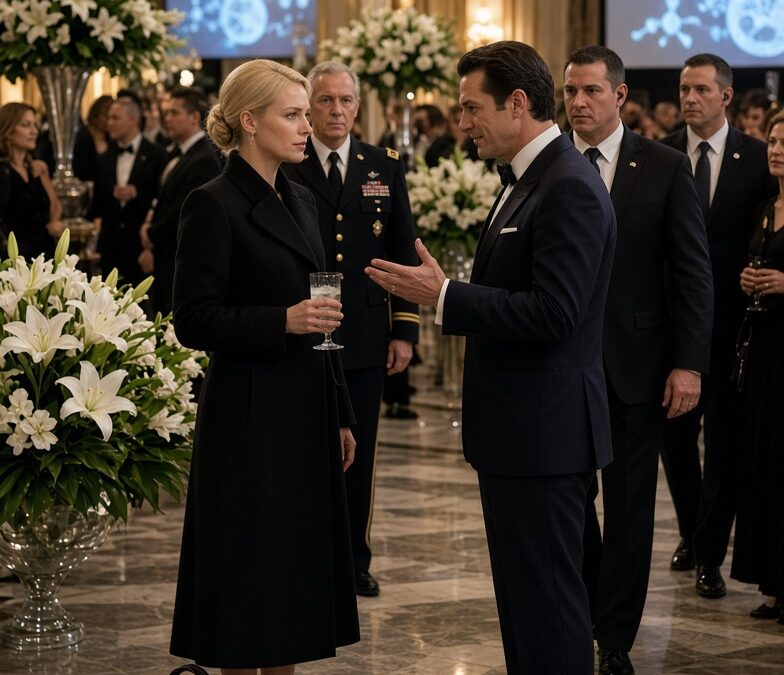
The room remained silent enough that I could hear ice shifting in the abandoned club soda beside me.
Then somebody whispered, “Major?”
The word traveled.
Calder looked at the security officers.
“Is there a problem?”
The supervisor cleared his throat.
“No, sir. We were verifying credentials.”
Adrian stepped forward.
“General, I can explain.”
Calder finally looked at him.
“I didn’t ask you.”
Five quiet words.
That was all.
People who truly possess authority rarely need to perform it.
Adrian had spent years filling rooms with confidence because silence made him nervous.
Calder could stop a room without raising his voice.
Colonel Sofia Reyes approached carrying a leather portfolio.
“Major Vance, we expected you with the technical delegation.”
“I arrived early.”
Her eyes moved toward Adrian.
Then the guards.
“Apparently.”
Adrian laughed thinly.
“Sofia, surely we don’t need to turn a personal misunderstanding into theater.”
Reyes studied him.
“I don’t know yet. Do we?”
I picked up my briefcase.
Four years earlier, Adrian used to carry a different one for me.
Brown leather.
Scratched.
Heavy.
That had been before Sentinel.
Before investors.
Before the gala.
Back when he was a biomedical engineer with overdue student loans, a failing consulting business, and a habit of falling asleep on the couch with spreadsheets open across his chest.
I had loved him then.
That remained one of the hardest facts to accept.
He made good omelets.
Terrible coffee.
Once drove ninety minutes at two in the morning because I had forgotten a field notebook in a laboratory refrigerator.
When I first began developing the stabilization system, I trusted him because trust was the architecture of our life.
That was not stupidity.
It was normal behavior with someone I believed loved me.
The project began after my second deployment.
I had treated too many wounds in places where evacuation took longer than training manuals assumed.
The problem that obsessed me was junctional bleeding—wounds too high or awkward for ordinary tourniquets.
My first prototype was ugly.
The clamp looked homemade because some of it was.
Gel cartridges leaked.
The applicator jammed in cold-weather testing.
I kept notebooks full of equations, diagrams, failure measurements, and profanity.
Adrian offered to help.
At first, he genuinely helped.
He understood manufacturing tolerances better than I did.
Redesigned the housing.
Identified cheaper medical polymers.
Turned measurements I had scribbled across three kinds of paper into usable spreadsheets.
The mistake came later.
I gave him access to everything.
Raw data.
Encrypted backups.
Grant correspondence.
Proposal drafts.
My trust.
Then came Darun Pass.
Our convoy was hit shortly before dawn.
I remembered the inside of the vehicle turning white.
Then orange.
Then strangely silent.
I remembered crawling toward somebody shouting for a medic even though my left leg no longer worked properly.
I remembered Colonel Calder bleeding high on his thigh.
Evacuation took twenty-three minutes.
My memory ended four minutes before the helicopter arrived.
I woke at Walter Reed nearly two weeks later.
Adrian sat beside my bed.
He cried when my eyes opened.
For years, I wondered whether those tears had been real.
That question hurt more than almost anything he did afterward.
During surgery and rehabilitation, he brought nurses coffee.
Called my mother.
Spoke with my command.
Kissed my forehead.
Told me not to worry about the research.
“I secured everything.”
He had.
Just not for me.
By the time I could walk from the rehabilitation gym to my room without vomiting from pain, Adrian had filed a provisional patent through a new company.
Three of my binding ratios were adjusted slightly.
My name disappeared.
My military grant number disappeared.
The technology became “private civilian innovation.”
Two months later, Adrian left our apartment.
I returned from outpatient therapy and found half the closets empty.
His coffee grinder gone.
The photograph from Santa Fe gone.
The engagement ring left in a kitchen drawer beneath old takeout menus.
My laptop had been wiped.
That frightened me more than the ring.
When I called Adrian, he said I sounded unstable.
When I called again, his attorney contacted my command.
Friends stopped answering.
Adrian had prepared them.
By the time I understood how thoroughly he had rewritten the story, defending myself sounded exactly like the obsession he had warned them about.
Back in the ballroom, I placed my briefcase on a cocktail table.
Adrian watched me unlock it.
“Mara.”
His voice changed.
For the first time all evening, he sounded like the man from our old apartment.
I hated him more for that.
I removed a thick binder marked with audit-control numbers and federal seals.
Adrian stared at the cover.
He recognized the format.
Calder looked at me.
“What am I receiving, Major?”
“A formal investigative referral, sir.”
The room seemed to contract.
I placed one hand on the binder.
“Sentinel didn’t just misattribute the invention.”
Adrian moved toward me.
I met his eyes.
“Investigators found something worse.”
Reyes opened the binder.
She read the executive summary for less than thirty seconds before her jaw tightened.
Calder watched her instead of me.
That mattered.
Whatever happened next needed to be institutional.
Not revenge.
Adrian tried to seize control again.
“This is absurd. Whatever she’s alleging can be handled through counsel.”
Reyes looked up.
“It has been.”
“We have intellectual-property counsel.”
“This is not primarily an intellectual-property matter.”
That stopped him.
The investigation had begun eleven months earlier because of something small.
A field medic at a stateside training center reported a Sentinel demonstration unit failing to maintain pressure during a simulated casualty drill.
Nobody was injured.
The complaint should have disappeared into a quality database among thousands of routine equipment reports.
Except the medic attached photographs.
I recognized the clamp immediately.
Not because it resembled mine.
Because one component did not.
My original design included a locking mechanism that prevented compression beyond a tested threshold.
Adrian and I had argued about it in our apartment years earlier because he believed it made manufacturing too expensive.
I refused to remove it.
The unit in the photograph did not have it.
At first, I assumed Sentinel had redesigned the product after testing.
Then I pulled public patent amendments.
The filings claimed the cheaper mechanism had existed in the earliest developmental prototype.
Impossible.
I built the earliest prototype.
I requested archived grant records.
Several documents were missing.
That was when anger became fear.
Someone had not merely stolen my work.
Someone was altering its history.
I contacted the Inspector General.
Special Agent Daniel Cho took the case.
Young.
Quiet.
Infuriating.
He never said he believed me.
He asked for facts.
Dates.
Names.
Devices.
Passwords.
Notebooks.
Witnesses.
Every place Adrian had access to my research.
For six weeks, I gave him everything.
Then he asked who else knew Adrian had access.
Captain Owen Price.
Dr. Lillian Park.
Colonel Nathan Bell.
All three had supported me after my injury.
All three later distanced themselves from my patent complaint.
One, I eventually learned, had done far more than remain silent.
In the ballroom, Adrian watched Reyes turn pages.
“What exactly was altered?” Calder asked.
“The provenance records, portions of the test history, and safety parameters submitted during Sentinel’s funding applications.”
Adrian shook his head.
“That is deliberately misleading.”
I continued.
“The commercial version removed the compression-limiting component. Sentinel represented the cheaper design as equivalent to the military prototype.”
“It was equivalent.”
“Your internal testing says otherwise.”
A woman near the front covered her mouth.
Adrian realized suddenly that he was no longer speaking only to me.
Investors listened.
So did journalists.
He pointed at the binder.
“That’s privileged company material.”
Calder’s expression hardened.
“Not if you submitted it for a federal contract.”
“Preliminary engineering.”
Reyes turned a page.
“You certified it.”
Silence.
Cho’s investigation had recovered an internal spreadsheet comparing the original design with Sentinel’s commercial version.
Failure rates differed.
Not dramatically.
That was what made it dangerous.
A device that fails constantly dies in development.
A device that fails rarely enough to look like bad luck can travel much farther.
Sentinel engineers noticed the difference.
Someone ordered changes to testing assumptions.
Three unfavorable trials vanished from the federal package.
Calder looked at Reyes.
“When did we know?”
“Nine days ago.”
“Acquisition office?”
“Only legal and limited review staff. We needed preservation measures before tonight.”
Adrian laughed.
“So this was a setup?”
“No,” I said. “You scheduled a contract celebration before you had a contract.”
Several guests looked toward the enormous VeloSeal displays.
An event coordinator quietly signaled a technician.
The screens went black.
That wounded Adrian more than anything I had said.
He stared at them.
Then at me.
“You planned this.”
“I submitted evidence. Other people made decisions.”
“You’ve wanted to destroy me for years.”
“No.”
That answer came easily.
“I wanted my work back. Everything else happened because of what you did after stealing it.”
Calder closed the binder.
“Colonel Reyes.”
“Sir.”
“Place the pending procurement action on administrative hold.”
Adrian stepped forward.
“General—”
“Immediately.”
Reyes unlocked her secure tablet.
Phones began appearing around us.
Adrian’s public-relations director moved quickly toward the stage.
The security officers who had been standing around me earlier now kept their distance from him.
Then my phone vibrated.
Unknown number.
YOU DON’T KNOW ABOUT PROJECT LANTERN.
A second message.
ASK WHO SIGNED THE 2019 TRANSFER AUTHORIZATION.
A photograph followed.
I enlarged it.
Colonel Nathan Bell’s signature sat at the bottom.
The same officer who had assured me after my injury that my research files were safe.
I showed Reyes.
Her eyes narrowed.
“Where did this come from?”
“Unknown.”
“Don’t respond.”
“I wasn’t planning to.”
The document referenced a destination code that did not match the version already in our case.
Project Lantern was new.
The transfer authorization was not.
Six days after the convoy attack, Bell approved movement of several research archives into what records described as a temporary continuity repository.
The anonymous photograph showed something different.
A contractor-accessible research enclave.
Reyes forwarded it through secure channels.
Across the room, Adrian watched us.
Twenty minutes later, he found me near the service corridor.
Alone.
“Mara.”
I kept walking.
“Please.”
That word stopped me.
Adrian rarely used it sincerely.
He lowered his voice.
“Whatever Bell did, I wasn’t part of it.”
I turned slowly.
Interesting.
“I never mentioned Bell.”
His face changed.
Small.
But enough.
“Your investigators interviewed him. Of course I know.”
“Cho never told Sentinel who was interviewed.”
“You think I don’t have attorneys?”
“I think you just answered a question I hadn’t asked.”
Adrian rubbed a hand across his mouth.
“There were people around your grant who saw commercial potential before I did.”
“Who?”
“I can’t talk here.”
“Then we have nothing to discuss.”
I started away.
“You still don’t understand what happened.”
I turned back.
Four years earlier, I imagined confronting him and watching arrogance collapse.
Reality was less satisfying.
Adrian looked tired.
Sweaty.
Ordinary.
“What happened,” I said, “is that I was unconscious while you copied my research.”
He looked down.
“Yes.”
For a second, I thought I heard wrong.
“Yes?”
“I took the files.”
Four years of denial ended beside stacked banquet chairs.
I felt almost nothing.
“But I didn’t create the opportunity.”
“Who did?”
“Bell.”
The answer did not surprise me anymore.
“He contacted me after the attack. Told me the Army would bury the technology in committees for a decade while people kept dying.”
“And you believed him.”
“I believed some of it.”
“You filed yourself as sole inventor.”
“I was told military ownership would make outside funding impossible.”
“You erased my name.”
His jaw tightened.
“I made a decision.”
“You made hundreds.”
A catering employee pushed a cart past us.
Adrian lowered his voice.
“Bell gave me access to the backup repository after your convoy attack. Told me which files mattered. Introduced me to the attorney who formed Sentinel.”
“Why?”
“He wanted commercialization quickly.”
“That’s a slogan. Why?”
“When we closed the first funding round, a consulting company received a percentage.”
“What company?”
He hesitated.
“Northbridge Strategic.”
I knew the name.
Northbridge performed regulatory consulting for defense companies.
It dissolved two years earlier.
Cho had searched it.
On paper, no link to Bell.
“Who owned it?”
“I never knew.”
“Then why pay them?”
“Bell told me to.”
I stared at him.
The answer sounded too pathetic to be invented.
“You built a company worth nearly a hundred million dollars and never asked where money went?”
“I asked later.”
“And?”
His eyes met mine.
“That’s when things changed.”
Two federal compliance officers appeared down the corridor.
“Mr. Mercer?”
One extended a hand.
“We need your phone and company laptop under the preservation order.”
Adrian looked at me as if I could stop them.
I could not.
I would not.
He surrendered the phone.
As they escorted him away, he turned.
“Mara.”
I said nothing.
“Northbridge wasn’t taking a consulting fee.”
The officers kept moving.
Adrian raised his voice.
“It was buying something.”
Then he disappeared through the doors.
My phone vibrated again.
Unknown number.
Six words.
YOUR ACCIDENT WASN’T THE FIRST ONE.
I did not sleep.
At 2:13 in the morning, I sat at my kitchen table wearing an old Army sweatshirt and stared at those words until they stopped feeling like language.
Your accident wasn’t the first one.
Cho called at 6:40.
“Do not delete anything.”
“I haven’t.”
“Don’t answer.”
“I haven’t.”
“Good.”
Silence.
Cho used silence the way surgeons used scalpels.
“Do you know who sent it?”
“Not yet.”
“Credible?”
“The sender had access to records we didn’t.”
“That isn’t an answer.”
“It’s the answer.”
By noon, the gala had become defense-industry news.
Sentinel described the contract hold as routine review.
Adrian temporarily stepped aside as chief executive.
None of that mattered as much as Lantern.
That afternoon, Cho, Reyes, and a document examiner came to my office.
Blinds closed.
Phone collected.
The transfer document went onto a secure monitor.
Signed six days after my convoy attack.
The destination code pointed to a contractor-accessible technology-transition enclave.
Bell could authorize access.
Adrian could not.
Somebody inside sponsored him.
The form listed three projects.
Mine.
A portable blood-product temperature system developed by Captain Elise Warren.
A field diagnostic platform developed by Dr. Peter Yang.
Warren died in a training vehicle rollover.
Yang retired after a stroke.
Both technologies later transferred into civilian programs.
Northbridge Strategic advised both companies.
I stared at the names.
“That’s what the message meant.”
Cho remained careful.
“Possibly.”
“Three researchers become unavailable and their projects move through the same structure?”
“We investigate patterns. We don’t decide what patterns mean because they look ugly.”
I hated that answer.
It was also correct.
Captain Warren’s death had been treated as an accident.
Nothing suggested otherwise.
Yang’s stroke had been natural.
But Northbridge’s involvement made the transfers worth reopening.
Reyes leaned back.
“We’ve treated Sentinel as the problem.”
Cho nodded.
“It may be a customer.”
That sentence rearranged the room.
Adrian had betrayed me.
He stole files.
Falsified history.
Built a company on work that was not his.
But perhaps someone had built a system designed to exploit researchers at the exact moment they became vulnerable.
By seven that night, investigators found Northbridge’s former accountant.
Frances Dwyer.
Sixty-three.
Red glasses.
Requested tea before answering a question.
I was not permitted inside the formal interview.
Afterward, Cho brought me in because she said she had something for me.
Dwyer looked immediately at my left knee.
“Still hurts?”
My body went cold.
“How do you know about my knee?”
She glanced at Cho.
He said, “Answer.”
“Northbridge maintained researcher profiles.”
“What profiles?”
“Availability risk.”
The phrase made me nauseous.
“Meaning?”
“Health issues. Deployments. Retirement eligibility. Divorce. Debt. Anything that could interrupt a project or weaken someone’s ability to contest a transfer.”
I stared at her.
“Contest ownership.”
“I processed payments. I didn’t select people.”
“Who did?”
“Colonel Bell.”
Cho leaned forward.
“Anyone else?”
Dwyer hesitated.
“Bell wasn’t the top.”
“Who?”
“I never met him. We used initials.”
“What initials?”
“T.R.”
Reyes and Cho exchanged a look.
Dwyer turned toward me.
“After your convoy was hit, Bell personally called the office. He said your project had become available.”
My hands tightened beneath the table.
“Available?”
“That was the word.”
“Was Adrian already involved?”
“Yes.”
That hurt more than I expected.
Dwyer removed an old photograph from an evidence envelope after an agent checked it.
Adrian stood outside a restaurant.
Beside Bell.
Date on the back.
Eleven days before the convoy attack.
Before.
The third man in the photograph was instantly recognizable.
Lieutenant General Theodore Rusk.
The officer who approved my research grant.
The man who later visited me at Walter Reed carrying a challenge coin.
Theodore Rusk had retired with honors.
Thirty-six years of service.
Combat commands.
Then a second career advising defense firms on innovation.
He wrote editorials about accelerating battlefield technology.
Sat on the board of a charity for wounded service members.
I had shaken his hand twice.
Once when he approved my proposal.
Once from a hospital bed.
The photograph proved only that three men had eaten together.
Cho reminded me of that repeatedly.
Investigations are not solved by dramatic photographs.
They are solved by boring records.
Calendar entries.
Parking receipts.
Travel reimbursement.
Archived texts.
Old invoices.
Bell’s former assistant distrusted electronic calendars and kept paper appointment books.
Three weeks before the photograph, she had written:
RUSK / MERCER — TRANSITION CANDIDATES.
Six days later:
VANCE PLATFORM — REVIEW AVAILABILITY.
There was that word again.
Availability.
As if researchers were warehouses waiting to be purchased.
Rusk denied wrongdoing.
Bell asked for immunity.
Adrian offered cooperation.
His lawyers eventually proposed what they called a global resolution.
Adrian would cooperate against Bell and Rusk.
Admit improper patent attribution.
Admit selected procurement violations.
In exchange, prosecutors would consider reduced charges.
Then came the part offered to me.
Public acknowledgment of my inventorship.
Transfer of his remaining patent interest.
Personal settlement.
My attorney slid the proposal across the table.
“You understand your view isn’t controlling.”
“I understand.”
“You could recover significant money.”
“I don’t want his money.”
“What do you want?”
“The truth.”
It sounded sentimental.
So I clarified.
“I want the official record to show what happened to the research, the safety data, and the people who objected.”
Because by then we had found Marcus Hale.
Marcus had been a quality engineer at Sentinel.
Two years earlier, he warned Adrian that the redesigned clamp failed outside laboratory conditions more often than Sentinel reports showed.
Marcus recommended restoring my original compression-limiting mechanism.
Adrian refused.
Too expensive.
Marcus escalated.
He was fired.
Sentinel called it restructuring.
Months later, the simplified device failed during treatment of a real injury at a contractor demonstration overseas.
The casualty survived because the medic abandoned VeloSeal and used a conventional method.
Sentinel classified the failure as operator error.
Adrian personally approved that classification.
That was when my anger changed.
Stealing credit harmed me.
Suppressing a medical safety failure endangered people who had nothing to do with our history.
Bell did not make him sign that.
Rusk did not make him approve it.
That choice belonged entirely to Adrian.
He finally sat with investigators in January.
Nine hours the first day.
Seven the next.
Bell had recruited him before my deployment.
Rusk wanted civilian pathways ready for promising military technologies.
Researchers were scored for “transition vulnerability.”
Adrian was encouraged to establish a company.
Promised investor introductions.
Told that if I became “unavailable,” legal mechanisms existed to move quickly.
Cho asked what unavailable meant.
“Reassignment. Retirement. Injury.”
Adrian denied knowing anything about the convoy attack beforehand.
Investigators found no evidence that Bell or Rusk caused it.
My injury had been war.
Not conspiracy.
That truth disturbed me more.
Nobody needed to arrange my suffering.
They only needed to wait for it.
Bell pleaded guilty to conspiracy involving procurement fraud and undisclosed financial conflicts.
Rusk was indicted on corruption and fraud charges tied to multiple technology transfers.
Adrian faced false-statement, wire-fraud, obstruction, and procurement-record charges.
Months after the gala, I saw him inside federal court.
He looked smaller.
No chandeliers.
No lilies.
No screens carrying his company logo.
When the judge asked whether he understood the charges, Adrian said yes.
Then he turned.
Our eyes met.
For the first time since our engagement, I did not wonder what he was thinking.
I simply no longer cared.
Adrian pleaded guilty before trial.
People told me that should have felt anticlimactic.
It did not.
Courtrooms are not built for dramatic satisfaction.
Records.
Dates.
Evidence.
Standards.
Consequences.
That suited me.
At the plea hearing, prosecutors described how he copied research while I was hospitalized, stripped attribution, altered development history, and later falsified safety records to preserve federal funding.
His cooperation helped expose Bell.
Strengthened the case against Rusk.
It did not erase what he had independently chosen.
The judge made that clear.
So did I.
I was allowed a victim-impact statement.
At first, I planned to decline.
Then Marcus Hale called.
“You should say something.”
“Why?”
“He spent years telling people you were unstable. Let the record contain your voice.”
So I wrote.
Not about revenge.
I wrote about the first wounded soldier who made me realize existing tools were not enough.
The nights in the lab.
Burnt coffee.
Failed prototypes.
Technicians.
Medics.
Statisticians.
Machinists.
People Adrian compressed into a story about himself.
Then I wrote about the safety report.
“Stealing credit harmed me,” I told the court. “Changing evidence could have harmed people who had no idea our private history existed. That is the part I cannot excuse.”
Adrian stared at the table.
I did not request the maximum sentence.
I did not request mercy.
The judge sentenced him within federal guidelines.
Ordered substantial restitution.
His patent interests were surrendered.
Sentinel entered restructuring.
The company did not disappear.
Some people found that unsatisfying.
Hundreds of innocent employees worked there.
Destroying their livelihoods would not restore mine.
Leadership changed.
Medical operations were sold.
The compromised products underwent independent review.
VeloSeal never entered Army-wide service.
My original platform did.
Not exactly as I designed it.
That mattered.
A new team improved the housing.
Refined the applicator.
Reduced manufacturing cost.
Kept the safety mechanism.
Credited every contributor.
The patent went into a military medical technology trust.
Licensing terms kept procurement prices low.
That mattered more to me than owning it personally.
The first production units arrived at Fort Cavazos the following spring.
General Calder invited me to speak at the fielding ceremony.
I refused the podium.
He found me later near a line of training ambulances.
“They had a plaque for you.”
“I own enough objects that need dusting.”
He laughed.
Calder had recovered well from Darun Pass, though after standing too long he still favored the injured leg.
“You’re difficult to celebrate, Major.”
“I’ve heard.”
He looked toward the young medics opening equipment cases.
“You did all right.”
That sentence landed harder than speeches.
A medic in her early twenties opened one kit.
Turned the clamp in her hands.
She had no idea who I was.
I liked that.
If she opened that package someday far from a hospital, I wanted her to trust the device.
Not the legend.
Bell was sentenced later that year.
Rusk fought longer.
His defense argued that accelerated technology transfer was legitimate policy.
That Northbridge’s arrangements were misunderstood consulting.
That military innovation sometimes required unconventional partnerships.
Jurors convicted him on some counts.
Acquitted him on others.
Messy.
Real.
Afterward, reporters wanted a quote.
I gave one.
“Research done for wounded service members should never become private property through deception.”
Then I returned to work.
The strangest part afterward was dealing with people who believed Adrian.
Some apologized.
Others explained.
“I only knew what he told me.”
“I didn’t want to get involved.”
“You seemed angry.”
“You have to understand how it looked.”
I listened.
Then stopped responding.
I did not need revenge.
I also did not need them back.
Dr. Lillian Park was different.
She came to my office with a cardboard archive box.
“I failed you.”
No explanation first.
No excuse.
That mattered.
She admitted Bell discouraged her from supporting my patent complaint.
He implied her career could suffer.
She chose silence.
“I was scared.”
“I know.”
“I wish that helped.”
“It doesn’t.”
She nodded.
We did not pretend.
Inside the box were laboratory notes.
Emails.
Photographs.
At the bottom was one picture of Adrian and me in the old lab.
He held an early prototype.
Grinning.
I was laughing at someone outside the frame.
I stared at that younger woman for a long time.
Then put the photograph back.
I did not tear it.
Some memories do not require destruction.
They only need to stop controlling the room.
A year after the gala, I returned to the same hotel.
Different event.
Military medicine foundation dinner.
Combat nurses.
Medics.
Surgeons.
Evacuation crews.
Researchers.
No lilies.
Someone used eucalyptus and white roses.
I noticed.
Trauma teaches strange inventory.
Smells.
Doors.
Distances.
Places where something happened once.
I entered wearing my uniform openly.
No coat.
No reveal.
Colonel Reyes met me at registration and handed me club soda.
“For tradition.”
“I didn’t drink the last one.”
“I know. It sat on a tray through half the investigation.”
I laughed.
That surprised me.
For years I imagined healing would be dramatic.
A morning when the past suddenly stopped hurting.
It was not like that.
It was realizing I had gone an entire afternoon without thinking about Adrian.
Then a day.
Then a week.
My knee remained damaged.
The ugly memories remained.
His choices remained his.
None of that required me to keep living in response to him.
He wrote once from prison.
The letter arrived through my attorney.
I almost returned it unopened.
Instead, I read it at my kitchen table.
He apologized.
Imperfectly.
There were paragraphs about pressure.
Bell.
Ambition.
Fear.
How quickly everything happened after my injury.
Then one line I believed.
I kept waiting for a version of what I did that would let me live with myself.
I understood that.
I had spent years waiting for a version of his betrayal that would make my trust seem less humiliating.
Neither of us got one.
At the end, he asked whether I might forgive him someday.
I did not respond.
Forgiveness had become a word other people seemed to need from me more than I needed it myself.
I did not wake angry every morning anymore.
I did not want him to suffer.
I hoped he became better.
None of those things meant he belonged in my life.
The absence of hatred is not reconciliation.
Some doors stay closed because you finally understand what belongs outside them.
That winter I promoted to lieutenant colonel.
I considered declining.
Reyes told me that rejecting promotion because I hated ceremonies was “the most Mara Vance reason imaginable and therefore invalid.”
So I accepted.
General Calder pinned the insignia.
My mother cried harder than she had at my commissioning.
She never forgave Adrian.
That simplified holidays.
Eventually, I moved out of the apartment where so much of the original work began.
I bought a small brick townhouse.
Crooked patio.
Kitchen large enough for two people to stand in without apologizing.
The spare bedroom stayed empty six months.
Then I turned it into a workshop.
Not to rebuild the past.
Because I still liked solving problems.
That part survived.
One Saturday, I spent five hours redesigning a cheap plastic connector in a training kit simply because it irritated me.
When the new version finally worked, I laughed alone at my workbench.
That was the moment I understood Adrian never stole the thing I once believed he had.
He stole files.
Credit.
Years.
Trust.
He never stole my ability to build something useful.
No patent could contain that.
At the foundation dinner, Calder eventually took the stage.
I stayed near the rear.
He spoke about battlefield medicine.
Logistics.
Integrity.
The danger of confusing speed with recklessness.
He never mentioned Adrian.
He did not need to.
Near the end, he asked every combat medic in the room to stand.
Chairs moved across the ballroom.
Men and women rose.
Some were barely twenty.
Some retired.
Some walked with canes.
One had a prosthetic leg.
I stood with them.
Not in front.
Among them.
That felt right.
After the ceremony, a young sergeant approached.
“Ma’am, are you Lieutenant Colonel Vance?”
“Yes.”
He suddenly looked nervous.
“I used your stabilization kit on deployment.”
I waited.
“The casualty made it.”
For one second, the ballroom disappeared.
No chandelier.
No hotel.
No investigation.
Just one medic trying not to cry.
“Good,” I said.
My voice almost failed.
“That’s what it was for.”
He thanked me.
Then walked away.
I remained still.
A year earlier, almost in the same place, Adrian told strangers I was broken.
Unstable.
Disgraced.
Unwanted.
At the time, I believed the great correction would be everyone discovering who I truly was.
I had been wrong.
The important correction was discovering what had actually happened.
Adrian’s fraud exposed Bell.
Bell exposed Northbridge.
Northbridge exposed a system that treated vulnerable researchers as opportunities.
Their own shortcuts destroyed them.
I did not defeat Adrian by becoming more powerful than he expected.
I survived long enough to keep records.
Asked questions when the answers felt wrong.
Trusted people who cared more about evidence than spectacle.
And when the truth finally reached a room large enough that Adrian could not control it anymore, I did not need to shout.
Outside the ballroom, rain tapped against the hotel windows.
I stood there for a moment.
Same building.
Different year.
Different woman.
My phone buzzed.
Reyes.
Breakfast after tomorrow’s briefing?
I typed:
Yes.
Then put the phone away.
For years I believed closure would come when somebody powerful announced that I had been right.
It did not.
Closure arrived when being right stopped being the center of my life.
Adrian had built his future by treating my worst day as his opportunity.
I built mine by refusing to let that day become the only thing anyone could know about me.
And in the end, that was the one thing he never learned how to steal.
𝗧𝗛𝗘 𝗘𝗡𝗗
My Ex Tried to Turn My Worst Day Into Proof That I Was Broken
My ex-fiancé had spent four years teaching everyone around him to doubt me before I ever opened my mouth.
At his biggest gala, he finally used my combat injury as a weapon and ordered security to remove me in front of two hundred donors.
I stayed where I was, because the man he had spent months trying to impress had just walked through the ballroom doors and was staring directly at me.
The first thing I noticed inside the Fairmont ballroom was the lilies.
White lilies floated in shallow glass bowls, rose from silver vases, and curved around the base of a twenty-foot display carrying the Sentinel BioSystems logo. There were enough of them to perfume an aircraft hangar.
I hated lilies.
Walter Reed had kept them near the rehabilitation-wing elevators, and even years later the smell could pull me backward before I had time to stop it.
Adrian Mercer loved them because they photographed well.
That difference explained more about us than I understood when we were engaged.
I stood near the back of the ballroom holding club soda and watched the man I had once planned to marry explain battlefield medicine to investors who had never watched anyone bleed.
Adrian was forty-one now.
Broader shoulders.
Dark hair carefully touched with gray at the temples.
Midnight dinner jacket.
Relaxed smile.
The kind of appearance people called natural after forgetting how much work it took to create.
Behind him, three enormous screens displayed Sentinel’s newest product.
VELOSeal Trauma Stabilization System.
The animation showed a medic applying a clamp and gel cartridge to a clean simulated wound while a calm male voice promised faster control, safer transport, superior survivability.
No blood.
No screaming.
No dust.
No helicopter blades beating hot air across a casualty collection point.
No medic realizing every available option was inadequate.
Just graphics.
Music.
Applause.
And Adrian standing beneath my ideas.
I had not come for him.
My invitation came through Army Medical Research and Development Command, where I served as a senior liaison between trauma researchers and acquisition teams. For fourteen months, I had been helping auditors understand discrepancies in Sentinel’s development records.
Tonight was supposed to be a celebration.
Adrian believed the government was about to award his company a major procurement contract.
I knew the contract package had problems.
What I did not yet know was how deep those problems went.
Adrian saw me twenty-seven minutes after I arrived.
I knew the number because I checked my watch when General Thomas Calder’s aide texted that his convoy was delayed.
One moment Adrian was laughing beside a venture-capital executive.
The next, his gaze crossed the ballroom and stopped on me.
His smile remained in place for two beats after everything behind it changed.
He handed his champagne to an assistant.
Then walked toward me.
Two private security officers followed.
“Mara.”
Four years had passed since we stood face-to-face.
He still managed to say my name like I had disappointed him.
“Adrian.”
His eyes traveled down my black wool coat.
Sensible heels.
Briefcase at my feet.
“I wondered whether you would try something like this.”
“Attend an event I was invited to?”
“Don’t.”
Nearby conversations softened.
Adrian noticed.
Public attention always changed him.
He raised his voice just enough.
“For everyone’s sake, you need to leave.”
One security officer glanced at the other.
“Mr. Mercer?”
Adrian turned partially toward the surrounding guests.
“This woman is my former fiancée. She was a combat medic before a medical discharge. She’s had difficulties since then.”
There are lies meant to fool strangers.
And lies designed to hurt the person who knows exactly why they are false.
Adrian had always been talented enough to do both at once.
I had never received a disgraceful discharge.
After the blast that destroyed my left knee and left me with months of neurological rehabilitation, an Army retention board allowed me to remain in service.
I returned to duty.
Promoted.
Completed a research fellowship.
Eventually made major.
Adrian knew every part of that story.
A donor nearby slowly lowered her champagne glass.
Adrian continued.
“She’s been fixated on Sentinel for years. There have been accusations. Threats. Claims that our technology belongs to her.”
I almost admired the architecture of it.
He had done this four years earlier too.
First tell everyone I was unstable.
Then make sure anything I said afterward sounded like proof.
The security supervisor stepped closer.
“Ma’am, may I see your credential?”
I reached inside my coat.
The younger guard stiffened.
I stopped.
“My identification is in my inside pocket.”
The supervisor nodded.
“Go ahead.”
I removed my wallet.
Common Access Card.
Defense Department liaison credential.
Restricted acquisition access.
The supervisor read it twice.
Then looked at Adrian.
“Mr. Mercer, she’s cleared for the restricted briefing.”
Adrian’s face hardly changed.
I knew him well enough to see panic anyway.
“That credential doesn’t belong here.”
“It lists this venue,” the supervisor said.
“I don’t care. I’m paying for security.”
“You’re paying for the reception,” I said. “You’re not paying for the federal oversight team.”
His jaw tightened.
The orchestra kept playing.
People stopped pretending not to listen.
Adrian leaned closer.
His cologne smelled like cedar.
Same scent he wore at our engagement party.
“You have no idea what you’re walking into.”
“I know exactly what’s in the contract package.”
Fear flashed through his face.
Then the ballroom doors opened.
The orchestra stopped almost mid-note.
General Thomas Calder entered with two aides and Colonel Sofia Reyes.
Four stars gleamed beneath the chandeliers.
Half the room turned.
Adrian transformed instantly.
Shoulders relaxed.
Smile restored.
He walked across the marble floor and extended his hand.
“General Calder. Welcome. We’re honored.”
Calder did not take it.
Adrian tried to recover.
“I apologize for the disturbance. My former fiancée appeared unexpectedly. She has a history of—”
Calder’s eyes moved past him.
Straight to me.
I set down my glass.
Then unbuttoned my coat.
Beneath it, I wore my Army Service Uniform.
The Distinguished Service Cross above my left breast caught the chandelier light.
Calder stopped.
For one second, the general disappeared.
I saw the wounded colonel from six years earlier.
The man bleeding beside a burning vehicle while I held pressure against his thigh and waited for a helicopter none of us were sure would arrive.
Calder brought his heels together.
Raised his hand.
And saluted me.
“Major Vance.”
Nobody moved.
He held the salute longer than protocol required.
“The last time I saw you,” he said, loud enough for the room to hear, “you were keeping me alive.”
Behind him, Adrian Mercer lost all color.
part2
I returned the salute.
The room remained silent enough that I could hear ice shifting in the abandoned club soda beside me.
Then somebody whispered, “Major?”
The word traveled.
Calder looked at the security officers.
“Is there a problem?”
The supervisor cleared his throat.
“No, sir. We were verifying credentials.”
Adrian stepped forward.
“General, I can explain.”
Calder finally looked at him.
“I didn’t ask you.”
Five quiet words.
That was all.
People who truly possess authority rarely need to perform it.
Adrian had spent years filling rooms with confidence because silence made him nervous.
Calder could stop a room without raising his voice.
Colonel Sofia Reyes approached carrying a leather portfolio.
“Major Vance, we expected you with the technical delegation.”
“I arrived early.”
Her eyes moved toward Adrian.
Then the guards.
“Apparently.”
Adrian laughed thinly.
“Sofia, surely we don’t need to turn a personal misunderstanding into theater.”
Reyes studied him.
“I don’t know yet. Do we?”
I picked up my briefcase.
Four years earlier, Adrian used to carry a different one for me.
Brown leather.
Scratched.
Heavy.
That had been before Sentinel.
Before investors.
Before the gala.
Back when he was a biomedical engineer with overdue student loans, a failing consulting business, and a habit of falling asleep on the couch with spreadsheets open across his chest.
I had loved him then.
That remained one of the hardest facts to accept.
He made good omelets.
Terrible coffee.
Once drove ninety minutes at two in the morning because I had forgotten a field notebook in a laboratory refrigerator.
When I first began developing the stabilization system, I trusted him because trust was the architecture of our life.
That was not stupidity.
It was normal behavior with someone I believed loved me.
The project began after my second deployment.
I had treated too many wounds in places where evacuation took longer than training manuals assumed.
The problem that obsessed me was junctional bleeding—wounds too high or awkward for ordinary tourniquets.
My first prototype was ugly.
The clamp looked homemade because some of it was.
Gel cartridges leaked.
The applicator jammed in cold-weather testing.
I kept notebooks full of equations, diagrams, failure measurements, and profanity.
Adrian offered to help.
At first, he genuinely helped.
He understood manufacturing tolerances better than I did.
Redesigned the housing.
Identified cheaper medical polymers.
Turned measurements I had scribbled across three kinds of paper into usable spreadsheets.
The mistake came later.
I gave him access to everything.
Raw data.
Encrypted backups.
Grant correspondence.
Proposal drafts.
My trust.
Then came Darun Pass.
Our convoy was hit shortly before dawn.
I remembered the inside of the vehicle turning white.
Then orange.
Then strangely silent.
I remembered crawling toward somebody shouting for a medic even though my left leg no longer worked properly.
I remembered Colonel Calder bleeding high on his thigh.
Evacuation took twenty-three minutes.
My memory ended four minutes before the helicopter arrived.
I woke at Walter Reed nearly two weeks later.
Adrian sat beside my bed.
He cried when my eyes opened.
For years, I wondered whether those tears had been real.
That question hurt more than almost anything he did afterward.
During surgery and rehabilitation, he brought nurses coffee.
Called my mother.
Spoke with my command.
Kissed my forehead.
Told me not to worry about the research.
“I secured everything.”
He had.
Just not for me.
By the time I could walk from the rehabilitation gym to my room without vomiting from pain, Adrian had filed a provisional patent through a new company.
Three of my binding ratios were adjusted slightly.
My name disappeared.
My military grant number disappeared.
The technology became “private civilian innovation.”
Two months later, Adrian left our apartment.
I returned from outpatient therapy and found half the closets empty.
His coffee grinder gone.
The photograph from Santa Fe gone.
The engagement ring left in a kitchen drawer beneath old takeout menus.
My laptop had been wiped.
That frightened me more than the ring.
When I called Adrian, he said I sounded unstable.
When I called again, his attorney contacted my command.
Friends stopped answering.
Adrian had prepared them.
By the time I understood how thoroughly he had rewritten the story, defending myself sounded exactly like the obsession he had warned them about.
Back in the ballroom, I placed my briefcase on a cocktail table.
Adrian watched me unlock it.
“Mara.”
His voice changed.
For the first time all evening, he sounded like the man from our old apartment.
I hated him more for that.
I removed a thick binder marked with audit-control numbers and federal seals.
Adrian stared at the cover.
He recognized the format.
Calder looked at me.
“What am I receiving, Major?”
“A formal investigative referral, sir.”
The room seemed to contract.
I placed one hand on the binder.
“Sentinel didn’t just misattribute the invention.”
Adrian moved toward me.
I met his eyes.
“Investigators found something worse.”
Reyes opened the binder.
She read the executive summary for less than thirty seconds before her jaw tightened.
Calder watched her instead of me.
That mattered.
Whatever happened next needed to be institutional.
Not revenge.
Adrian tried to seize control again.
“This is absurd. Whatever she’s alleging can be handled through counsel.”
Reyes looked up.
“It has been.”
“We have intellectual-property counsel.”
“This is not primarily an intellectual-property matter.”
That stopped him.
The investigation had begun eleven months earlier because of something small.
A field medic at a stateside training center reported a Sentinel demonstration unit failing to maintain pressure during a simulated casualty drill.
Nobody was injured.
The complaint should have disappeared into a quality database among thousands of routine equipment reports.
Except the medic attached photographs.
I recognized the clamp immediately.
Not because it resembled mine.
Because one component did not.
My original design included a locking mechanism that prevented compression beyond a tested threshold.
Adrian and I had argued about it in our apartment years earlier because he believed it made manufacturing too expensive.
I refused to remove it.
The unit in the photograph did not have it.
At first, I assumed Sentinel had redesigned the product after testing.
Then I pulled public patent amendments.
The filings claimed the cheaper mechanism had existed in the earliest developmental prototype.
Impossible.
I built the earliest prototype.
I requested archived grant records.
Several documents were missing.
That was when anger became fear.
Someone had not merely stolen my work.
Someone was altering its history.
I contacted the Inspector General.
Special Agent Daniel Cho took the case.
Young.
Quiet.
Infuriating.
He never said he believed me.
He asked for facts.
Dates.
Names.
Devices.
Passwords.
Notebooks.
Witnesses.
Every place Adrian had access to my research.
For six weeks, I gave him everything.
Then he asked who else knew Adrian had access.
Captain Owen Price.
Dr. Lillian Park.
Colonel Nathan Bell.
All three had supported me after my injury.
All three later distanced themselves from my patent complaint.
One, I eventually learned, had done far more than remain silent.
In the ballroom, Adrian watched Reyes turn pages.
“What exactly was altered?” Calder asked.
“The provenance records, portions of the test history, and safety parameters submitted during Sentinel’s funding applications.”
Adrian shook his head.
“That is deliberately misleading.”
I continued.
“The commercial version removed the compression-limiting component. Sentinel represented the cheaper design as equivalent to the military prototype.”
“It was equivalent.”
“Your internal testing says otherwise.”
A woman near the front covered her mouth.
Adrian realized suddenly that he was no longer speaking only to me.
Investors listened.
So did journalists.
He pointed at the binder.
“That’s privileged company material.”
Calder’s expression hardened.
“Not if you submitted it for a federal contract.”
“Preliminary engineering.”
Reyes turned a page.
“You certified it.”
Silence.
Cho’s investigation had recovered an internal spreadsheet comparing the original design with Sentinel’s commercial version.
Failure rates differed.
Not dramatically.
That was what made it dangerous.
A device that fails constantly dies in development.
A device that fails rarely enough to look like bad luck can travel much farther.
Sentinel engineers noticed the difference.
Someone ordered changes to testing assumptions.
Three unfavorable trials vanished from the federal package.
Calder looked at Reyes.
“When did we know?”
“Nine days ago.”
“Acquisition office?”
“Only legal and limited review staff. We needed preservation measures before tonight.”
Adrian laughed.
“So this was a setup?”
“No,” I said. “You scheduled a contract celebration before you had a contract.”
Several guests looked toward the enormous VeloSeal displays.
An event coordinator quietly signaled a technician.
The screens went black.
That wounded Adrian more than anything I had said.
He stared at them.
Then at me.
“You planned this.”
“I submitted evidence. Other people made decisions.”
“You’ve wanted to destroy me for years.”
“No.”
That answer came easily.
“I wanted my work back. Everything else happened because of what you did after stealing it.”
Calder closed the binder.
“Colonel Reyes.”
“Sir.”
“Place the pending procurement action on administrative hold.”
Adrian stepped forward.
“General—”
“Immediately.”
Reyes unlocked her secure tablet.
Phones began appearing around us.
Adrian’s public-relations director moved quickly toward the stage.
The security officers who had been standing around me earlier now kept their distance from him.
Then my phone vibrated.
Unknown number.
YOU DON’T KNOW ABOUT PROJECT LANTERN.
A second message.
ASK WHO SIGNED THE 2019 TRANSFER AUTHORIZATION.
A photograph followed.
I enlarged it.
Colonel Nathan Bell’s signature sat at the bottom.
The same officer who had assured me after my injury that my research files were safe.
I showed Reyes.
Her eyes narrowed.
“Where did this come from?”
“Unknown.”
“Don’t respond.”
“I wasn’t planning to.”
The document referenced a destination code that did not match the version already in our case.
Project Lantern was new.
The transfer authorization was not.
Six days after the convoy attack, Bell approved movement of several research archives into what records described as a temporary continuity repository.
The anonymous photograph showed something different.
A contractor-accessible research enclave.
Reyes forwarded it through secure channels.
Across the room, Adrian watched us.
Twenty minutes later, he found me near the service corridor.
Alone.
“Mara.”
I kept walking.
“Please.”
That word stopped me.
Adrian rarely used it sincerely.
He lowered his voice.
“Whatever Bell did, I wasn’t part of it.”
I turned slowly.
Interesting.
“I never mentioned Bell.”
His face changed.
Small.
But enough.
“Your investigators interviewed him. Of course I know.”
“Cho never told Sentinel who was interviewed.”
“You think I don’t have attorneys?”
“I think you just answered a question I hadn’t asked.”
Adrian rubbed a hand across his mouth.
“There were people around your grant who saw commercial potential before I did.”
“Who?”
“I can’t talk here.”
“Then we have nothing to discuss.”
I started away.
“You still don’t understand what happened.”
I turned back.
Four years earlier, I imagined confronting him and watching arrogance collapse.
Reality was less satisfying.
Adrian looked tired.
Sweaty.
Ordinary.
“What happened,” I said, “is that I was unconscious while you copied my research.”
He looked down.
“Yes.”
For a second, I thought I heard wrong.
“Yes?”
“I took the files.”
Four years of denial ended beside stacked banquet chairs.
I felt almost nothing.
“But I didn’t create the opportunity.”
“Who did?”
“Bell.”
The answer did not surprise me anymore.
“He contacted me after the attack. Told me the Army would bury the technology in committees for a decade while people kept dying.”
“And you believed him.”
“I believed some of it.”
“You filed yourself as sole inventor.”
“I was told military ownership would make outside funding impossible.”
“You erased my name.”
His jaw tightened.
“I made a decision.”
“You made hundreds.”
A catering employee pushed a cart past us.
Adrian lowered his voice.
“Bell gave me access to the backup repository after your convoy attack. Told me which files mattered. Introduced me to the attorney who formed Sentinel.”
“Why?”
“He wanted commercialization quickly.”
“That’s a slogan. Why?”
“When we closed the first funding round, a consulting company received a percentage.”
“What company?”
He hesitated.
“Northbridge Strategic.”
I knew the name.
Northbridge performed regulatory consulting for defense companies.
It dissolved two years earlier.
Cho had searched it.
On paper, no link to Bell.
“Who owned it?”
“I never knew.”
“Then why pay them?”
“Bell told me to.”
I stared at him.
The answer sounded too pathetic to be invented.
“You built a company worth nearly a hundred million dollars and never asked where money went?”
“I asked later.”
“And?”
His eyes met mine.
“That’s when things changed.”
Two federal compliance officers appeared down the corridor.
“Mr. Mercer?”
One extended a hand.
“We need your phone and company laptop under the preservation order.”
Adrian looked at me as if I could stop them.
I could not.
I would not.
He surrendered the phone.
As they escorted him away, he turned.
“Mara.”
I said nothing.
“Northbridge wasn’t taking a consulting fee.”
The officers kept moving.
Adrian raised his voice.
“It was buying something.”
Then he disappeared through the doors.
My phone vibrated again.
Unknown number.
Six words.
YOUR ACCIDENT WASN’T THE FIRST ONE.
I did not sleep.
At 2:13 in the morning, I sat at my kitchen table wearing an old Army sweatshirt and stared at those words until they stopped feeling like language.
Your accident wasn’t the first one.
Cho called at 6:40.
“Do not delete anything.”
“I haven’t.”
“Don’t answer.”
“I haven’t.”
“Good.”
Silence.
Cho used silence the way surgeons used scalpels.
“Do you know who sent it?”
“Not yet.”
“Credible?”
“The sender had access to records we didn’t.”
“That isn’t an answer.”
“It’s the answer.”
By noon, the gala had become defense-industry news.
Sentinel described the contract hold as routine review.
Adrian temporarily stepped aside as chief executive.
None of that mattered as much as Lantern.
That afternoon, Cho, Reyes, and a document examiner came to my office.
Blinds closed.
Phone collected.
The transfer document went onto a secure monitor.
Signed six days after my convoy attack.
The destination code pointed to a contractor-accessible technology-transition enclave.
Bell could authorize access.
Adrian could not.
Somebody inside sponsored him.
The form listed three projects.
Mine.
A portable blood-product temperature system developed by Captain Elise Warren.
A field diagnostic platform developed by Dr. Peter Yang.
Warren died in a training vehicle rollover.
Yang retired after a stroke.
Both technologies later transferred into civilian programs.
Northbridge Strategic advised both companies.
I stared at the names.
“That’s what the message meant.”
Cho remained careful.
“Possibly.”
“Three researchers become unavailable and their projects move through the same structure?”
“We investigate patterns. We don’t decide what patterns mean because they look ugly.”
I hated that answer.
It was also correct.
Captain Warren’s death had been treated as an accident.
Nothing suggested otherwise.
Yang’s stroke had been natural.
But Northbridge’s involvement made the transfers worth reopening.
Reyes leaned back.
“We’ve treated Sentinel as the problem.”
Cho nodded.
“It may be a customer.”
That sentence rearranged the room.
Adrian had betrayed me.
He stole files.
Falsified history.
Built a company on work that was not his.
But perhaps someone had built a system designed to exploit researchers at the exact moment they became vulnerable.
By seven that night, investigators found Northbridge’s former accountant.
Frances Dwyer.
Sixty-three.
Red glasses.
Requested tea before answering a question.
I was not permitted inside the formal interview.
Afterward, Cho brought me in because she said she had something for me.
Dwyer looked immediately at my left knee.
“Still hurts?”
My body went cold.
“How do you know about my knee?”
She glanced at Cho.
He said, “Answer.”
“Northbridge maintained researcher profiles.”
“What profiles?”
“Availability risk.”
The phrase made me nauseous.
“Meaning?”
“Health issues. Deployments. Retirement eligibility. Divorce. Debt. Anything that could interrupt a project or weaken someone’s ability to contest a transfer.”
I stared at her.
“Contest ownership.”
“I processed payments. I didn’t select people.”
“Who did?”
“Colonel Bell.”
Cho leaned forward.
“Anyone else?”
Dwyer hesitated.
“Bell wasn’t the top.”
“Who?”
“I never met him. We used initials.”
“What initials?”
“T.R.”
Reyes and Cho exchanged a look.
Dwyer turned toward me.
“After your convoy was hit, Bell personally called the office. He said your project had become available.”
My hands tightened beneath the table.
“Available?”
“That was the word.”
“Was Adrian already involved?”
“Yes.”
That hurt more than I expected.
Dwyer removed an old photograph from an evidence envelope after an agent checked it.
Adrian stood outside a restaurant.
Beside Bell.
Date on the back.
Eleven days before the convoy attack.
Before.
The third man in the photograph was instantly recognizable.
Lieutenant General Theodore Rusk.
The officer who approved my research grant.
The man who later visited me at Walter Reed carrying a challenge coin.
Theodore Rusk had retired with honors.
Thirty-six years of service.
Combat commands.
Then a second career advising defense firms on innovation.
He wrote editorials about accelerating battlefield technology.
Sat on the board of a charity for wounded service members.
I had shaken his hand twice.
Once when he approved my proposal.
Once from a hospital bed.
The photograph proved only that three men had eaten together.
Cho reminded me of that repeatedly.
Investigations are not solved by dramatic photographs.
They are solved by boring records.
Calendar entries.
Parking receipts.
Travel reimbursement.
Archived texts.
Old invoices.
Bell’s former assistant distrusted electronic calendars and kept paper appointment books.
Three weeks before the photograph, she had written:
RUSK / MERCER — TRANSITION CANDIDATES.
Six days later:
VANCE PLATFORM — REVIEW AVAILABILITY.
There was that word again.
Availability.
As if researchers were warehouses waiting to be purchased.
Rusk denied wrongdoing.
Bell asked for immunity.
Adrian offered cooperation.
His lawyers eventually proposed what they called a global resolution.
Adrian would cooperate against Bell and Rusk.
Admit improper patent attribution.
Admit selected procurement violations.
In exchange, prosecutors would consider reduced charges.
Then came the part offered to me.
Public acknowledgment of my inventorship.
Transfer of his remaining patent interest.
Personal settlement.
My attorney slid the proposal across the table.
“You understand your view isn’t controlling.”
“I understand.”
“You could recover significant money.”
“I don’t want his money.”
“What do you want?”
“The truth.”
It sounded sentimental.
So I clarified.
“I want the official record to show what happened to the research, the safety data, and the people who objected.”
Because by then we had found Marcus Hale.
Marcus had been a quality engineer at Sentinel.
Two years earlier, he warned Adrian that the redesigned clamp failed outside laboratory conditions more often than Sentinel reports showed.
Marcus recommended restoring my original compression-limiting mechanism.
Adrian refused.
Too expensive.
Marcus escalated.
He was fired.
Sentinel called it restructuring.
Months later, the simplified device failed during treatment of a real injury at a contractor demonstration overseas.
The casualty survived because the medic abandoned VeloSeal and used a conventional method.
Sentinel classified the failure as operator error.
Adrian personally approved that classification.
That was when my anger changed.
Stealing credit harmed me.
Suppressing a medical safety failure endangered people who had nothing to do with our history.
Bell did not make him sign that.
Rusk did not make him approve it.
That choice belonged entirely to Adrian.
He finally sat with investigators in January.
Nine hours the first day.
Seven the next.
Bell had recruited him before my deployment.
Rusk wanted civilian pathways ready for promising military technologies.
Researchers were scored for “transition vulnerability.”
Adrian was encouraged to establish a company.
Promised investor introductions.
Told that if I became “unavailable,” legal mechanisms existed to move quickly.
Cho asked what unavailable meant.
“Reassignment. Retirement. Injury.”
Adrian denied knowing anything about the convoy attack beforehand.
Investigators found no evidence that Bell or Rusk caused it.
My injury had been war.
Not conspiracy.
That truth disturbed me more.
Nobody needed to arrange my suffering.
They only needed to wait for it.
Bell pleaded guilty to conspiracy involving procurement fraud and undisclosed financial conflicts.
Rusk was indicted on corruption and fraud charges tied to multiple technology transfers.
Adrian faced false-statement, wire-fraud, obstruction, and procurement-record charges.
Months after the gala, I saw him inside federal court.
He looked smaller.
No chandeliers.
No lilies.
No screens carrying his company logo.
When the judge asked whether he understood the charges, Adrian said yes.
Then he turned.
Our eyes met.
For the first time since our engagement, I did not wonder what he was thinking.
I simply no longer cared.
Adrian pleaded guilty before trial.
People told me that should have felt anticlimactic.
It did not.
Courtrooms are not built for dramatic satisfaction.
Records.
Dates.
Evidence.
Standards.
Consequences.
That suited me.
At the plea hearing, prosecutors described how he copied research while I was hospitalized, stripped attribution, altered development history, and later falsified safety records to preserve federal funding.
His cooperation helped expose Bell.
Strengthened the case against Rusk.
It did not erase what he had independently chosen.
The judge made that clear.
So did I.
I was allowed a victim-impact statement.
At first, I planned to decline.
Then Marcus Hale called.
“You should say something.”
“Why?”
“He spent years telling people you were unstable. Let the record contain your voice.”
So I wrote.
Not about revenge.
I wrote about the first wounded soldier who made me realize existing tools were not enough.
The nights in the lab.
Burnt coffee.
Failed prototypes.
Technicians.
Medics.
Statisticians.
Machinists.
People Adrian compressed into a story about himself.
Then I wrote about the safety report.
“Stealing credit harmed me,” I told the court. “Changing evidence could have harmed people who had no idea our private history existed. That is the part I cannot excuse.”
Adrian stared at the table.
I did not request the maximum sentence.
I did not request mercy.
The judge sentenced him within federal guidelines.
Ordered substantial restitution.
His patent interests were surrendered.
Sentinel entered restructuring.
The company did not disappear.
Some people found that unsatisfying.
Hundreds of innocent employees worked there.
Destroying their livelihoods would not restore mine.
Leadership changed.
Medical operations were sold.
The compromised products underwent independent review.
VeloSeal never entered Army-wide service.
My original platform did.
Not exactly as I designed it.
That mattered.
A new team improved the housing.
Refined the applicator.
Reduced manufacturing cost.
Kept the safety mechanism.
Credited every contributor.
The patent went into a military medical technology trust.
Licensing terms kept procurement prices low.
That mattered more to me than owning it personally.
The first production units arrived at Fort Cavazos the following spring.
General Calder invited me to speak at the fielding ceremony.
I refused the podium.
He found me later near a line of training ambulances.
“They had a plaque for you.”
“I own enough objects that need dusting.”
He laughed.
Calder had recovered well from Darun Pass, though after standing too long he still favored the injured leg.
“You’re difficult to celebrate, Major.”
“I’ve heard.”
He looked toward the young medics opening equipment cases.
“You did all right.”
That sentence landed harder than speeches.
A medic in her early twenties opened one kit.
Turned the clamp in her hands.
She had no idea who I was.
I liked that.
If she opened that package someday far from a hospital, I wanted her to trust the device.
Not the legend.
Bell was sentenced later that year.
Rusk fought longer.
His defense argued that accelerated technology transfer was legitimate policy.
That Northbridge’s arrangements were misunderstood consulting.
That military innovation sometimes required unconventional partnerships.
Jurors convicted him on some counts.
Acquitted him on others.
Messy.
Real.
Afterward, reporters wanted a quote.
I gave one.
“Research done for wounded service members should never become private property through deception.”
Then I returned to work.
The strangest part afterward was dealing with people who believed Adrian.
Some apologized.
Others explained.
“I only knew what he told me.”
“I didn’t want to get involved.”
“You seemed angry.”
“You have to understand how it looked.”
I listened.
Then stopped responding.
I did not need revenge.
I also did not need them back.
Dr. Lillian Park was different.
She came to my office with a cardboard archive box.
“I failed you.”
No explanation first.
No excuse.
That mattered.
She admitted Bell discouraged her from supporting my patent complaint.
He implied her career could suffer.
She chose silence.
“I was scared.”
“I know.”
“I wish that helped.”
“It doesn’t.”
She nodded.
We did not pretend.
Inside the box were laboratory notes.
Emails.
Photographs.
At the bottom was one picture of Adrian and me in the old lab.
He held an early prototype.
Grinning.
I was laughing at someone outside the frame.
I stared at that younger woman for a long time.
Then put the photograph back.
I did not tear it.
Some memories do not require destruction.
They only need to stop controlling the room.
A year after the gala, I returned to the same hotel.
Different event.
Military medicine foundation dinner.
Combat nurses.
Medics.
Surgeons.
Evacuation crews.
Researchers.
No lilies.
Someone used eucalyptus and white roses.
I noticed.
Trauma teaches strange inventory.
Smells.
Doors.
Distances.
Places where something happened once.
I entered wearing my uniform openly.
No coat.
No reveal.
Colonel Reyes met me at registration and handed me club soda.
“For tradition.”
“I didn’t drink the last one.”
“I know. It sat on a tray through half the investigation.”
I laughed.
That surprised me.
For years I imagined healing would be dramatic.
A morning when the past suddenly stopped hurting.
It was not like that.
It was realizing I had gone an entire afternoon without thinking about Adrian.
Then a day.
Then a week.
My knee remained damaged.
The ugly memories remained.
His choices remained his.
None of that required me to keep living in response to him.
He wrote once from prison.
The letter arrived through my attorney.
I almost returned it unopened.
Instead, I read it at my kitchen table.
He apologized.
Imperfectly.
There were paragraphs about pressure.
Bell.
Ambition.
Fear.
How quickly everything happened after my injury.
Then one line I believed.
I kept waiting for a version of what I did that would let me live with myself.
I understood that.
I had spent years waiting for a version of his betrayal that would make my trust seem less humiliating.
Neither of us got one.
At the end, he asked whether I might forgive him someday.
I did not respond.
Forgiveness had become a word other people seemed to need from me more than I needed it myself.
I did not wake angry every morning anymore.
I did not want him to suffer.
I hoped he became better.
None of those things meant he belonged in my life.
The absence of hatred is not reconciliation.
Some doors stay closed because you finally understand what belongs outside them.
That winter I promoted to lieutenant colonel.
I considered declining.
Reyes told me that rejecting promotion because I hated ceremonies was “the most Mara Vance reason imaginable and therefore invalid.”
So I accepted.
General Calder pinned the insignia.
My mother cried harder than she had at my commissioning.
She never forgave Adrian.
That simplified holidays.
Eventually, I moved out of the apartment where so much of the original work began.
I bought a small brick townhouse.
Crooked patio.
Kitchen large enough for two people to stand in without apologizing.
The spare bedroom stayed empty six months.
Then I turned it into a workshop.
Not to rebuild the past.
Because I still liked solving problems.
That part survived.
One Saturday, I spent five hours redesigning a cheap plastic connector in a training kit simply because it irritated me.
When the new version finally worked, I laughed alone at my workbench.
That was the moment I understood Adrian never stole the thing I once believed he had.
He stole files.
Credit.
Years.
Trust.
He never stole my ability to build something useful.
No patent could contain that.
At the foundation dinner, Calder eventually took the stage.
I stayed near the rear.
He spoke about battlefield medicine.
Logistics.
Integrity.
The danger of confusing speed with recklessness.
He never mentioned Adrian.
He did not need to.
Near the end, he asked every combat medic in the room to stand.
Chairs moved across the ballroom.
Men and women rose.
Some were barely twenty.
Some retired.
Some walked with canes.
One had a prosthetic leg.
I stood with them.
Not in front.
Among them.
That felt right.
After the ceremony, a young sergeant approached.
“Ma’am, are you Lieutenant Colonel Vance?”
“Yes.”
He suddenly looked nervous.
“I used your stabilization kit on deployment.”
I waited.
“The casualty made it.”
For one second, the ballroom disappeared.
No chandelier.
No hotel.
No investigation.
Just one medic trying not to cry.
“Good,” I said.
My voice almost failed.
“That’s what it was for.”
He thanked me.
Then walked away.
I remained still.
A year earlier, almost in the same place, Adrian told strangers I was broken.
Unstable.
Disgraced.
Unwanted.
At the time, I believed the great correction would be everyone discovering who I truly was.
I had been wrong.
The important correction was discovering what had actually happened.
Adrian’s fraud exposed Bell.
Bell exposed Northbridge.
Northbridge exposed a system that treated vulnerable researchers as opportunities.
Their own shortcuts destroyed them.
I did not defeat Adrian by becoming more powerful than he expected.
I survived long enough to keep records.
Asked questions when the answers felt wrong.
Trusted people who cared more about evidence than spectacle.
And when the truth finally reached a room large enough that Adrian could not control it anymore, I did not need to shout.
Outside the ballroom, rain tapped against the hotel windows.
I stood there for a moment.
Same building.
Different year.
Different woman.
My phone buzzed.
Reyes.
Breakfast after tomorrow’s briefing?
I typed:
Yes.
Then put the phone away.
For years I believed closure would come when somebody powerful announced that I had been right.
It did not.
Closure arrived when being right stopped being the center of my life.
Adrian had built his future by treating my worst day as his opportunity.
I built mine by refusing to let that day become the only thing anyone could know about me.
And in the end, that was the one thing he never learned how to steal.