𝙍𝙚𝙖𝙙𝙈𝙤𝙧𝙚👉 My Sister Called Me a Quitter Until the Man She Loved Recognized the One Thing I Had Never Explained
part2
By the following summer, quitter had become part of the Bennett family vocabulary.
Dad used it when disappointment needed humor.
Mom repeated it occasionally and looked guilty afterward.
Claire learned to deliver it with the cheerful cruelty people develop when they discover everyone else will let them continue.
At cookouts:
“This is Mara, our famous Annapolis dropout.”
At Christmas:
“Careful asking Mara for commitment.”
At birthdays:
“She might quit halfway through dessert.”
If someone asked what happened, I smiled.
“Long story.”
Eventually, silence became easier than explanation.
I enlisted in February 2010 and arrived at Great Lakes during an Illinois winter cold enough to freeze moisture on my eyelashes.
Nobody knew I had spent two years at Annapolis.
I liked that.
I was simply Bennett.
Older than some recruits.
Strong swimmer.
Quiet.
I made mistakes.
Got yelled at.
Cleaned things that were already clean.
Waited in lines.
Learned how quickly status disappears when everyone wears the same uniform.
Then came rescue swimmer school in Pensacola.
Whatever romantic version of the job I had built after Elise disappeared during the first week.
The instructors did not care about calling.
They cared about what happened when exhaustion stripped every noble thought away.
People stronger than me quit.
People faster than me quit.
On more than one morning, I leaned over a trash can beside the pool wondering whether Dad had been right.
Maybe I had traded Annapolis for another failure.
Senior Chief Victor Salazar ran our class.
Thick neck.
Sunburned scalp.
Patience like concrete.
On graduation day, he looked at those of us still standing.
“This job is not about being the best swimmer.”
Then he tapped two fingers against his chest.
“It’s about what you do when somebody else has nothing left.”
His eyes moved down the line.
“You don’t let go before they do.”
The phrase went through me.
Claire.
Hampton River.
Tiny hands around my wrists.
I’ve got you.
I don’t let go.
I received my wings.
Spent the following years with helicopter squadrons out of Norfolk.
The ocean taught me quickly that pool confidence meant nothing outside a pool.
Cold.
Darkness.
Rotor wash.
Waves taller than houses.
Fishing boats.
Training accidents.
Sick sailors.
Searches where we found people.
Searches where we did not.
Long launches that ended halfway out because another crew reached the scene first.
My family knew I flew in helicopters.
That was almost everything they wanted to know.
Dad called it “the Navy thing.”
Mom told neighbors I taught swimming.
Claire once asked whether helicopters made me seasick, then spent twenty minutes describing a dentist she was dating.
At first, I corrected them.
Then less.
Every promotion created the same response from Dad.
A nod.
“Does that mean more money?”
Then a new subject.
Eventually I stopped mentioning promotions.
Then came February 14, 2016.
A special warfare training boat rolled in heavy Atlantic seas roughly forty miles east of the Virginia Capes.
Seven men recovered quickly.
An eighth drifted away in darkness and freezing water.
His emergency strobe became the only stable point in an ocean made of black waves.
I was twenty-six, sitting in the open cabin door of a Seahawk while Lieutenant Tessa Ward fought to hold position.
The ocean below looked like moving asphalt.
The strobe vanished into a trough.
Reappeared.
Vanished.
Reappeared.
“Swimmer ready.”
Tessa answered through my headset.
“Go get him.”
The water was forty-one degrees.
Training prepares your mind for cold.
Nothing prepares your body.
The impact felt like being struck.
I surfaced in spray.
Found the strobe.
Lost it.
Found it.
Swam.
A wave lifted me high enough to see a face fifty feet away.
He was barely conscious.
Gray lips.
Slow movement.
When I reached him and grabbed his harness, his hand closed around my right forearm so hard it hurt.
“I’ve got you!”
His eyes moved toward me but did not focus.
“I don’t let go.”
We attached to the rescue hook.
The crew started lifting.
Maybe ten feet above the water, a wave swung us sideways.
The cable fed badly across the hoist assembly.
The crew stopped the lift before something catastrophic happened.
We dropped back into the sea, still tethered beneath the aircraft.
Twenty-two minutes.
That is how long the crew fought the hoist while I fought the Atlantic.
The man kept fading.
A cable or hook assembly ripped across the inside of my right forearm.
I saw blood in the water before realizing it was mine.
I held his head against my shoulder.
Talked constantly.
Marina.
Swimming.
My sister.
Anything.
Mostly the same sentence.
“I’ve got you.”
His breathing changed.
“I don’t let go.”
When the hoist finally moved, the crew dragged us inside together.
Red cabin lights.
Medics cutting gear.
Someone wrapping my arm.
I never got a proper look at the man’s face.
At the hospital, he went one direction.
I went another.
I never learned his name.
Later that year, I received the Navy and Marine Corps Medal for heroism not involving combat.
My mother got a copy of the official correspondence because I had never updated an old emergency contact address.
Years later, she admitted she saw the government envelope, assumed it involved benefits, and put it in a drawer unopened.
By then I expected nothing else.
A month after the ceremony, I walked into a tattoo shop in Norfolk.
Along the scar on my right forearm, I had the date inked in small black numbers.
14 FEB 2016.
Below it, a tiny rescue hook.
Ten years later, Claire asked me to cover it because she did not want her fiancé’s friends seeing evidence of my “little Navy phase.”
I covered it.
I had no idea her fiancé had spent a decade searching for the arm under my sleeve.
Claire called about her engagement while I was standing on the training pool deck in Pensacola.
I had eventually become an instructor.
Nineteen candidates were hauling themselves from the water after conditioning.
“Mara, I’m engaged.”
I smiled.
“That poor man.”
“Can you not?”
“I’m happy for you.”
She talked for five minutes.
Patient.
Funny.
Thirty-six.
Calls his mother every Sunday.
Then her voice dropped.
“He’s a SEAL.”
“A real one?”
“Mara.”
“Sorry.”
“His whole team is coming to the engagement party, so please don’t make the Navy thing weird.”
I stared across the pool.
“What would weird look like?”
“You know.”
“No.”
“Annapolis. Quitting. Whatever you say if they ask.”
Seventeen years of habit answered before pride could.
“Okay.”
A week before the party, nine texts came while I was buying groceries.
Waterfront restaurant.
Sixty guests.
Evan’s teammates.
Then:
Long sleeves please.
No tattoo.
If anyone asks, just say you teach swimming.
I bought a cream blouse with buttoned cuffs.
On May 16, I arrived to string lights, white hydrangeas, salt air, perfume, and charter boats coming under the bridge.
Mom hugged me.
Then checked my wrists.
Dad gave me the kind of handshake men use with neighbors.
Claire looked beautiful.
White dress.
Ring catching every light.
“You came.”
She hugged me.
Then glanced at my sleeves.
“Perfect.”
Something about that hurt.
I ignored it.
“Come meet Evan.”
Nine men stood near the railing.
Relaxed in that specific way people become relaxed after years of training themselves never to be careless.
Claire pulled me toward one.
Broad shoulders.
Close-cut brown hair graying at the temples.
He looked at Claire first.
The affection in that glance made me like him immediately.
“Evan, this is my sister.”
Claire lifted her voice.
“The quitter.”
Two men nearby turned.
“She washed out of Annapolis in year three.”
Polite laughter.
Not much.
Enough.
Evan did not laugh.
He extended his hand.
I reached.
The button on my right cuff slipped loose.
My sleeve slid perhaps four inches.
Enough.
His eyes dropped.
Scar.
Numbers.
Hook.
His entire face went still.
The handshake changed.
Not tighter.
Stopped being automatic.
Claire was still smiling.
“Babe?”
Evan let go of her hand.
Their fingers had been interlaced.
Now his arm hung at his side.
His mouth moved.
“February fourteenth.”
Nobody laughed.
He unbuttoned his left cuff.
Slowly.
Rolled his sleeve.
Black lettering.
14 FEB 2016.
Below it:
A tiny emergency strobe.
Claire looked at his arm.
Then mine.
The color left her face.
A red-bearded teammate gently placed his drink on the railing.
Evan’s eyes filled.
“You kept saying you wouldn’t let go.”
My throat closed.
“I never saw your face,” he said.
Nobody around us moved.
“You had the hood. Mask. Spray everywhere.”
He looked down at my arm again.
“I’ve been trying to find you for ten years.”
I managed to nod.
Claire whispered:
“What is he talking about?”
Evan barely seemed to hear her.
He asked if I would walk down to the dock.
We left the party.
Beside a fish-cleaning station, he told me his side.
Freezing water.
Strobe.
Losing consciousness.
Coming back because a woman’s voice kept ordering him to stay awake.
He had asked his command for my name after recovery.
Restricted report.
All anyone would tell him was that the swimmer had been a woman.
“I got the tattoo because of the strobe.”
He looked at his arm.
“It was the last thing I could see before you reached me.”
I looked at mine.
“I got mine because I almost lost you.”
He laughed once.
No humor.
“And now I’m marrying your sister.”
The sentence hung there.
“Did she know?”
“No.”
“Your parents?”
“Not about that rescue.”
“About what you do?”
“In theory.”
He looked toward the restaurant deck.
“She introduced the woman who saved my life as a quitter.”
Something ugly rose inside me.
A seventeen-year-old desire to be vindicated.
See?
Now someone important believes me.
I hated the feeling.
“She was sixteen when this started.”
Evan looked at me.
“She’s thirty-three now.”
“I know.”
When we returned upstairs, Claire was gone.
I found her in the parking lot.
Sitting sideways in the driver’s seat.
Mascara down her cheeks.
“You let me say it.”
“I didn’t know who Evan was.”
“You let me say it for seventeen years.”
“That’s not the same.”
“Isn’t it?”
Her voice cracked.
“His whole team thinks I spent years humiliating the woman who saved his life.”
“You did spend years humiliating me.”
She flinched.
That was the first time I had said it without softening.
Anger replaced embarrassment.
“You could have corrected me.”
“You could have asked.”
“You could have told me.”
“You stopped listening before I knew how.”
Her mouth opened.
Closed.
She climbed fully into the car.
“Go enjoy being everybody’s hero.”
She drove away.
I stood there while taillights disappeared toward Atlantic Avenue.
That night, in a hotel room, I called Tessa Ward.
She listened.
Then asked:
“You want comfort or truth?”
“Truth.”
“You didn’t tell them because you were angry they didn’t ask.”
I stared at the black ocean outside my window.
“That doesn’t excuse what they did,” Tessa continued. “But silence becomes a choice eventually, Mara.”
That sentence followed me to bed.
Three days later, Mom called.
Her voice sounded wrong.
“I found something in your father’s old marina desk.”
“What?”
“A letter.”
I sat down.
“It’s addressed to Claire.”
I stopped breathing.
“In your handwriting.”
The envelope had been postmarked December 14, 2009.
Four days after I called home.
Two days before Christmas break.
Claire’s name in my block handwriting.
The envelope had been opened.
Mom sent me a photograph.
Memory came back all at once.
I had written that letter.
Eight pages.
At a library desk after Claire ignored my calls.
I explained Elise.
The capsized boat.
Lieutenant Commander Price.
Rescue swimmer training.
My fear.
My shame.
How terrified I was that leaving Annapolis would make everyone believe I failed.
At the end:
Please don’t think I’m leaving you. I’m trying to become somebody I can live with.
Claire never replied.
Eventually I decided she had read it and remained angry.
“Where did you find it?”
“In Dad’s paperwork.”
“Why does Dad have it?”
Mom went silent.
“Mom.”
“I don’t know.”
That answer lasted less than one day.
I drove to Hampton.
Same kitchen table where Claire first called me a quitter.
Dad came in from the garage smelling like oil.
Saw the envelope.
His face changed.
That was enough.
“You took it.”
He pulled out a chair but did not sit.
“I was angry.”
“You took mail addressed to Claire.”
“She was a kid.”
“She was sixteen.”
“You had already upset everyone.”
“So you opened my letter?”
“It came to my house.”
I laughed.
Not because it was funny.
“Did you read it?”
“Yes.”
“Did you hide it?”
Dad stared toward the counter.
“Yes.”
Mom gripped the edge.
I felt something inside me go very still.
“Why?”
“You were making the Navy sound noble.”
I stared.
“What?”
“You were trying to make Claire believe leaving Annapolis was brave instead of irresponsible.”
“So you decided she shouldn’t hear from me?”
“I thought you needed to live with your decision.”
“No.”
My voice shook.
“You made Claire live with your decision.”
Dad looked away.
That hurt worse.
For seventeen years, I blamed myself.
Some of that blame belonged to me.
I called late.
Avoided confrontation.
Turned silence into pride.
But I had explained once.
I had written everything.
Sent it to the one person who mattered most.
Dad made sure she never received it.
“Does Claire know?” Mom whispered.
“Not yet.”
Dad snapped toward me.
“There’s no reason to stir this up again.”
I stood.
“That sentence is the reason.”
“Mara.”
“Her wedding is already in trouble because of all this.”
“Because she spent seventeen years calling me a failure.”
“And who let her?”
The words landed because they were partly true.
I picked up the envelope.
“You did.”
From the marina parking lot, I called Claire.
No answer.
So I photographed every page.
Sent them.
Twelve minutes later:
“Where did you get this?”
“Dad’s desk.”
Silence.
“He had it?”
“Yes.”
“All these years?”
“Yes.”
Her breathing changed.
“Did Mom know?”
“No.”
“Did you?”
“No.”
Long silence.
“I need to go.”
The wedding was paused that afternoon.
Evan called two days later.
Exhausted.
“She hasn’t slept.”
“I’m sorry.”
“She keeps reading your letter.”
“That probably isn’t helping.”
“She says she spent half her life believing you chose the Navy over her.”
“I did choose a different Navy life.”
“That’s not what I said.”
I looked through my office window at the training pool.
Candidates moved through drills below.
“No.”
I swallowed.
“It isn’t.”
Evan said he loved Claire.
But now he needed to understand who she became when she felt abandoned.
The engagement-party insult was not only about my career.
It was about how Claire turned hurt into ridicule.
And kept feeding the ridicule long after the wound itself should have been questioned.
“Don’t punish her for me.”
“I’m not.”
“She was sixteen.”
“She wasn’t sixteen at the engagement party.”
I had no answer.
That weekend, Claire drove to our parents’ house.
Mom later told me the shouting lasted less than ten minutes.
Claire walked into Dad’s study.
Placed the copied letter on his desk.
“Did you read this before you hid it?”
“Yes.”
“Did you know she said she wasn’t leaving me?”
“Yes.”
“And you let me believe she did?”
Dad tried explaining.
His disappointment.
His anger.
The future I supposedly threw away.
Claire interrupted.
“No. I asked whether you let me believe it.”
“Yes.
She left.
For the first time in seventeen years, quitter disappeared from the Bennett family.
Its absence did not feel like victory.
It felt like walking into a room after a loud machine shuts off and realizing how much noise you had accepted as normal.
I asked Claire to meet me at the marina before Fourth of July.
Dad had retired four years earlier, but the docks looked almost unchanged.
Gray boards.
Rust.
Gulls.
Fuel smell.
Water against pilings.
I sat with my shoes beside me.
At 9:25, footsteps approached.
Claire sat three feet away.
Shorts.
My old swim-team sweatshirt.
We watched a pelican hit the river like a bag of laundry thrown from a moving truck.
Then she said:
“I thought you stopped loving me.”
Simple.
Devastating.
“I didn’t.”
“I know now.”
“I should have called sooner.”
“You sent the letter.”
“I also spent seventeen years pretending it didn’t matter that you never answered.”
Claire pulled the sweatshirt sleeves over her hands.
“I thought you wrote Mom and Dad. I thought I was the one person you didn’t bother explaining it to.”
“I thought you read eight pages and decided I was still a quitter.”
We looked at each other.
The entire tragedy suddenly seemed absurd.
Two sisters.
Nearly half their lives.
Both reacting to a conversation neither one had actually received.
Claire cried first.
“The letter explains sixteen.”
She wiped her face.
“It doesn’t explain thirty-three.”
I said nothing.
“I kept using the word because I knew it hurt.”
She looked ashamed.
“Every time you smiled, I told myself that meant it didn’t.”
“It hurt.”
“I know.”
“I let you keep doing it because correcting you meant admitting I wanted you to care.”
Claire almost laughed through tears.
“That sounds like us.”
“Unfortunately.”
Then I told her everything.
Elise.
The dinghy.
Price.
Dad.
Boot camp.
Pensacola.
Salazar.
The first time I almost quit training.
Promotions.
Rescues.
Things no one in the family had ever asked about.
Finally:
February 14.
The rolled boat.
The strobe.
The Atlantic.
The hoist jam.
The cable opening my arm.
Twenty-two minutes.
Evan slipping away.
My voice in his ear.
“I’ve got you.”
Claire covered her mouth.
“I don’t let go.”
Her eyes went toward the little beach beside the boat ramp.
“That’s what you used to tell me.”
“I know.”
Claire stood.
Walked down the dock.
Crossed the sand.
Went straight into the river wearing the sweatshirt.
Water to her thighs.
“You’re ruining your clothes.”
She turned.
“You coming?”
I went.
Warm water.
Mud.
July.
When I reached her, Claire wrapped both arms around me the way she had at three.
We cried hard enough that two fishermen nearby suddenly became very interested in their tackle boxes.
It was not forgiveness.
Not yet.
It was simply the first honest thing we had done together in years.
Two weeks later, Evan’s teammates hosted a cookout.
Claire stood on the back steps with a paper plate.
Thirty people went quiet.
“At my engagement party, I introduced my sister Mara as the quitter.”
She took a breath.
“Some of you heard it. Most of you heard about it.”
Evan stood near the grill.
Claire continued.
“I want to correct it in front of people who heard the first version.”
She looked toward me.
“Mara did not quit on our family.”
Her voice shook.
“Our family stopped listening to her.”
Nobody moved.
“I was hurt when I was sixteen. That part was real.”
Then:
“But I used that hurt as permission to humiliate her for seventeen years.”
She swallowed.
“That belongs to me.”
Nobody applauded.
I was glad.
A public apology is not a performance you earn applause for.
Grant Mercer, Evan’s red-bearded teammate, simply handed Claire a beer when she sat down.
Later Evan called.
“That mattered.”
“I’m glad.”
“I’m still angry with her.”
“You’re allowed.”
“She understands that now.”
“So do I.”
Claire and I started talking every Sunday.
Her rule.
One thing we had never told each other.
Sometimes serious.
Sometimes stupid.
She admitted she once backed Mom’s car into a piling and blamed a shopping cart.
I told her about a rescue swimmer candidate who swallowed so much pool water he burped through an entire debrief.
Trust returned in teaspoons.
Dad stayed outside it.
He texted once.
I hope you understand I was trying to keep this family from being pulled apart by an impulsive decision.
I replied:
You intercepted a letter between your daughters. I understand exactly what you did.
No answer.
Mom called more often.
She apologized for letting Dad’s disappointment become the official family history.
Unlike him, she stopped adding but afterward.
In late July, Claire and Evan set a new wedding date.
September 26.
Then Claire surprised everyone.
Mom would walk her down the aisle.
Dad would be invited.
As a guest.
When Dad called me furious, he expected support.
“It’s her wedding.”
“You know what this means to me.”
“Yes.”
“And you’re fine with it?”
I thought about Claire at sixteen.
A letter hidden because Dad believed he knew what she deserved to hear.
“I think consequences often mean something to the person experiencing them.”
He hung up.
I sat afterward and realized I did not feel triumphant.
I simply felt finished protecting him from the result of his own decisions.
In August, I flew to Virginia for a long weekend.
Mom asked me to come by.
Dad sat on the back porch with iced tea.
Cicadas screamed in the trees.
For several minutes, nothing.
Then:
“Your mother thinks I owe you an apology.”
“Do you?”
He looked irritated.
“I handled the letter badly.”
“That sounds like something a company says after poisoning a river.”
His mouth tightened.
I inherited that expression.
“I was furious.”
“I know.”
“You had everything.”
“No.”
I looked at him.
“I had what you wanted me to have.”
“You wanted Annapolis.”
“I did.”
“Then you threw away a commission.”
“I gave it up.”
“Same thing.”
“It isn’t.”
Dad looked toward the yard.
“Do you know how proud I was?”
“Yes.”
“That was part of the problem.”
He turned.
“What does that mean?”
I took a breath.
“You weren’t proud of me.”
He flinched.
“You were proud of what Annapolis said about you.”
“That’s unfair.”
“When I left, you never asked why.”
“Mara—”
“When I became a rescue swimmer, you never asked what that meant.”
He stopped.
“When I promoted, you asked if I got a raise.”
Mom stood behind the screen door.
“When the Navy sent Mom the citation for my medal, it sat unopened for ten years because nobody cared enough to read the first page.”
Dad rubbed his face.
For the first time, he looked old.
“I read it yesterday.”
I said nothing.
“Your mother gave it to me.”
Still nothing.
He reached into his shirt pocket.
Folded photocopy.
“You went into forty-one-degree water.”
“Yes.”
“You stayed twenty-two minutes after the hoist jammed.”
“Yes.”
“You were bleeding.”
“Yes.”
His voice cracked.
“Why didn’t you tell me?”
I had imagined that question for years.
In every fantasy, I had a devastating answer.
The real one came quietly.
“Because you never made me believe you wanted to know.”
Dad stared at the paper.
“I wanted you to be an officer.”
“I know.”
“You were good enough.”
“I know.”
“I thought leaving meant you were scared to finish.”
“I was scared.”
He looked up.
“I was terrified.”
That surprised him.
“I was scared of disappointing you. Scared I wasted two years. Scared I’d fail rescue swimmer school and prove you right.”
I paused.
“Courage wasn’t the absence of that.”
The porch went quiet.
Finally Dad said:
“I should have mailed the letter.”
“Yes.”
“I should never have opened it.”
“Yes.”
“I can’t undo it.”
“No.”
He waited.
Maybe expecting me to comfort him.
I did not.
“I’m sorry, Mara.”
No but.
First time.
I believed him.
That did not equal forgiveness.
“I accept that you’re sorry.”
His eyes lifted.
“I’m not ready to tell you we’re fine.”
Pain moved across his face.
I let it stay.
A week later, Claire said he had apologized to her too.
She told him she loved him.
Mom was still walking her down the aisle.
“He cried,” Claire said.
“How did that feel?”
“Terrible.”
“Want to change your mind?”
“No.”
“Then terrible might just be part of it.”
She laughed softly.
“When did you become ruthless?”
“Pensacola.”
By September, I was leading a new rescue swimmer class through final weeks.
Nineteen started.
Eight remained.
One was Riley Nash.
Twenty-one.
Arkansas.
Nearly quit in week three.
I found her sitting by the pool after a brutal day.
“I don’t think I’m built for this.”
“Maybe not.”
She looked offended.
“Being unsure doesn’t mean you leave.”
I sat beside her.
“It means tomorrow you decide again.”
“Did you ever want to quit?”
I almost laughed.
“More than once.”
She looked at my forearm.
“What happened?”
“Long story.”
“Good ending?”
I thought.
“Still being written.”
Two weeks before the wedding, Evan called.
“I need a favor.”
“That sentence is never good.”
“Wear something sleeveless.”
I looked down at the scar.
“Why?”
“Trust me.”
“That’s unfair.”
“I know.”
“What are you planning?”
“Not telling.”
Claire claimed ignorance.
For once, I believed her.
The night before graduation, storms moved across the Gulf.
The pool ceremony moved indoors.
Airports started filling with delays.
Claire’s wedding was less than twenty-eight hours away.
For the first time since I was sixteen, Dad asked Mom to save me a seat beside him.
Graduation ran forty minutes late.
Riley cried so hard when I pinned her wings she could not properly salute.
Her father came down from the bleachers and saluted for her.
Everybody laughed.
Riley laughed too.
I thought about Salazar.
What you do when somebody else has nothing left.
Then I changed.
Grabbed the garment bag.
Drove to the airport through heavy rain.
Flight delayed.
Again.
Atlanta covered in thunderstorms.
At 10:40 p.m., Claire texted:
Where are you?
Pensacola. Still trying.
Then:
You promised.
I stared.
Another message:
Sorry. Bad joke. I know you’re coming.
I typed:
I don’t let go.
Her response arrived immediately.
I know.
I landed in Norfolk at one in the morning.
The wedding began at four.
Marina lawn above the boat ramp.
Overnight storms had washed the sky clean.
River silver under September light.
I wore sleeveless.
Scar visible.
Tattoo visible.
Mom walked Claire down the aisle.
Dad sat front row.
I expected it to break him.
Instead, when Claire reached his seat, she stopped.
Kissed his cheek.
Whispered something.
Dad nodded through tears.
Let her continue.
That was the first sign he might be learning the difference between losing control and losing family.
Claire reached the front.
Took my hand before Evan’s.
One second.
Enough.
The ceremony was simple.
Evan cried through his vows.
Claire teased him while crying harder.
When they were pronounced married, eight men from Evan’s team stood almost together.
At dinner, Dad sat beside me.
“I’m glad you made it.”
“Me too.”
“I kept checking the road.”
“I came by plane.”
“I know.”
We laughed.
Awkward.
Better than pretending closeness.
After dessert, Grant Mercer tapped a glass.
“Evan asked the team for help with something.”
Two men carried a rectangular wooden frame toward the head table.
The moment I saw what was inside, my hands went cold.
A battered white emergency strobe.
Scratched.
Lens cracked.
Evan’s.
February 14, 2016.
A brass plate below:
14 FEB 2016
SHE DID NOT LET GO
I turned toward him.
“You kept it?”
Evan nodded.
“It was in my gear when they returned everything after the hospital.”
Grant took the microphone.
“This idiot carried that thing every time he moved for ten years.”
Laughter.
“He said it belonged to whoever followed the light.”
Everyone laughed except me.
I was crying too hard.
The frame was heavier than it looked.
Claire came around the table.
One arm around my shoulders.
“I told him short sleeves,” Evan said.
“That was manipulative.”
“I know.”
Then Dad stood.
For one terrible second, I thought he would give the grand speech he had spent seventeen years believing belonged to him.
Instead he walked over.
No microphone.
Looked at the strobe.
Then my scar.
“I’m sorry.”
Quiet.
Only nearby tables heard.
I nodded.
Then he turned to Evan.
“I owe you something too.”
Evan looked confused.
Dad swallowed.
“For years, I told people Mara quit.”
Nearby conversation faded.
“I made that the story because I couldn’t stand that she chose a life I didn’t choose for her.”
He looked toward Claire.
“I interfered between my daughters because I wanted Mara to feel the cost of disappointing me.”
His face tightened.
“I called that teaching responsibility.”
He shook his head.
“I was wrong.”
No demand for forgiveness.
No defense.
He sat down.
That mattered more than a perfect speech.
Later, I carried the strobe down to the dock for air.
Claire followed.
We stopped near the little beach where I taught her to swim.
“You forgive him?”
“No.”
Claire looked surprised.
“Maybe someday.”
I stared at the water.
“But forgiveness isn’t the price of admitting someone apologized.”
She nodded.
“Do you forgive me?”
I considered lying.
“I’m working on it.”
“That’s fair.”
I looked at her.
“You?”
“For what?”
“For me leaving and not calling fast enough.”
Claire nudged my shoulder.
“I’m working on it.”
“That’s fair too.”
We laughed.
Neither of us pretending one summer repaired seventeen years.
Music started behind us.
Claire held out her hand.
“Come dance.”
“I hate dancing.”
“You jumped into the Atlantic in winter.”
“That required less coordination.”
“Mara.”
I took her hand.
Some promises are kept by never leaving.
Others are kept by finding your way back without pretending you were never gone.
It is October now.
I am back in Pensacola.
Pool deck before sunrise.
Nineteen new candidates in the water.
Whistle against my chest.
Chlorine.
Wet concrete.
Coughing.
Bad kicks.
Recovery.
My framed strobe sits on the shelf in my office.
Beside it:
The old letter.
Claire asked if I wanted the original.
Dad gave it to me.
I kept it not because I enjoy seeing it.
Because it reminds me how much damage can grow from one person deciding what another deserves to know.
Dad and I speak sometimes.
Not weekly.
Sometimes.
He stopped asking Mom to put him on the phone unexpectedly.
I stopped answering messages from obligation.
Last month, he invited me fishing.
I already had plans.
I said no.
He replied:
Another time.
That sounds small.
In my family, it is not.
Mom reads every piece of mail now.
Two weeks after the wedding, she forwarded me a catalog addressed to somebody else because, as she wrote:
I’m not taking chances anymore.
Claire and I still talk Sundays.
One new thing.
Last week she admitted she hates oysters and pretended to like them because Evan loved the restaurant where they met.
I told her I once failed a basic knot-tying evaluation in rescue swimmer school and spent an entire weekend practicing with a shoelace because I was too embarrassed to ask for rope.
“You failed something?”
“Often.”
“Should I call you a quitter?”
Silence.
Then:
“Sorry. That wasn’t funny.”
A year ago I would have said:
It’s fine.
Instead:
“Not yet.”
“Okay.”
That might be the biggest change between us.
We no longer require the other person to pretend something does not hurt.
Evan and Claire took a short honeymoon to the Outer Banks.
A postcard arrived yesterday.
Lighthouse.
Ridiculous sunset.
On the back, Claire wrote:
You’ve got me. You don’t let go.
Below it, Evan added:
Can confirm.
I laughed loudly enough that Riley Nash stuck her head into my office.
“What’s wrong?”
“Family.”
She nodded like that explained everything.
Then she noticed the strobe.
“That the good ending?”
I looked at it.
“No.”
Riley raised an eyebrow.
“It’s evidence.”
“Of what?”
“That endings are mostly something people invent because they get tired of telling the story.”
“That sounds depressing, Chief.”
“It isn’t.”
We walked toward the pool.
What happened at Claire’s engagement party did not make me a hero.
The rescue happened ten years earlier.
The people I worked with already knew what it meant.
It did not magically make Claire a better sister either.
Something simpler happened.
She humiliated me in front of people whose respect mattered deeply to the man she loved.
Her cruelty became impossible to dismiss as a family joke.
The consequence forced her to ask why she needed the joke.
Then the letter forced all of us to ask something worse.
Who benefited from keeping the old story alive?
Dad did.
As long as I was the quitter, he never had to examine why my leaving Annapolis felt like betrayal.
Mom benefited too.
Quietly.
Allowing Dad’s version to stand meant she never had to confront him.
Claire benefited because anger hurt less than abandonment.
And I benefited.
That was the hardest part to admit.
Silence let me feel morally superior.
Nobody asked.
Nobody cared.
Fine.
I would keep everything.
That protected me from another rejection.
We all used the same lie for different reasons.
A medal could not fix that.
A tattoo could not.
A Navy SEAL team could not.
A wedding speech could not.
Only honesty could.
Slowly.
Repeatedly.
Without applause.
The whistle blows.
Nineteen candidates reach the wall.
One young man has struggled all morning.
His face has that particular expression of someone waiting for permission to either collapse or escape.
He misses the edge.
Finds it.
Looks toward me.
I do not rescue him.
I do not release him.
“Breathe.”
He does.
“Again.”
Another breath.
“Ready?”
He nods.
“Go.”
He pushes away from the wall.
That is something people misunderstand about not letting go.
It does not mean carrying another person forever.
It does not mean forgiving everything.
It does not mean allowing someone to hurt you because they share your blood.
Sometimes not letting go means refusing to let go of the truth.
Sometimes it means maintaining a boundary while someone on the other side cries.
Sometimes it means understanding the person who wounded you was wounded too without deciding that makes the wound acceptable.
I love Claire.
I may forgive everything eventually.
Maybe I already forgive more than I realize.
I love Dad too.
That does not require returning us to what we were before I found the letter.
He made a choice that changed two daughters’ lives for seventeen years.
Apology is the beginning of accountability.
Not cancellation.
The candidates reach the far wall.
The struggling young man grabs the edge.
Coughing.
I call:
“You done?”
He shakes his head.
“Then come back.”
He pushes off.
Sunlight comes through high windows and breaks across the lane lines.
For one second I am seven again.
Hampton River.
Claire’s tiny hands around my wrists.
Don’t let go.
I know better now.
You cannot promise never to leave.
You cannot promise never to disappoint someone.
Love does not prevent people from hurting each other.
The only promise worth making is that when truth becomes difficult, you will not replace it with a more convenient story.
I spent seventeen years letting my family call me a quitter because fighting the word seemed exhausting.
Claire spent seventeen years saying it because believing I had quit was easier than believing I had left her.
Dad spent seventeen years defending it because admitting I chose my own life meant admitting my life belonged to me.
Then one loose shirt cuff exposed a scar.
One man recognized a date.
One insult finally created enough consequence to crack the story open.
The truth underneath was not cleaner.
It was simply ours.
At lunch, I return to my office.
Read Claire’s postcard again.
You’ve got me. You don’t let go.
I write the date in one corner.
Place it beside the strobe.
The medal citation.
The seventeen-year-old letter she never received.
Not trophies.
Not proof.
Reminders.
People can love you and still fail you.
People can regret what they did without earning immediate forgiveness.
People can come back without returning to the place they once occupied.
And sometimes the bravest thing you can do for someone you love is stop protecting them from the consequences of how they treated you.
Outside my office, a whistle blows.
Someone shouts that a lane line is tangled.
I stand.
Roll my shoulders.
Walk back toward the water.
For half my life, people called me the woman who quit.
The people who matter know better now.
More importantly, so do I.
𝗧𝗛𝗘 𝗘𝗡𝗗
My Sister Called Me a Quitter Until the Man She Loved Recognized the One Thing I Had Never Explained
For seventeen years, my family used one word to explain every choice I had made: quitter. I stopped correcting them because defending myself felt more exhausting than letting them be wrong. Then my little sister introduced me that way to her Navy SEAL fiancé, my sleeve slipped four inches, and the look on his face changed everything.
My name is Mara Bennett, I’m thirty-seven years old, and the first person I ever taught not to be afraid of the water was my little sister Claire.
She was three.
I was seven.
Our father ran a weather-beaten marina on the Hampton River in Virginia, where everything smelled like diesel, salt, wet rope, sun-warmed wood, and a bait freezer that never quite closed. That summer Claire refused to go deeper than her ankles. Every afternoon she stood on the narrow strip of sand beside the boat ramp with both fists clenched while I waited waist-deep in brown river water.
“I’ve got you,” I told her.
She shook her head violently.
“You said that yesterday.”
“And I had you yesterday.”
“You might let go.”
“I won’t.”
“How do I know?”
“Because I don’t let go.”
By the end of July, she could swim four crooked strokes from my hands to Dad’s knees.
When he lifted her out of the water, Claire pointed at me with dripping hair plastered across her face.
“Mara didn’t let go!”
For years afterward, that sentence belonged to us more than any photograph.
Claire followed me everywhere.
Copied my haircut twice.
Joined swim team because I did.
Learned to sail because I did.
Wore my old sweatshirts until the cuffs swallowed her hands.
When I received my appointment to the United States Naval Academy, Claire told half her school before I had finished reading the letter.
Dad was even prouder.
Ray Bennett had never served in the Navy, but his father had, and Dad had spent thirty-one years watching gray ships move through Hampton Roads while he repaired engines and fueled other people’s boats.
Whenever customers came through the marina store, he pointed at my sailing trophies.
“That one’s going to Annapolis.”
He said it like he had predicted weather.
The truth was that I wanted Annapolis too.
That matters.
Years later, Dad acted as though I had stolen his dream from him, but for a while it had been mine.
On Induction Day in 2007, Claire was fourteen and wearing my faded swim-team sweatshirt despite ninety-degree heat.
She cried into my shoulder.
“Tell me everything.”
“I will.”
“Not just the good stuff.”
“I promise.”
For two years, I kept that promise.
Sunday letters.
Inspections.
Bad coffee.
Aching legs.
Professors.
People yelling in hallways.
The first time I stood watch while dawn came over the Severn.
Then, during October of my third year, a squall blew across the river during sailing drills.
The wind hit hard enough to turn the water white.
Two-person dinghies began going over.
Most sailors surfaced beside their hulls.
One did not.
Her name was Elise Moreno.
Second-year midshipman.
Arizona.
I barely knew her.
Her partner came up screaming.
I dove before anyone told me to.
Under the capsized boat, the world was green-black and full of bubbles.
Elise was tangled in the mainsheet.
One arm trapped.
Eyes wide.
Panic already burning through whatever training she had.
I could barely see my own hands.
I worked the line by touch.
Pulled.
Twisted.
Freed her.
When we surfaced, she coughed river water across my shoulder and clung to me so hard I could feel her nails through my sleeve.
I held her face above the chop until the safety boat reached us.
Elise lived.
That should have been the end.
Instead, something underneath that overturned boat made sense to me in a way the life I had been preparing for suddenly did not.
For weeks, I fought the feeling.
Leaving Annapolis after two years looked insane.
Good grades.
Varsity swimmer.
Strong class standing.
A commission waiting if I simply stayed.
Then I found Lieutenant Commander Malcolm Price.
Former enlisted aviation rescue swimmer.
He listened while I explained what happened beneath the dinghy.
Then he told me everything I would lose if I resigned and enlisted.
Status.
Time.
Money.
Certainty.
Approval.
Almost everyone I knew would think I had failed.
“Then why did you do it?” I asked.
Price leaned back.
“Because I figured out I didn’t want to be the person pointing toward the water.”
He paused.
“I wanted to be the one going into it.”
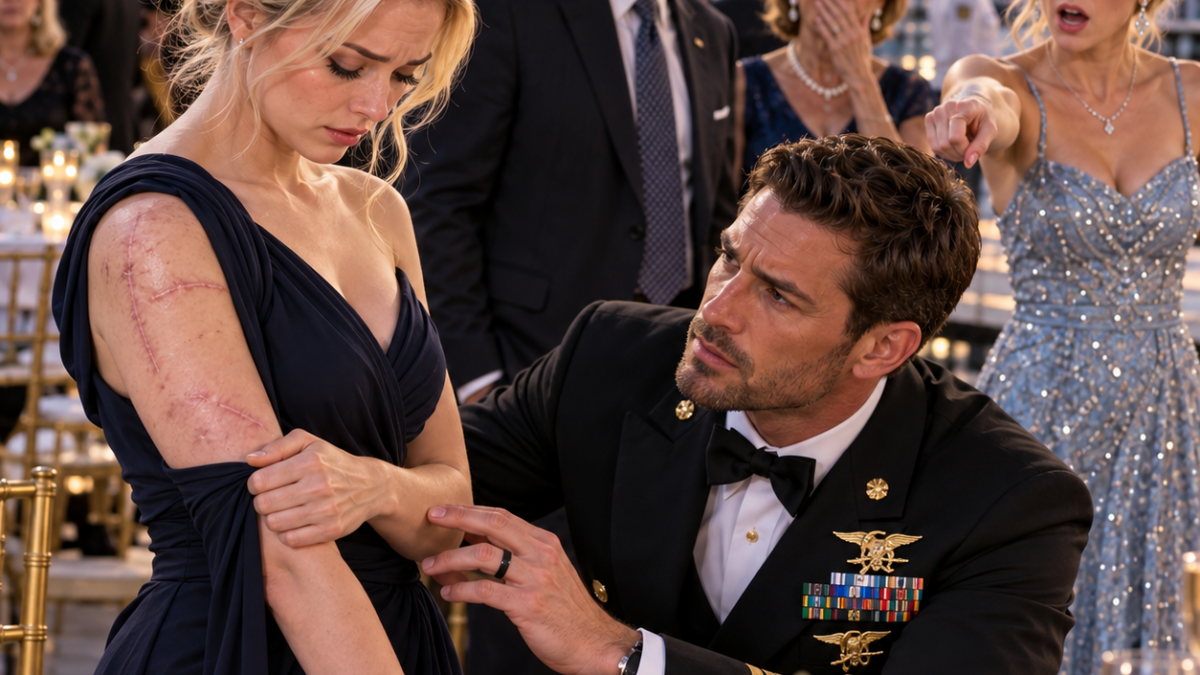
Six weeks later, I submitted my resignation paperwork.
Calling home was harder.
Mom cried before I finished.
Dad stayed silent so long I thought the call dropped.
Finally he said:
“We don’t quit in this family.”
Then he handed the phone back to Mom.
I should have called Claire that night.
I didn’t.
I told myself I needed time.
Then finals.
Then another meeting.
Then I wanted a better explanation.
Four days passed.
By the time I called, she had already heard Dad’s version.
Mara threw Annapolis away.
Claire did not answer.
At Christmas, she sat across from me wearing that same oversized sweatshirt.
Sixteen now.
Angry enough that her whole body seemed rigid.
Dad carved ham without looking at anyone.
Mom talked about weather.
Finally Claire said:
“So you just quit?”
“I changed direction.”
“You promised you’d tell me everything.”
“I was going to call.”
“You told Mom.”
“Yes.”
“You told Dad.”
“Yes.”
“But not me.”
“I was trying to figure out how.”
She stood.
“Apparently I wasn’t important enough to figure out.”
“Claire—”
“Congratulations, Mara.”
Her eyes filled.
“You’re a quitter.”
That was the first time she used the word.
I had no idea it would take seventeen years to understand why she never stopped.
part2
By the following summer, quitter had become part of the Bennett family vocabulary.
Dad used it when disappointment needed humor.
Mom repeated it occasionally and looked guilty afterward.
Claire learned to deliver it with the cheerful cruelty people develop when they discover everyone else will let them continue.
At cookouts:
“This is Mara, our famous Annapolis dropout.”
At Christmas:
“Careful asking Mara for commitment.”
At birthdays:
“She might quit halfway through dessert.”
If someone asked what happened, I smiled.
“Long story.”
Eventually, silence became easier than explanation.
I enlisted in February 2010 and arrived at Great Lakes during an Illinois winter cold enough to freeze moisture on my eyelashes.
Nobody knew I had spent two years at Annapolis.
I liked that.
I was simply Bennett.
Older than some recruits.
Strong swimmer.
Quiet.
I made mistakes.
Got yelled at.
Cleaned things that were already clean.
Waited in lines.
Learned how quickly status disappears when everyone wears the same uniform.
Then came rescue swimmer school in Pensacola.
Whatever romantic version of the job I had built after Elise disappeared during the first week.
The instructors did not care about calling.
They cared about what happened when exhaustion stripped every noble thought away.
People stronger than me quit.
People faster than me quit.
On more than one morning, I leaned over a trash can beside the pool wondering whether Dad had been right.
Maybe I had traded Annapolis for another failure.
Senior Chief Victor Salazar ran our class.
Thick neck.
Sunburned scalp.
Patience like concrete.
On graduation day, he looked at those of us still standing.
“This job is not about being the best swimmer.”
Then he tapped two fingers against his chest.
“It’s about what you do when somebody else has nothing left.”
His eyes moved down the line.
“You don’t let go before they do.”
The phrase went through me.
Claire.
Hampton River.
Tiny hands around my wrists.
I’ve got you.
I don’t let go.
I received my wings.
Spent the following years with helicopter squadrons out of Norfolk.
The ocean taught me quickly that pool confidence meant nothing outside a pool.
Cold.
Darkness.
Rotor wash.
Waves taller than houses.
Fishing boats.
Training accidents.
Sick sailors.
Searches where we found people.
Searches where we did not.
Long launches that ended halfway out because another crew reached the scene first.
My family knew I flew in helicopters.
That was almost everything they wanted to know.
Dad called it “the Navy thing.”
Mom told neighbors I taught swimming.
Claire once asked whether helicopters made me seasick, then spent twenty minutes describing a dentist she was dating.
At first, I corrected them.
Then less.
Every promotion created the same response from Dad.
A nod.
“Does that mean more money?”
Then a new subject.
Eventually I stopped mentioning promotions.
Then came February 14, 2016.
A special warfare training boat rolled in heavy Atlantic seas roughly forty miles east of the Virginia Capes.
Seven men recovered quickly.
An eighth drifted away in darkness and freezing water.
His emergency strobe became the only stable point in an ocean made of black waves.
I was twenty-six, sitting in the open cabin door of a Seahawk while Lieutenant Tessa Ward fought to hold position.
The ocean below looked like moving asphalt.
The strobe vanished into a trough.
Reappeared.
Vanished.
Reappeared.
“Swimmer ready.”
Tessa answered through my headset.
“Go get him.”
The water was forty-one degrees.
Training prepares your mind for cold.
Nothing prepares your body.
The impact felt like being struck.
I surfaced in spray.
Found the strobe.
Lost it.
Found it.
Swam.
A wave lifted me high enough to see a face fifty feet away.
He was barely conscious.
Gray lips.
Slow movement.
When I reached him and grabbed his harness, his hand closed around my right forearm so hard it hurt.
“I’ve got you!”
His eyes moved toward me but did not focus.
“I don’t let go.”
We attached to the rescue hook.
The crew started lifting.
Maybe ten feet above the water, a wave swung us sideways.
The cable fed badly across the hoist assembly.
The crew stopped the lift before something catastrophic happened.
We dropped back into the sea, still tethered beneath the aircraft.
Twenty-two minutes.
That is how long the crew fought the hoist while I fought the Atlantic.
The man kept fading.
A cable or hook assembly ripped across the inside of my right forearm.
I saw blood in the water before realizing it was mine.
I held his head against my shoulder.
Talked constantly.
Marina.
Swimming.
My sister.
Anything.
Mostly the same sentence.
“I’ve got you.”
His breathing changed.
“I don’t let go.”
When the hoist finally moved, the crew dragged us inside together.
Red cabin lights.
Medics cutting gear.
Someone wrapping my arm.
I never got a proper look at the man’s face.
At the hospital, he went one direction.
I went another.
I never learned his name.
Later that year, I received the Navy and Marine Corps Medal for heroism not involving combat.
My mother got a copy of the official correspondence because I had never updated an old emergency contact address.
Years later, she admitted she saw the government envelope, assumed it involved benefits, and put it in a drawer unopened.
By then I expected nothing else.
A month after the ceremony, I walked into a tattoo shop in Norfolk.
Along the scar on my right forearm, I had the date inked in small black numbers.
14 FEB 2016.
Below it, a tiny rescue hook.
Ten years later, Claire asked me to cover it because she did not want her fiancé’s friends seeing evidence of my “little Navy phase.”
I covered it.
I had no idea her fiancé had spent a decade searching for the arm under my sleeve.
Claire called about her engagement while I was standing on the training pool deck in Pensacola.
I had eventually become an instructor.
Nineteen candidates were hauling themselves from the water after conditioning.
“Mara, I’m engaged.”
I smiled.
“That poor man.”
“Can you not?”
“I’m happy for you.”
She talked for five minutes.
Patient.
Funny.
Thirty-six.
Calls his mother every Sunday.
Then her voice dropped.
“He’s a SEAL.”
“A real one?”
“Mara.”
“Sorry.”
“His whole team is coming to the engagement party, so please don’t make the Navy thing weird.”
I stared across the pool.
“What would weird look like?”
“You know.”
“No.”
“Annapolis. Quitting. Whatever you say if they ask.”
Seventeen years of habit answered before pride could.
“Okay.”
A week before the party, nine texts came while I was buying groceries.
Waterfront restaurant.
Sixty guests.
Evan’s teammates.
Then:
Long sleeves please.
No tattoo.
If anyone asks, just say you teach swimming.
I bought a cream blouse with buttoned cuffs.
On May 16, I arrived to string lights, white hydrangeas, salt air, perfume, and charter boats coming under the bridge.
Mom hugged me.
Then checked my wrists.
Dad gave me the kind of handshake men use with neighbors.
Claire looked beautiful.
White dress.
Ring catching every light.
“You came.”
She hugged me.
Then glanced at my sleeves.
“Perfect.”
Something about that hurt.
I ignored it.
“Come meet Evan.”
Nine men stood near the railing.
Relaxed in that specific way people become relaxed after years of training themselves never to be careless.
Claire pulled me toward one.
Broad shoulders.
Close-cut brown hair graying at the temples.
He looked at Claire first.
The affection in that glance made me like him immediately.
“Evan, this is my sister.”
Claire lifted her voice.
“The quitter.”
Two men nearby turned.
“She washed out of Annapolis in year three.”
Polite laughter.
Not much.
Enough.
Evan did not laugh.
He extended his hand.
I reached.
The button on my right cuff slipped loose.
My sleeve slid perhaps four inches.
Enough.
His eyes dropped.
Scar.
Numbers.
Hook.
His entire face went still.
The handshake changed.
Not tighter.
Stopped being automatic.
Claire was still smiling.
“Babe?”
Evan let go of her hand.
Their fingers had been interlaced.
Now his arm hung at his side.
His mouth moved.
“February fourteenth.”
Nobody laughed.
He unbuttoned his left cuff.
Slowly.
Rolled his sleeve.
Black lettering.
14 FEB 2016.
Below it:
A tiny emergency strobe.
Claire looked at his arm.
Then mine.
The color left her face.
A red-bearded teammate gently placed his drink on the railing.
Evan’s eyes filled.
“You kept saying you wouldn’t let go.”
My throat closed.
“I never saw your face,” he said.
Nobody around us moved.
“You had the hood. Mask. Spray everywhere.”
He looked down at my arm again.
“I’ve been trying to find you for ten years.”
I managed to nod.
Claire whispered:
“What is he talking about?”
Evan barely seemed to hear her.
He asked if I would walk down to the dock.
We left the party.
Beside a fish-cleaning station, he told me his side.
Freezing water.
Strobe.
Losing consciousness.
Coming back because a woman’s voice kept ordering him to stay awake.
He had asked his command for my name after recovery.
Restricted report.
All anyone would tell him was that the swimmer had been a woman.
“I got the tattoo because of the strobe.”
He looked at his arm.
“It was the last thing I could see before you reached me.”
I looked at mine.
“I got mine because I almost lost you.”
He laughed once.
No humor.
“And now I’m marrying your sister.”
The sentence hung there.
“Did she know?”
“No.”
“Your parents?”
“Not about that rescue.”
“About what you do?”
“In theory.”
He looked toward the restaurant deck.
“She introduced the woman who saved my life as a quitter.”
Something ugly rose inside me.
A seventeen-year-old desire to be vindicated.
See?
Now someone important believes me.
I hated the feeling.
“She was sixteen when this started.”
Evan looked at me.
“She’s thirty-three now.”
“I know.”
When we returned upstairs, Claire was gone.
I found her in the parking lot.
Sitting sideways in the driver’s seat.
Mascara down her cheeks.
“You let me say it.”
“I didn’t know who Evan was.”
“You let me say it for seventeen years.”
“That’s not the same.”
“Isn’t it?”
Her voice cracked.
“His whole team thinks I spent years humiliating the woman who saved his life.”
“You did spend years humiliating me.”
She flinched.
That was the first time I had said it without softening.
Anger replaced embarrassment.
“You could have corrected me.”
“You could have asked.”
“You could have told me.”
“You stopped listening before I knew how.”
Her mouth opened.
Closed.
She climbed fully into the car.
“Go enjoy being everybody’s hero.”
She drove away.
I stood there while taillights disappeared toward Atlantic Avenue.
That night, in a hotel room, I called Tessa Ward.
She listened.
Then asked:
“You want comfort or truth?”
“Truth.”
“You didn’t tell them because you were angry they didn’t ask.”
I stared at the black ocean outside my window.
“That doesn’t excuse what they did,” Tessa continued. “But silence becomes a choice eventually, Mara.”
That sentence followed me to bed.
Three days later, Mom called.
Her voice sounded wrong.
“I found something in your father’s old marina desk.”
“What?”
“A letter.”
I sat down.
“It’s addressed to Claire.”
I stopped breathing.
“In your handwriting.”
The envelope had been postmarked December 14, 2009.
Four days after I called home.
Two days before Christmas break.
Claire’s name in my block handwriting.
The envelope had been opened.
Mom sent me a photograph.
Memory came back all at once.
I had written that letter.
Eight pages.
At a library desk after Claire ignored my calls.
I explained Elise.
The capsized boat.
Lieutenant Commander Price.
Rescue swimmer training.
My fear.
My shame.
How terrified I was that leaving Annapolis would make everyone believe I failed.
At the end:
Please don’t think I’m leaving you. I’m trying to become somebody I can live with.
Claire never replied.
Eventually I decided she had read it and remained angry.
“Where did you find it?”
“In Dad’s paperwork.”
“Why does Dad have it?”
Mom went silent.
“Mom.”
“I don’t know.”
That answer lasted less than one day.
I drove to Hampton.
Same kitchen table where Claire first called me a quitter.
Dad came in from the garage smelling like oil.
Saw the envelope.
His face changed.
That was enough.
“You took it.”
He pulled out a chair but did not sit.
“I was angry.”
“You took mail addressed to Claire.”
“She was a kid.”
“She was sixteen.”
“You had already upset everyone.”
“So you opened my letter?”
“It came to my house.”
I laughed.
Not because it was funny.
“Did you read it?”
“Yes.”
“Did you hide it?”
Dad stared toward the counter.
“Yes.”
Mom gripped the edge.
I felt something inside me go very still.
“Why?”
“You were making the Navy sound noble.”
I stared.
“What?”
“You were trying to make Claire believe leaving Annapolis was brave instead of irresponsible.”
“So you decided she shouldn’t hear from me?”
“I thought you needed to live with your decision.”
“No.”
My voice shook.
“You made Claire live with your decision.”
Dad looked away.
That hurt worse.
For seventeen years, I blamed myself.
Some of that blame belonged to me.
I called late.
Avoided confrontation.
Turned silence into pride.
But I had explained once.
I had written everything.
Sent it to the one person who mattered most.
Dad made sure she never received it.
“Does Claire know?” Mom whispered.
“Not yet.”
Dad snapped toward me.
“There’s no reason to stir this up again.”
I stood.
“That sentence is the reason.”
“Mara.”
“Her wedding is already in trouble because of all this.”
“Because she spent seventeen years calling me a failure.”
“And who let her?”
The words landed because they were partly true.
I picked up the envelope.
“You did.”
From the marina parking lot, I called Claire.
No answer.
So I photographed every page.
Sent them.
Twelve minutes later:
“Where did you get this?”
“Dad’s desk.”
Silence.
“He had it?”
“Yes.”
“All these years?”
“Yes.”
Her breathing changed.
“Did Mom know?”
“No.”
“Did you?”
“No.”
Long silence.
“I need to go.”
The wedding was paused that afternoon.
Evan called two days later.
Exhausted.
“She hasn’t slept.”
“I’m sorry.”
“She keeps reading your letter.”
“That probably isn’t helping.”
“She says she spent half her life believing you chose the Navy over her.”
“I did choose a different Navy life.”
“That’s not what I said.”
I looked through my office window at the training pool.
Candidates moved through drills below.
“No.”
I swallowed.
“It isn’t.”
Evan said he loved Claire.
But now he needed to understand who she became when she felt abandoned.
The engagement-party insult was not only about my career.
It was about how Claire turned hurt into ridicule.
And kept feeding the ridicule long after the wound itself should have been questioned.
“Don’t punish her for me.”
“I’m not.”
“She was sixteen.”
“She wasn’t sixteen at the engagement party.”
I had no answer.
That weekend, Claire drove to our parents’ house.
Mom later told me the shouting lasted less than ten minutes.
Claire walked into Dad’s study.
Placed the copied letter on his desk.
“Did you read this before you hid it?”
“Yes.”
“Did you know she said she wasn’t leaving me?”
“Yes.”
“And you let me believe she did?”
Dad tried explaining.
His disappointment.
His anger.
The future I supposedly threw away.
Claire interrupted.
“No. I asked whether you let me believe it.”
“Yes.
She left.
For the first time in seventeen years, quitter disappeared from the Bennett family.
Its absence did not feel like victory.
It felt like walking into a room after a loud machine shuts off and realizing how much noise you had accepted as normal.
I asked Claire to meet me at the marina before Fourth of July.
Dad had retired four years earlier, but the docks looked almost unchanged.
Gray boards.
Rust.
Gulls.
Fuel smell.
Water against pilings.
I sat with my shoes beside me.
At 9:25, footsteps approached.
Claire sat three feet away.
Shorts.
My old swim-team sweatshirt.
We watched a pelican hit the river like a bag of laundry thrown from a moving truck.
Then she said:
“I thought you stopped loving me.”
Simple.
Devastating.
“I didn’t.”
“I know now.”
“I should have called sooner.”
“You sent the letter.”
“I also spent seventeen years pretending it didn’t matter that you never answered.”
Claire pulled the sweatshirt sleeves over her hands.
“I thought you wrote Mom and Dad. I thought I was the one person you didn’t bother explaining it to.”
“I thought you read eight pages and decided I was still a quitter.”
We looked at each other.
The entire tragedy suddenly seemed absurd.
Two sisters.
Nearly half their lives.
Both reacting to a conversation neither one had actually received.
Claire cried first.
“The letter explains sixteen.”
She wiped her face.
“It doesn’t explain thirty-three.”
I said nothing.
“I kept using the word because I knew it hurt.”
She looked ashamed.
“Every time you smiled, I told myself that meant it didn’t.”
“It hurt.”
“I know.”
“I let you keep doing it because correcting you meant admitting I wanted you to care.”
Claire almost laughed through tears.
“That sounds like us.”
“Unfortunately.”
Then I told her everything.
Elise.
The dinghy.
Price.
Dad.
Boot camp.
Pensacola.
Salazar.
The first time I almost quit training.
Promotions.
Rescues.
Things no one in the family had ever asked about.
Finally:
February 14.
The rolled boat.
The strobe.
The Atlantic.
The hoist jam.
The cable opening my arm.
Twenty-two minutes.
Evan slipping away.
My voice in his ear.
“I’ve got you.”
Claire covered her mouth.
“I don’t let go.”
Her eyes went toward the little beach beside the boat ramp.
“That’s what you used to tell me.”
“I know.”
Claire stood.
Walked down the dock.
Crossed the sand.
Went straight into the river wearing the sweatshirt.
Water to her thighs.
“You’re ruining your clothes.”
She turned.
“You coming?”
I went.
Warm water.
Mud.
July.
When I reached her, Claire wrapped both arms around me the way she had at three.
We cried hard enough that two fishermen nearby suddenly became very interested in their tackle boxes.
It was not forgiveness.
Not yet.
It was simply the first honest thing we had done together in years.
Two weeks later, Evan’s teammates hosted a cookout.
Claire stood on the back steps with a paper plate.
Thirty people went quiet.
“At my engagement party, I introduced my sister Mara as the quitter.”
She took a breath.
“Some of you heard it. Most of you heard about it.”
Evan stood near the grill.
Claire continued.
“I want to correct it in front of people who heard the first version.”
She looked toward me.
“Mara did not quit on our family.”
Her voice shook.
“Our family stopped listening to her.”
Nobody moved.
“I was hurt when I was sixteen. That part was real.”
Then:
“But I used that hurt as permission to humiliate her for seventeen years.”
She swallowed.
“That belongs to me.”
Nobody applauded.
I was glad.
A public apology is not a performance you earn applause for.
Grant Mercer, Evan’s red-bearded teammate, simply handed Claire a beer when she sat down.
Later Evan called.
“That mattered.”
“I’m glad.”
“I’m still angry with her.”
“You’re allowed.”
“She understands that now.”
“So do I.”
Claire and I started talking every Sunday.
Her rule.
One thing we had never told each other.
Sometimes serious.
Sometimes stupid.
She admitted she once backed Mom’s car into a piling and blamed a shopping cart.
I told her about a rescue swimmer candidate who swallowed so much pool water he burped through an entire debrief.
Trust returned in teaspoons.
Dad stayed outside it.
He texted once.
I hope you understand I was trying to keep this family from being pulled apart by an impulsive decision.
I replied:
You intercepted a letter between your daughters. I understand exactly what you did.
No answer.
Mom called more often.
She apologized for letting Dad’s disappointment become the official family history.
Unlike him, she stopped adding but afterward.
In late July, Claire and Evan set a new wedding date.
September 26.
Then Claire surprised everyone.
Mom would walk her down the aisle.
Dad would be invited.
As a guest.
When Dad called me furious, he expected support.
“It’s her wedding.”
“You know what this means to me.”
“Yes.”
“And you’re fine with it?”
I thought about Claire at sixteen.
A letter hidden because Dad believed he knew what she deserved to hear.
“I think consequences often mean something to the person experiencing them.”
He hung up.
I sat afterward and realized I did not feel triumphant.
I simply felt finished protecting him from the result of his own decisions.
In August, I flew to Virginia for a long weekend.
Mom asked me to come by.
Dad sat on the back porch with iced tea.
Cicadas screamed in the trees.
For several minutes, nothing.
Then:
“Your mother thinks I owe you an apology.”
“Do you?”
He looked irritated.
“I handled the letter badly.”
“That sounds like something a company says after poisoning a river.”
His mouth tightened.
I inherited that expression.
“I was furious.”
“I know.”
“You had everything.”
“No.”
I looked at him.
“I had what you wanted me to have.”
“You wanted Annapolis.”
“I did.”
“Then you threw away a commission.”
“I gave it up.”
“Same thing.”
“It isn’t.”
Dad looked toward the yard.
“Do you know how proud I was?”
“Yes.”
“That was part of the problem.”
He turned.
“What does that mean?”
I took a breath.
“You weren’t proud of me.”
He flinched.
“You were proud of what Annapolis said about you.”
“That’s unfair.”
“When I left, you never asked why.”
“Mara—”
“When I became a rescue swimmer, you never asked what that meant.”
He stopped.
“When I promoted, you asked if I got a raise.”
Mom stood behind the screen door.
“When the Navy sent Mom the citation for my medal, it sat unopened for ten years because nobody cared enough to read the first page.”
Dad rubbed his face.
For the first time, he looked old.
“I read it yesterday.”
I said nothing.
“Your mother gave it to me.”
Still nothing.
He reached into his shirt pocket.
Folded photocopy.
“You went into forty-one-degree water.”
“Yes.”
“You stayed twenty-two minutes after the hoist jammed.”
“Yes.”
“You were bleeding.”
“Yes.”
His voice cracked.
“Why didn’t you tell me?”
I had imagined that question for years.
In every fantasy, I had a devastating answer.
The real one came quietly.
“Because you never made me believe you wanted to know.”
Dad stared at the paper.
“I wanted you to be an officer.”
“I know.”
“You were good enough.”
“I know.”
“I thought leaving meant you were scared to finish.”
“I was scared.”
He looked up.
“I was terrified.”
That surprised him.
“I was scared of disappointing you. Scared I wasted two years. Scared I’d fail rescue swimmer school and prove you right.”
I paused.
“Courage wasn’t the absence of that.”
The porch went quiet.
Finally Dad said:
“I should have mailed the letter.”
“Yes.”
“I should never have opened it.”
“Yes.”
“I can’t undo it.”
“No.”
He waited.
Maybe expecting me to comfort him.
I did not.
“I’m sorry, Mara.”
No but.
First time.
I believed him.
That did not equal forgiveness.
“I accept that you’re sorry.”
His eyes lifted.
“I’m not ready to tell you we’re fine.”
Pain moved across his face.
I let it stay.
A week later, Claire said he had apologized to her too.
She told him she loved him.
Mom was still walking her down the aisle.
“He cried,” Claire said.
“How did that feel?”
“Terrible.”
“Want to change your mind?”
“No.”
“Then terrible might just be part of it.”
She laughed softly.
“When did you become ruthless?”
“Pensacola.”
By September, I was leading a new rescue swimmer class through final weeks.
Nineteen started.
Eight remained.
One was Riley Nash.
Twenty-one.
Arkansas.
Nearly quit in week three.
I found her sitting by the pool after a brutal day.
“I don’t think I’m built for this.”
“Maybe not.”
She looked offended.
“Being unsure doesn’t mean you leave.”
I sat beside her.
“It means tomorrow you decide again.”
“Did you ever want to quit?”
I almost laughed.
“More than once.”
She looked at my forearm.
“What happened?”
“Long story.”
“Good ending?”
I thought.
“Still being written.”
Two weeks before the wedding, Evan called.
“I need a favor.”
“That sentence is never good.”
“Wear something sleeveless.”
I looked down at the scar.
“Why?”
“Trust me.”
“That’s unfair.”
“I know.”
“What are you planning?”
“Not telling.”
Claire claimed ignorance.
For once, I believed her.
The night before graduation, storms moved across the Gulf.
The pool ceremony moved indoors.
Airports started filling with delays.
Claire’s wedding was less than twenty-eight hours away.
For the first time since I was sixteen, Dad asked Mom to save me a seat beside him.
Graduation ran forty minutes late.
Riley cried so hard when I pinned her wings she could not properly salute.
Her father came down from the bleachers and saluted for her.
Everybody laughed.
Riley laughed too.
I thought about Salazar.
What you do when somebody else has nothing left.
Then I changed.
Grabbed the garment bag.
Drove to the airport through heavy rain.
Flight delayed.
Again.
Atlanta covered in thunderstorms.
At 10:40 p.m., Claire texted:
Where are you?
Pensacola. Still trying.
Then:
You promised.
I stared.
Another message:
Sorry. Bad joke. I know you’re coming.
I typed:
I don’t let go.
Her response arrived immediately.
I know.
I landed in Norfolk at one in the morning.
The wedding began at four.
Marina lawn above the boat ramp.
Overnight storms had washed the sky clean.
River silver under September light.
I wore sleeveless.
Scar visible.
Tattoo visible.
Mom walked Claire down the aisle.
Dad sat front row.
I expected it to break him.
Instead, when Claire reached his seat, she stopped.
Kissed his cheek.
Whispered something.
Dad nodded through tears.
Let her continue.
That was the first sign he might be learning the difference between losing control and losing family.
Claire reached the front.
Took my hand before Evan’s.
One second.
Enough.
The ceremony was simple.
Evan cried through his vows.
Claire teased him while crying harder.
When they were pronounced married, eight men from Evan’s team stood almost together.
At dinner, Dad sat beside me.
“I’m glad you made it.”
“Me too.”
“I kept checking the road.”
“I came by plane.”
“I know.”
We laughed.
Awkward.
Better than pretending closeness.
After dessert, Grant Mercer tapped a glass.
“Evan asked the team for help with something.”
Two men carried a rectangular wooden frame toward the head table.
The moment I saw what was inside, my hands went cold.
A battered white emergency strobe.
Scratched.
Lens cracked.
Evan’s.
February 14, 2016.
A brass plate below:
14 FEB 2016
SHE DID NOT LET GO
I turned toward him.
“You kept it?”
Evan nodded.
“It was in my gear when they returned everything after the hospital.”
Grant took the microphone.
“This idiot carried that thing every time he moved for ten years.”
Laughter.
“He said it belonged to whoever followed the light.”
Everyone laughed except me.
I was crying too hard.
The frame was heavier than it looked.
Claire came around the table.
One arm around my shoulders.
“I told him short sleeves,” Evan said.
“That was manipulative.”
“I know.”
Then Dad stood.
For one terrible second, I thought he would give the grand speech he had spent seventeen years believing belonged to him.
Instead he walked over.
No microphone.
Looked at the strobe.
Then my scar.
“I’m sorry.”
Quiet.
Only nearby tables heard.
I nodded.
Then he turned to Evan.
“I owe you something too.”
Evan looked confused.
Dad swallowed.
“For years, I told people Mara quit.”
Nearby conversation faded.
“I made that the story because I couldn’t stand that she chose a life I didn’t choose for her.”
He looked toward Claire.
“I interfered between my daughters because I wanted Mara to feel the cost of disappointing me.”
His face tightened.
“I called that teaching responsibility.”
He shook his head.
“I was wrong.”
No demand for forgiveness.
No defense.
He sat down.
That mattered more than a perfect speech.
Later, I carried the strobe down to the dock for air.
Claire followed.
We stopped near the little beach where I taught her to swim.
“You forgive him?”
“No.”
Claire looked surprised.
“Maybe someday.”
I stared at the water.
“But forgiveness isn’t the price of admitting someone apologized.”
She nodded.
“Do you forgive me?”
I considered lying.
“I’m working on it.”
“That’s fair.”
I looked at her.
“You?”
“For what?”
“For me leaving and not calling fast enough.”
Claire nudged my shoulder.
“I’m working on it.”
“That’s fair too.”
We laughed.
Neither of us pretending one summer repaired seventeen years.
Music started behind us.
Claire held out her hand.
“Come dance.”
“I hate dancing.”
“You jumped into the Atlantic in winter.”
“That required less coordination.”
“Mara.”
I took her hand.
Some promises are kept by never leaving.
Others are kept by finding your way back without pretending you were never gone.
It is October now.
I am back in Pensacola.
Pool deck before sunrise.
Nineteen new candidates in the water.
Whistle against my chest.
Chlorine.
Wet concrete.
Coughing.
Bad kicks.
Recovery.
My framed strobe sits on the shelf in my office.
Beside it:
The old letter.
Claire asked if I wanted the original.
Dad gave it to me.
I kept it not because I enjoy seeing it.
Because it reminds me how much damage can grow from one person deciding what another deserves to know.
Dad and I speak sometimes.
Not weekly.
Sometimes.
He stopped asking Mom to put him on the phone unexpectedly.
I stopped answering messages from obligation.
Last month, he invited me fishing.
I already had plans.
I said no.
He replied:
Another time.
That sounds small.
In my family, it is not.
Mom reads every piece of mail now.
Two weeks after the wedding, she forwarded me a catalog addressed to somebody else because, as she wrote:
I’m not taking chances anymore.
Claire and I still talk Sundays.
One new thing.
Last week she admitted she hates oysters and pretended to like them because Evan loved the restaurant where they met.
I told her I once failed a basic knot-tying evaluation in rescue swimmer school and spent an entire weekend practicing with a shoelace because I was too embarrassed to ask for rope.
“You failed something?”
“Often.”
“Should I call you a quitter?”
Silence.
Then:
“Sorry. That wasn’t funny.”
A year ago I would have said:
It’s fine.
Instead:
“Not yet.”
“Okay.”
That might be the biggest change between us.
We no longer require the other person to pretend something does not hurt.
Evan and Claire took a short honeymoon to the Outer Banks.
A postcard arrived yesterday.
Lighthouse.
Ridiculous sunset.
On the back, Claire wrote:
You’ve got me. You don’t let go.
Below it, Evan added:
Can confirm.
I laughed loudly enough that Riley Nash stuck her head into my office.
“What’s wrong?”
“Family.”
She nodded like that explained everything.
Then she noticed the strobe.
“That the good ending?”
I looked at it.
“No.”
Riley raised an eyebrow.
“It’s evidence.”
“Of what?”
“That endings are mostly something people invent because they get tired of telling the story.”
“That sounds depressing, Chief.”
“It isn’t.”
We walked toward the pool.
What happened at Claire’s engagement party did not make me a hero.
The rescue happened ten years earlier.
The people I worked with already knew what it meant.
It did not magically make Claire a better sister either.
Something simpler happened.
She humiliated me in front of people whose respect mattered deeply to the man she loved.
Her cruelty became impossible to dismiss as a family joke.
The consequence forced her to ask why she needed the joke.
Then the letter forced all of us to ask something worse.
Who benefited from keeping the old story alive?
Dad did.
As long as I was the quitter, he never had to examine why my leaving Annapolis felt like betrayal.
Mom benefited too.
Quietly.
Allowing Dad’s version to stand meant she never had to confront him.
Claire benefited because anger hurt less than abandonment.
And I benefited.
That was the hardest part to admit.
Silence let me feel morally superior.
Nobody asked.
Nobody cared.
Fine.
I would keep everything.
That protected me from another rejection.
We all used the same lie for different reasons.
A medal could not fix that.
A tattoo could not.
A Navy SEAL team could not.
A wedding speech could not.
Only honesty could.
Slowly.
Repeatedly.
Without applause.
The whistle blows.
Nineteen candidates reach the wall.
One young man has struggled all morning.
His face has that particular expression of someone waiting for permission to either collapse or escape.
He misses the edge.
Finds it.
Looks toward me.
I do not rescue him.
I do not release him.
“Breathe.”
He does.
“Again.”
Another breath.
“Ready?”
He nods.
“Go.”
He pushes away from the wall.
That is something people misunderstand about not letting go.
It does not mean carrying another person forever.
It does not mean forgiving everything.
It does not mean allowing someone to hurt you because they share your blood.
Sometimes not letting go means refusing to let go of the truth.
Sometimes it means maintaining a boundary while someone on the other side cries.
Sometimes it means understanding the person who wounded you was wounded too without deciding that makes the wound acceptable.
I love Claire.
I may forgive everything eventually.
Maybe I already forgive more than I realize.
I love Dad too.
That does not require returning us to what we were before I found the letter.
He made a choice that changed two daughters’ lives for seventeen years.
Apology is the beginning of accountability.
Not cancellation.
The candidates reach the far wall.
The struggling young man grabs the edge.
Coughing.
I call:
“You done?”
He shakes his head.
“Then come back.”
He pushes off.
Sunlight comes through high windows and breaks across the lane lines.
For one second I am seven again.
Hampton River.
Claire’s tiny hands around my wrists.
Don’t let go.
I know better now.
You cannot promise never to leave.
You cannot promise never to disappoint someone.
Love does not prevent people from hurting each other.
The only promise worth making is that when truth becomes difficult, you will not replace it with a more convenient story.
I spent seventeen years letting my family call me a quitter because fighting the word seemed exhausting.
Claire spent seventeen years saying it because believing I had quit was easier than believing I had left her.
Dad spent seventeen years defending it because admitting I chose my own life meant admitting my life belonged to me.
Then one loose shirt cuff exposed a scar.
One man recognized a date.
One insult finally created enough consequence to crack the story open.
The truth underneath was not cleaner.
It was simply ours.
At lunch, I return to my office.
Read Claire’s postcard again.
You’ve got me. You don’t let go.
I write the date in one corner.
Place it beside the strobe.
The medal citation.
The seventeen-year-old letter she never received.
Not trophies.
Not proof.
Reminders.
People can love you and still fail you.
People can regret what they did without earning immediate forgiveness.
People can come back without returning to the place they once occupied.
And sometimes the bravest thing you can do for someone you love is stop protecting them from the consequences of how they treated you.
Outside my office, a whistle blows.
Someone shouts that a lane line is tangled.
I stand.
Roll my shoulders.
Walk back toward the water.
For half my life, people called me the woman who quit.
The people who matter know better now.
More importantly, so do I.