. My Family Thought One Signature Was All They Needed to Own My Silence
part2
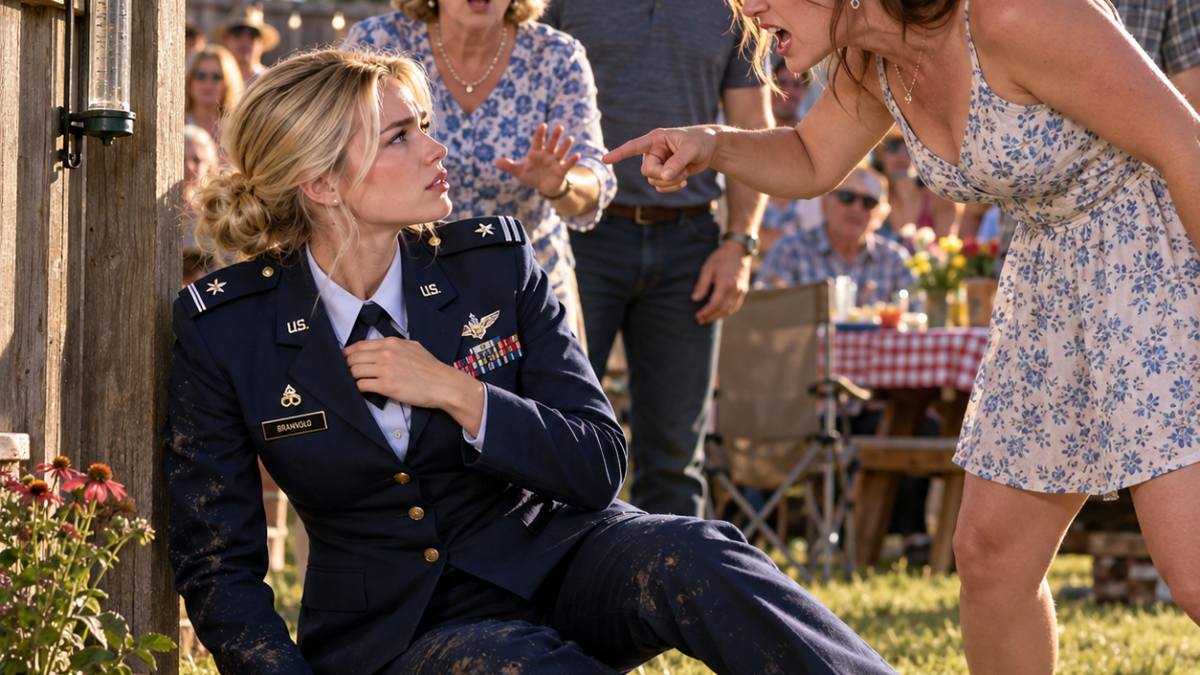
My heel caught the garden bricks before my shoulder hit Dad’s fence post. The rain gauge cracked against the ground, and for one strange second that bothered me more than the pain. Dad had checked that gauge almost every morning of my childhood. Six o’clock. Coffee in one hand. Pencil behind one ear. If I happened to be awake, he would make me read the number twice. Accuracy mattered to him even when the number disappointed him. Especially then.
Aunt Luella told me I was making a scene.
Mom told me to apologize.
Travis told me to stop ruining the reunion.
Brock smiled.
So I stood.
I picked up the broken rain gauge and wrapped it inside a kitchen towel. The silver Quinn Farms pen had landed in the grass near the brick edging, so I wrapped that too.
“I’m not apologizing for asking to read something.”
Mom pointed toward the driveway.
“Then go home.”
I did.
All 227 miles.
Alone.
Travis stayed behind with Brock.
That was the first moment I understood my marriage might be standing on the wrong side of the fence with everyone else.
At 11:52 that night, the family group chat vanished from my phone.
Darcy had removed me.
Two days later, photographs from the reunion appeared on Facebook. Big family picture in front of the Quonset. Kids in front. Older relatives sitting. Everyone smiling.
I had been cropped out.
Not badly.
Deliberately.
My left elbow was still visible near one edge.
Travis liked the post.
I showed him when he finally came home.
He shrugged.
“It’s a Facebook like, Cass.”
“They cropped your wife out.”
“You want me to unlike everybody now?”
“No.”
“What do you want?”
That question kept appearing everywhere because nobody wanted to hear the answer.
I wanted my husband to notice when people treated me badly.
I wanted my mother to care that one daughter had shoved the other.
I wanted Darcy to send me four pages instead of one signature line.
I wanted my family to stop using the word loyalty when they meant obedience.
Thursday morning, I drove to Norville Steel’s office. I put Dad’s funeral program on his desk.
Life estate.
Remainder.
All three.
He read the words, then opened the estate file.
“Brock’s attorney requested information about your father’s estate last month.”
My stomach tightened.
“Why?”
“They checked the recorded deed.”
“And?”
Norville tapped a document.
“They know exactly what your ownership interest is.”
“So Brock knows he needs my signature.”
“Yes.”
“Darcy too?”
“Yes.”
I sat there looking at Dad’s name printed across a deed older than some marriages.
They had not forgotten my signature.
They had planned around it.
They knew I could stop the transfer.
That was why they had hidden the paperwork, pushed for a public commitment, and tried to turn refusal into betrayal.
I drove home four hours with that realization sitting beside me like a passenger.
When I opened my front door, Travis was waiting in the kitchen.
So was a manila envelope.
He stood beside the sink with a dish towel over one shoulder, looking as if he had rehearsed.
“Apologize, sign Monday, or leave.”
I closed the door behind me.
“This is my house too.”
“I want this finished.”
“Why?”
“Because everybody’s sick of your drama.”
I looked at the envelope.
“Where did that come from?”
“Darcy dropped it off.”
Inside was one sheet.
Page four.
My signature line.
Nothing else.
No property description.
No transfer terms.
No explanation of permanence.
Just my name beside a yellow SIGN HERE tab.
I held it up.
“Where are pages one through three?”
“You don’t need them.”
I stared at him.
“You’ve said that sentence eleven different ways this month.”
He slapped his palm against the counter.
“You humiliated Darcy.”
“She assaulted me.”
“She pushed you.”
“Interesting distinction.”
He rolled his eyes.
I examined the bottom of the page.
Transfer Application — Page 4 of 4.
The top edge had torn staple holes.
Someone had deliberately removed the signature page from the rest of the application.
I photographed it.
Then photographed the envelope.
Then photographed the Quinn Farms pen Dad’s broken rain gauge had delivered home with me.
Travis watched.
“What are you doing?”
“Reading.”
“You don’t even have the other pages.”
“Exactly.”
He muttered something under his breath and walked outside.
That night I emailed my commanding officer.
Six weeks earlier, I had declined a temporary assignment in Alaska because of family obligations. The slot involved weather support at a remote training location. Long days. Bad coffee. Cold air. Exactly what I needed.
I asked whether it was still available.
Nine minutes later, he responded.
It’s yours.
The next morning, I drove to Mom’s farm.
She stood behind the screen door in a church dress.
“Did you come to apologize?”
“No. I came to tell you I’m leaving for Alaska.”
Her face changed.
“For how long?”
“Six weeks.”
“Does Travis know?”
“Travis told me to leave.”
She finally opened the door.
Inside, Dad’s calendars still sat tied in Mom’s pantry. I wanted to pull every bundle out and look through them. I didn’t. Instead, I wrote my Alaska contact number on her current kitchen calendar.
Mom watched.
“You’re running away.”
“No.”
“That’s what it looks like.”
“I’m going to work.”
“And the family?”
“What family?”
She flinched.
I regretted the cruelty but not enough to take it back.
Monday morning Brock texted.
You just cost me a $9,000 extension fee.
Two minutes later:
Your husband says Alaska might cool you down.
I saved both messages.
The storm had finally started producing evidence.
The night before my flight, Brock came to my house with Darcy.
Travis let them inside before I reached the door.
Captain Nora Halberg, another Air Force officer, happened to be there picking up my dog Juniper for the first part of my assignment.
That became important.
Brock slammed a blue folder onto my kitchen island.
“Sign.”
“Pages one through three?”
“You don’t need them.”
Darcy snatched my military orders from the counter.
“Six weeks in Alaska?”
She threw them across the kitchen.
“That’s how much this family means to you.”
Nora quietly gathered the pages without saying anything.
I kept my eyes on Brock.
“Show me the full application.”
“What difference does it make?”
“If it makes no difference, show it to me.”
Brock’s face reddened.
“You want to know why this matters so much?”
“Yes.”
He looked toward Travis.
“Ask your husband what your signature is worth.”
The room changed.
I turned.
Travis had gone pale.
“What does he mean?”
Nobody answered.
I waited.
Finally Brock did.
“Forty-six thousand dollars.”
I did not understand.
“Explain.”
Travis had borrowed $46,000 from Brock after a fencing contract collapsed the previous year.
My husband had never told me.
Brock had agreed to forgive the debt if Travis delivered my signature on the water transfer.
My marriage had been priced.
Forty-six thousand dollars.
I looked at Travis.
“You knew?”
His mouth opened.
“I was trying to save the business.”
“With my father’s land?”
“I was going to explain.”
“When?”
He looked down.
“After you signed.”
That answer ended more than he understood.
Darcy folded her arms.
“Stop acting betrayed. Travis was protecting your household.”
“No. He was protecting himself.”
Brock stepped toward me.
Nora moved between us instantly.
“Sir, back up.”
Her voice remained calm.
Juniper growled from beside her travel crate.
I pointed toward the front door.
“Get out.”
Darcy picked up the folder.
“You’ll regret this when Mom is gone and nobody in this county wants anything to do with you.”
“I’ll still have the deed.”
She slammed the door hard enough to knock our wedding picture crooked.
Travis remained in the kitchen.
“Cass, please.”
“You’ll have plenty of time to explain.”
“What does that mean?”
I picked up my duffel.
Nora took Juniper’s leash.
“At 5:40 tomorrow morning, I’m getting on a plane. When I come back, we’ll talk through lawyers.”
His face collapsed.
“You can’t be serious.”
“You sold my signature before you even asked me for it.”
“I didn’t sell anything.”
“You attached a dollar amount to my compliance.”
“That’s not fair.”
“No, Travis. Fair would have been telling your wife you owed forty-six thousand dollars.”
I walked out.
Nine days after I arrived in Alaska, Nebraska called.
The woman on the phone introduced herself as Renee Vondracek from the local Natural Resources District.
She asked whether I had signed an irrigation transfer application.
“No.”
I made the word clear.
Not maybe.
Not verbally.
No.
An application had been filed after I left Nebraska. It requested transferring all 110 certified irrigated acres from Mom’s property to Brock’s new parcel.
Permanently.
Darcy had signed.
Mom had signed.
Brock had signed.
My line remained blank.
The application also certified that all affected owners had agreed.
“I specifically refused,” I told Renee. “They refused to show me the complete application.”
“Then we cannot approve the transfer.”
Relief moved through me, followed immediately by anger.
I sent written confirmation.
A week later, Brock’s attorney finally emailed all four pages.
Page one identified the properties.
Page two contained the word PERMANENT.
Page three listed Mom’s payment at $22,000 and certified that every affected ownership interest supported the transfer.
Page four was my signature line.
The same page they had kept bringing me alone.
I replied with one sentence.
I have now read the complete application. My answer is no.
Travis called that evening.
He sounded exhausted.
“Brock called the note.”
“Good.”
“Cass, I don’t have forty-six thousand dollars.”
“You had sixteen months to tell me that.”
“He said the debt disappeared if you signed.”
“And you believed sacrificing hundreds of thousands in long-term land value was easier than talking to your wife?”
Silence.
Then: “I was scared.”
“So was I when my sister shoved me and my husband stayed beside the man buying my signature.”
“That’s not what happened.”
“It is exactly what happened.”
“You always make everything so black and white.”
I looked through the weather station window at a sky the color of steel.
“My job is literally identifying gray areas, Travis. This isn’t one.”
I hung up.
Darcy called ten minutes later.
“You’ve destroyed everything.”
“No. I declined a transaction.”
“Mom is asking questions now.”
That got my attention.
“What questions?”
“Questions about the deed. Why she didn’t get full copies. Dad.”
For the first time all summer, I almost smiled.
Questions were exactly what everyone had been trying to prevent.
Ten days later, my nephew Colby called from Mom’s kitchen.
He almost never called anyone.
“Aunt Cass, Grandma cut open Grandpa’s calendar bundles.”
I stopped walking.
“Why?”
“She’s looking for something.”
Paper rustled.
Then Colby went quiet.
“What?”
“I found something.”
He read the date.
August 9, 2022.
Then Dad’s handwriting.
Brock asked about moving water. Told him no. Don’t let them move water. — A
I sat down on a metal bench outside the weather shop.
Darcy had repeatedly told Mom that Dad would have wanted the irrigation transfer.
Dad had documented the opposite.
That evening, Mom called.
“Your father told Brock no.”
“Yes.”
“I believed Darcy.”
I let her continue.
Then she told me a story I had never heard.
When Mom was young, one of her brothers brought paperwork to her father’s hospital room. He said it concerned insurance. Mom signed without reading.
It transferred cattle.
Her brother sold them.
The family exploded.
Mom learned a lesson from that betrayal, but not the lesson I expected.
She decided questions destroyed families.
So she spent decades avoiding them.
“I was afraid if I questioned Darcy, she’d stop coming every Tuesday,” Mom said. “She drives me to appointments. Buys groceries. Helps with everything. I didn’t want to be alone.”
That hurt more than being thrown out of the reunion.
Because it explained Darcy’s power.
Not ownership.
Access.
She was close.
I was 227 miles away.
Darcy controlled the ride to appointments, the groceries, the paperwork, the Tuesday afternoons.
Proximity had gradually become authority.
Then Mom said something I had rarely heard from her.
“I was wrong.”
I closed my eyes.
“Thank you.”
“I still don’t like what happened at the reunion.”
“Neither do I.”
“I think you could have handled it differently.”
“I said no.”
Silence.
Then Mom sighed.
“I suppose that is handling it.”
Three days later, Darcy brought Mom another document.
An affidavit.
She would not leave a copy.
Mom called me.
“Come home and read it.”
My Alaska assignment ended September tenth.
I flew home that night.
The next morning, I drove west.
Darcy’s Tahoe was already parked outside Mom’s house.
Inside, all forty-one of Dad’s calendar bundles covered the kitchen table.
Darcy stood beside them holding the affidavit under one arm.
Mom sat at the table.
“Give me the paper,” she said.
Darcy stared.
“Mom, Cassidy is poisoning you against me.”
“Give me the paper.”
It was the first time I had ever heard my mother speak to Darcy like an accountant instead of a frightened parent.
Darcy dropped the folder onto the table.
“Fine.”
I opened it.
The affidavit claimed Mom owned the property outright.
False.
It claimed she had sole authority to transfer the water.
False.
Then came the part that explained why Darcy had refused to leave a copy.
It claimed I had verbally consented during our June nineteenth phone call.
Mom looked at me.
“Did you?”
“No. June nineteenth was when I asked Darcy three times to send the application.”
Mom flattened her fingers against Dad’s calendar.
“That’s a lie.”
“Yes.”
She picked up the black wall phone.
“Call Norville.”
The next morning we entered Sand Hills Plains Farm Credit together.
Mom carried Dad’s 2022 calendar inside an old grocery sack.
Norville brought the recorded deed.
Renee from the Natural Resources District attended.
Brock was there with Darcy and their lawyer.
A loan officer sat at the far end of the conference table.
And Travis was there.
Brock looked relieved when I entered.
“You came to sign.”
“I came to read.”
His lawyer slid the affidavit toward Mom.
“Mrs. Branvold, this clears up the ownership issue.”
Mom did not touch it.
“I want Cassidy to read it aloud.”
Darcy snapped, “Mom.”
“Every word.”
So I read.
Slowly.
No interpretation.
No editorializing.
Just the document.
When I reached the section claiming verbal consent, Renee spoke.
“A verbal conversation cannot replace the required signatures. If this affidavit is knowingly false and is submitted in support of the transfer, our office may have to refer it for additional review.”
Brock’s attorney capped his pen.
Suddenly nobody wanted the affidavit.
Norville placed Dad’s deed on the table.
Life estate to Arlene.
Equal remainder interests to Darcy and Cassidy.
Then Mom removed Dad’s calendar from the grocery sack.
She found August ninth, 2022.
And read his note.
Brock asked about moving water. Told him no. Don’t let them move water. — A
Brock’s face changed.
Mom looked at him.
“When did you ask my husband about transferring the irrigation rights?”
He shifted.
“It was just conversation.”
“Why didn’t you tell me he said no?”
“He was sick.”
Mom stared at him.
“He was healthy enough to write it down.”
Brock’s phone began ringing.
He ignored it.
It rang again.
The loan officer looked at his laptop.
I would later learn the contractor who installed Brock’s $138,000 pivot was demanding payment.
Without the irrigation transfer, financing could not close.
Without financing, Brock could not pay.
Then Brock turned toward Darcy.
“You told me Cassidy would fold.”
Nobody moved.
Mom folded her hands.
“Your farm lease ends in February.”
Brock looked at her.
“What?”
“I’m not renewing it.”
Darcy stood so quickly her chair scraped backward.
“I stayed!”
Her voice cracked.
“I was here every week. I took Dad to treatment. I drive you everywhere. Cassidy left!”
Mom looked at her for a long time.
“Yes. You stayed.”
Darcy’s face tightened.
Mom continued.
“And because you stayed, I trusted you without reading anything you brought me.”
That landed harder than anything I could have said.
Darcy opened her mouth.
Nothing came out.
Mom looked at Brock.
“You were paying twenty-two thousand dollars for something Arvid told you not to move.”
“It was more complicated.”
“No. You needed water for land that didn’t have it.”
Brock looked toward his lawyer.
His lawyer looked at the table.
Travis leaned toward me.
“Cass, can we talk?”
“You’ll receive papers.”
His face changed.
“What papers?”
I looked toward the blank signature line sitting near the center of the table.
“The kind you should read before signing.”
The bank deadline expired without my signature.
No screaming.
No police.
No dramatic scene.
At five o’clock Monday afternoon, a computer changed Brock’s financing from pending to dead.
His contractor filed a lien.
Eventually Brock sold 160 acres he had inherited from his grandfather to cover the obligations created by the new pivot and related debts.
The pivot itself remained standing on land without the certified water allocation he thought he had already secured.
Mom hired Norville to review the old lease.
That created another surprise.
Brock had been paying dramatically below comparable local rent.
The discount had started as family help and quietly become entitlement.
A settlement followed.
Brock and Darcy repaid Mom more than fifty thousand dollars in underpaid rent plus a meaningful portion of her legal expenses.
They also signed a recorded agreement stating no future water transfer, encumbrance, or permanent change involving the home property would occur without complete documentation and every legally required signature.
Mom removed Darcy from her bank signature card.
Then she bought a two-drawer metal filing cabinet.
She put a white label on the top drawer.
MINE.
I laughed when I saw it.
Mom did not.
“I should’ve had one thirty years ago.”
“Probably.”
The bottom drawer said READ FIRST.
That one made me smile.
Travis received divorce papers at his fencing shop.
He called the same evening.
First came the apology.
Then the explanations.
Brock pressured him.
The business failed.
He had been ashamed of the debt.
He believed he could repay everything once work improved.
He thought the water transfer would happen anyway.
He offered counseling.
He offered to sell equipment.
He offered every truth he should have offered before standing in our kitchen and telling me to leave.
I listened.
Then said, “You weren’t tricked into betraying me, Travis. You scheduled it.”
He went quiet.
“Cass.”
“You knew when they were bringing the page.”
“I was desperate.”
“You knew they needed my signature.”
“Yes.”
“You knew why.”
“Yes.”
“You knew I had not seen the paperwork.”
Silence.
“Answer.”
“Yes.”
I closed my eyes.
That was all I needed.
He eventually sold equipment and paid Brock the $46,000 debt.
Our divorce was finalized in December.
The house stayed with me.
The mortgage had always been mine anyway.
Juniper took Travis’s side of the bed.
Honestly, she used the space better.
The first few weeks after the divorce were quieter than I expected.
I had imagined relief would feel dramatic.
Instead it felt like not hearing a second set of keys in the front door.
Like buying milk and finding it exactly where I left it.
Like seeing a message from the family group chat no longer appear because I had never been added back.
The silence was not happy every day.
But it was mine.
Darcy never apologized.
She resigned from the reunion committee.
Mom canceled the next reunion completely.
Fifty-eight consecutive summers ended because one daughter finally asked what she was signing.
Some relatives blamed me.
Aunt Luella called Mom and said the family was being torn apart over “paperwork.”
Mom answered differently now.
“It wasn’t paperwork.”
That sentence traveled through the family faster than any explanation I could have given.
By spring, people stopped calling.
Fine.
I had spent years being told I lived too far away to understand the farm.
Now distance became useful.
Work helped.
Weather helped.
Forecast models do not care whether your sister blocked you.
Storm systems have no opinion about divorce.
Juniper cared only about breakfast.
There are worse ways to recover.
But Dad’s rain gauge had not finished its part in the story.
In October, Mom called.
“Bring the gauge.”
“The broken one?”
“You know another?”
I had carried it from Nebraska to Alaska and back, still wrapped in the kitchen towel from the reunion.
It sat in a box beside the Quinn Farms pen.
“Why?”
“Because I said so.”
There she was.
Still Mom.
It had rained overnight.
When I reached the farm before seven, Mom stood outside wearing Dad’s old barn coat and holding a new rain gauge, a bracket, and a screwdriver.
“You’re late.”
“It’s 6:40.”
“Your father checked it at six.”
“Dad has been dead two years.”
“He’d still complain.”
We walked toward the garden fence.
The old screw holes remained visible where Darcy’s shove had knocked the original gauge loose.
Mom positioned the new bracket.
Her hands were slower than Dad’s had been.
She installed one screw.
Then another.
When it was straight, she reached inside her coat.
She had Dad’s cracked gauge.
“I set it on the porch before the rain.”
There was water inside.
Despite the crack.
She lifted it toward the morning light.
“Point four two.”
I leaned closer.
Dad always made me read twice.
“Point four two.”
Inside the farmhouse, Mom took down a fresh kitchen calendar.
October twenty-fifth.
In small blue letters, she wrote:
.42. Water stays. — AB
I stared at it.
Mom capped the pen.
“What?”
“Nothing.”
“That face means something.”
“Dad would approve.”
She looked toward the pantry.
“I hope so.”
Then she placed the cracked rain gauge on the windowsill above the kitchen sink.
Dad’s old calendar bundles had been tied again in fresh twine.
All except 2022.
That one remained in the drawer beneath the telephone.
Easy to reach.
Easy to read.
Mom poured coffee.
One mug for herself.
One for me.
No Darcy.
No Travis.
No documents hidden beneath breakfast plates.
We sat at the same kitchen table where Darcy had once apparently explained everything Mom thought she needed to know.
After a while, Mom asked, “Did Darcy ever push you when you were children?”
I considered it.
“Not with her hands.”
Mom nodded slowly.
She did not defend her.
She did not explain.
She simply added the answer to whatever accounting she had finally started inside herself.
Outside, Dad’s old pivot stretched across the field.
Still there.
Still connected to the ground he had protected.
The new rain gauge stood straight on the fence post.
The cracked one sat above the sink.
And my signature?
Still exactly where it belonged.
Nowhere near Brock Quinn’s paperwork.
That could have been the end.
For a while, I wanted it to be.
But families do not stop existing simply because paperwork becomes accurate.
The following winter, Mom slipped on ice outside church.
Nothing catastrophic.
Bruised hip. Sprained wrist. A few weeks where driving was difficult.
For the first time, she hesitated before calling Darcy.
Then she called me.
“I need help.”
It was the most direct thing she had ever asked.
I arranged leave and drove west.
Darcy found out anyway.
She arrived the second evening carrying groceries.
Mom opened the door.
Neither of us knew what would happen.
Darcy looked at me.
Then at Mom.
“I brought soup.”
Mom stepped aside.
We ate at the kitchen table.
No one discussed irrigation.
No one discussed Brock.
Halfway through dinner, Darcy noticed the filing cabinet.
MINE.
READ FIRST.
Her mouth tightened.
Mom saw.
“I bought it.”
“I noticed.”
“I should have had one years ago.”
Darcy stared at her soup.
That was the closest Mom came to reopening the argument.
Darcy did not stay long.
At the door, she looked toward me.
“You happy?”
The old anger was there.
Smaller.
Still alive.
“No.”
She seemed disappointed by the answer.
“You got everything.”
“No.”
“Mom’s farm stayed exactly how you wanted it.”
“Dad’s water stayed with Dad’s ground.”
“You got divorced.”
“That was not a prize.”
“Brock sold land.”
“That was his debt.”
She looked away.
Then she said something I finally understood.
“I was here.”
“I know.”
“You got to leave.”
There it was.
Not water.
Not acreage.
Not signatures.
Resentment.
Darcy had stayed.
Dad’s cancer treatments.
Mom’s appointments.
Groceries.
Snowstorms.
Broken water heaters.
Farm tenants.
Tuesday afternoons.
I had left for the Air Force.
To her, every mile I traveled had become evidence that she carried what I abandoned.
“I know you stayed,” I said.
“Do you?”
“Yes.”
“You don’t act like it.”
“What do you want me to say?”
“That it mattered.”
“It mattered.”
She looked at me.
I continued.
“It still doesn’t give you my ownership interest.”
Her expression hardened again.
“I knew you’d do that.”
“Do what?”
“Turn everything into law.”
“No. I’m separating two things you keep combining.”
She crossed her arms.
“You stayed. You helped Mom. You helped Dad. Those things were real and valuable.”
She said nothing.
“But they did not give you permission to lie about documents.”
Her eyes filled.
Not crying.
Anger.
“Dad would’ve wanted me taken care of.”
“Dad wrote what he wanted.”
She flinched.
That ended the conversation.
But I thought about it long after she left.
Darcy had done real work.
Caregiving often becomes invisible when inheritance arrives.
She had likely spent years believing proximity earned something unspoken.
The problem was not that she wanted acknowledgment.
The problem was that she converted that desire into entitlement without ever saying it aloud.
Brock turned it into a transaction.
Travis turned it into debt relief.
Mom turned it into fear.
And I turned my distance into an excuse to avoid seeing any of it until someone put a pen in my hand.
There was enough failure for everyone.
That did not make our failures equal.
It made the story human.
A few months later, I asked Norville whether Mom could compensate Darcy fairly for caregiving work without changing the land ownership.
He looked at me over his glasses.
“You want to pay your sister?”
“I want Mom to know options exist.”
He nodded.
“There are.”
We structured nothing without Mom’s approval.
That mattered.
Mom chose to reimburse Darcy for documented mileage and some caregiving expenses from her own funds.
Not land.
Not water.
Not secret promises.
Checks.
Records.
Receipts.
Darcy initially refused.
Then accepted.
It did not fix us.
But it removed one grievance from the pile.
Sometimes fairness is boring.
That is one reason families avoid it.
Fairness requires numbers.
Documentation.
Questions.
It cannot survive on sentimental phrases like we’ll take care of you.
Dad understood that.
Apparently I inherited more from him than land.
The following summer, there was no Branvold reunion.
Instead, Mom invited eight people for lunch.
Me.
Darcy.
Brock did not come.
Aunt Luella.
Uncle Dave.
Colby.
Two cousins.
No flatbed speech.
No banner.
No sixty-one relatives.
Mom put papers beside every plate.
Darcy stared.
“What is this?”
Mom smiled.
“Farm summary.”
I almost laughed.
She had made copies of the lease terms, income, property tax, irrigation certification, and estate structure.
“Why?” Aunt Luella asked.
Mom answered, “Because apparently our family does read the fine print now.”
Nobody knew whether to laugh.
I did.
Even Darcy smiled eventually.
After lunch, Mom took everyone outside to look at the new rain gauge.
She read the rainfall aloud.
Point three six.
Then she made Colby verify it.
Dad would have approved.
Travis contacted me once about a year after the divorce.
Email.
Subject line: Juniper.
My stomach tightened until I opened it.
He asked whether she was still healthy.
That was all.
I replied.
She is.
He answered:
Good. I miss her.
I did not reply.
Juniper had spent the divorce sleeping diagonally across my bed and barking at delivery trucks.
She had earned peace too.
Later, Nora asked whether I ever regretted leaving Travis instead of trying counseling.
We were sitting in a base cafeteria eating food that tasted engineered rather than cooked.
“I regret that he didn’t tell me about the debt.”
“That wasn’t the question.”
“I know.”
She waited.
That is what good friends do.
“I don’t think counseling fixes a situation where someone knowingly trades your legal consent for debt forgiveness.”
“No.”
“I think counseling might have helped before that.”
“Did you know there was a before?”
I thought about it.
Yes.
Small things.
Travis mocking the time I spent reviewing contracts.
Calling me rigid.
Saying I treated marriage like an operations manual.
Complaining that I always needed details.
Whenever I asked for clarity, he framed the question itself as distrust.
That pattern had been there.
The irrigation transfer simply made the stakes large enough for me to see it.
“I knew,” I said.
Nora took a bite.
“Then maybe you regret ignoring the weather report.”
I laughed.
“Very funny.”
“You’re the meteorologist.”
“Weather officer.”
“Same cloud.”
She was wrong technically.
Right otherwise.
Years passed.
Mom eventually stopped farming the ground herself and leased it to another operator at a market rate reviewed by Norville.
Every document came in duplicate.
She mailed me copies before signing.
Darcy got copies too.
The first time a new lease arrived, Mom called both of us on speakerphone.
“Page one.”
Darcy groaned.
“Mom.”
“Nope. We’re reading.”
We read all fourteen pages.
It was painfully boring.
It was beautiful.
At the end, Mom said, “Any objections?”
None.
“Then I’ll sign.”
No hidden pages.
No yellow tabs.
No silver pen shoved into anyone’s hand.
Dad would have liked that more than any family reunion.
My relationship with Darcy remained uneven.
Some months we talked.
Some months we did not.
She and Brock stayed married, though the farm deal changed them. He became quieter around me.
The first time we crossed paths at a funeral, he nodded.
I nodded back.
Nothing else.
That was enough.
Forgiveness is not the same as access.
I learned that slowly.
Mom sometimes complained.
“You girls are sisters.”
“Yes.”
“You should be closer.”
“Maybe.”
She stopped using family as an argument for forced intimacy.
That was progress too.
Once, during Christmas, Darcy brought me a small box.
Inside was a replacement glass cylinder for Dad’s old rain gauge.
I stared at it.
“The original bracket size,” she said.
“Why?”
“I found it online.”
“That’s not what I asked.”
She looked uncomfortable.
“I thought maybe you could repair it.”
I glanced toward the kitchen windowsill, where the cracked gauge still sat.
“I don’t want to.”
Her face closed.
Then I explained.
“The crack is part of it now.”
She looked toward the gauge.
I watched understanding arrive slowly.
“You kept it because of the reunion?”
“No.”
“Then why?”
“Because it still measured rain.”
Darcy stared at me.
I smiled faintly.
“Even broken.”
She gave a small laugh.
“Very poetic for a weather officer.”
“Don’t tell anyone.”
She took the replacement cylinder home.
That evening, I thought about the original gauge.
A piece of glass broke because my sister pushed me.
It still held .42 inches of rain months later.
Not perfectly.
Not forever.
Enough to be read.
Maybe families are like that.
Damage does not always make something useless.
But pretending there is no crack does.
The Air Force moved me again.
Colorado this time.
Higher elevation.
Different forecasts.
Juniper hated the first snow and then became obsessed with it.
I bought a smaller place with a fenced yard.
No farm.
No irrigation rights.
No family acreage.
Still, copies of Dad’s deed lived in a fireproof box inside my office.
Not because I expected another scheme.
Because documentation had become another form of weather awareness.
You hope conditions remain calm.
You still watch the radar.
Mom’s health declined gradually.
Age more than illness.
When she finally decided to leave the farm, she did something none of us expected.
She called a family meeting at Norville’s office.
Darcy looked terrified.
I probably did too.
Mom sat at the head of the conference table with a legal pad.
“I’m moving to town.”
Darcy immediately said, “You can stay with us.”
“No.”
“Mom.”
“I want my own apartment.”
I smiled.
Darcy noticed.
“Don’t.”
Mom continued.
“The life estate remains mine while I’m alive. The farm lease will continue. Income helps pay my expenses.”
She looked at both of us.
“When I die, you inherit equally, exactly like your father wrote.”
No one argued.
Then Mom added, “And if either of you ever brings the other a signature page without the pages before it, I will come back and haunt you.”
Norville laughed so hard he coughed.
Even Darcy laughed.
I looked at Mom.
“Dad would approve.”
She smiled.
“He’d say I should’ve learned sooner.”
Probably.
Mom moved into a two-bedroom apartment in Broken Bow.
The filing cabinet came with her.
MINE.
READ FIRST.
The cracked gauge stayed at the farmhouse kitchen window because she said it belonged with the land.
The new gauge remained on the fence.
When I visited, I still checked it.
Sometimes point zero.
Sometimes an inch.
Sometimes hail shattered whatever had been growing.
Weather does not negotiate.
That is what I always liked about it.
Truth without personality.
Data without favorites.
Years after the reunion, I attended a professional conference in Omaha. On the drive back to the airport, I passed a sign pointing west toward Broken Bow.
For one moment, I considered continuing.
Just driving to the farm.
Instead, I pulled into a gas station.
Bought coffee.
Called Mom.
“How much rain?”
She laughed.
“You calling as my daughter or the Air Force?”
“Both.”
“Point one eight.”
“You checked twice?”
“Your father taught me.”
I smiled.
“Good.”
Then she said, “Darcy was here yesterday.”
“Okay.”
“She fixed the porch step.”
“That’s good.”
“She asked about you.”
“What did you say?”
“That you’re stubborn.”
“Accurate.”
“And that she is too.”
“Also accurate.”
Mom paused.
“She misses you.”
I looked through the windshield toward the Nebraska horizon.
Flat enough to make weather visible from miles away.
“I miss parts of her.”
“That counts.”
Maybe it did.
When Mom died, years later, the farm transfer happened exactly as Dad intended.
No fight.
No hidden application.
No surprise affidavit.
Norville put everything on a conference table.
Every page.
Darcy and I read them together.
At the final signature section, she looked at me.
“Ready?”
I almost laughed.
“After I finish reading.”
She nodded.
“Fair.”
We inherited equal shares.
Brock never asked about moving the water again.
Darcy and I eventually agreed to keep the farm leased rather than sell immediately.
Not because family land is sacred.
Land is land.
But because neither of us needed the money badly enough to make a rushed decision.
That mattered.
The first lease we signed together took nearly two hours because both of us asked questions.
Norville looked delighted.
“Your father created monsters.”
“No,” Darcy said.
“He created daughters.”
That surprised me.
I looked at her.
She shrugged.
“Don’t make it weird.”
There she was.
Still Darcy.
After the meeting, we drove to the farm.
The house stood empty.
Mom’s curtains remained.
Dad’s Quonset leaned slightly on one side.
The rain gauge stood on the fence.
Darcy and I walked toward it.
“Point two one,” she said.
I leaned closer.
“Point two one.”
She smiled.
“I checked first.”
“Good.”
Then we went inside.
The cracked gauge still sat above the kitchen sink.
Dad’s calendars were boxed now.
Forty-one years of weather and small-town arguments.
I opened 2022.
August ninth.
Brock asked about moving water. Told him no. Don’t let them move water. — A
I ran my finger beneath the sentence.
Darcy stood behind me.
“I hated that page.”
“I know.”
“For years.”
“I know.”
“I thought it was Dad choosing you.”
I turned.
“He wasn’t.”
“I know that now.”
“What did you think he was doing?”
“Stopping Brock.”
“Yes.”
She looked at the floor.
“I should have stopped him too.”
I said nothing.
She continued.
“I wanted the deal because I thought Brock’s farm failing would mean my marriage failed.”
That was new.
“So you pushed Mom.”
“Yes.”
“And me.”
Her eyes went toward the rain gauge.
“Yes.”
I waited.
Then she said what she had never managed before.
“I’m sorry I shoved you.”
Simple.
Years late.
No excuse.
I nodded.
“I believe you.”
She looked relieved.
Not forgiven completely.
Relieved that truth finally had somewhere to land.
We left the farmhouse near sunset.
Darcy locked the door.
I checked it twice.
She rolled her eyes.
“Air Force.”
“Fine print.”
We laughed.
Driving away, I thought about the reunion photographs.
Sixty-one people.
The old sign.
The missing section where I had been cropped out.
At the time, I thought exclusion was the deepest injury.
It wasn’t.
The deepest injury was realizing people I loved believed belonging depended on compliance.
Sign.
Apologize.
Stop asking questions.
Don’t embarrass anyone.
Stay.
Leave.
Family had been used as a verb meaning surrender.
Dad’s documents broke that spell.
Not because paperwork is magical.
Because clarity is.
Life estate.
Remainder.
All three.
Permanent transfer.
Blank signature.
Forty-six thousand dollars.
Point four two inches.
Numbers and words.
Things that remain themselves even when somebody wishes they meant something else.
That is what weather taught me too.
You cannot shame a storm into moving.
You cannot guilt pressure systems into changing direction.
You observe.
Verify.
Act.
The same is true of people more often than we admit.
For years, I thought asking questions made me difficult.
My family agreed.
My husband agreed.
My sister built an entire confrontation around that belief.
Now I know questions were never the problem.
The people hiding answers were.
The silver Quinn Farms pen still sits in my desk drawer.
I kept it accidentally at first.
Then deliberately.
Not as evidence.
As a reminder.
Family doesn’t read the fine print. Family signs.
Darcy said that once.
Years later, she laughs when I repeat it.
Mom changed it before she died.
Family reads every page.
That version lasted.
So did Dad’s water.
So did the land.
And so did I.
The rain gauge broke.
My marriage ended.
My relationship with Darcy cracked badly enough that for years neither of us knew whether it could hold anything again.
But broken does not always mean empty.
Sometimes it means you finally see where the pressure was.
Sometimes it means you stop pretending a fracture is decorative.
Sometimes, if you are lucky, you measure what remains.
Point four two.
Water stays.
Signature stays.
No.
One word.
The word everyone called selfish.
The word that cost me a reunion, a husband, and the easy version of my family.
The word that saved the farm.
The word that made my mother start reading.
The word that forced my sister to stop confusing proximity with ownership.
The word that made Travis’s secret debt visible.
The word that gave all of us a chance to build something less convenient and more honest.
No.
I used to think it ended conversations.
Now I know sometimes it is the first truthful sentence in one.
𝗧𝗛𝗘 𝗘𝗡𝗗
My Family Thought One Signature Was All They Needed to Own My Silence
My sister shoved me into our father’s fence because I refused to sign a document she would not let me read. My mother blamed me, my husband stayed behind with them, and within forty-eight hours my own family had cropped me out of the reunion photographs. What none of them understood was that refusing one signature would uncover a debt, a hidden land deal, and forty-one years of my father’s handwriting waiting to tell the truth.
My sister put both hands on me because I said one word.
“No.”
It happened at 8:41 on a Saturday night in July. I know because I checked my watch while brushing dirt from my jeans and trying to determine whether my shoulder was bruised or merely furious. Sixty-one relatives were scattered across my mother’s yard outside Broken Bow, Nebraska. Children ran between folding chairs. Somebody had forgotten to cover the baked beans. A cheap Bluetooth speaker near the garage played old country music. Above the Quonset door hung the plywood reunion sign my grandfather painted in 1968. Beside Mom’s garden stood my father’s old rain gauge, attached to a cedar fence post exactly where it had been for years.
Until my shoulder hit it.
The glass tube jumped free, struck the brick edging, and cracked.
Nobody looked at the gauge.
Everybody looked at me.
Darcy stood three feet away, breathing hard. My mother rose from the picnic table with a potato-salad spoon in one hand. “Apologize to your sister, Cassidy.”
I stared at her.
“For what?”
“For embarrassing her.”
Darcy had just shoved me hard enough to break Dad’s rain gauge, but apparently gravity was now part of my misconduct. “Mom, she pushed me.”
“Oh, please,” Darcy snapped. “I barely touched you.”
Her husband Brock stood beside the beer cooler wearing the little smirk I had disliked since they started dating twenty years earlier. My husband Travis stood next to him.
Not next to me.
That detail mattered later.
“Cass,” Travis said. “Just apologize. Don’t turn this into some federal investigation.”
I’m Major Cassidy Branvold, thirty-seven years old, United States Air Force, weather officer. I spend my working life looking at numbers that people occasionally want me to soften because the truth complicates their plans. Visibility. Wind shear. Ceiling height. Thunderstorm probability. I learned early that weather does not care whose feelings get hurt.
Neither does a deed.
And the deed was the real reason Darcy had put her hands on me.
Our father, Arvid Branvold, had owned 120 acres northwest of Broken Bow. Not some television ranch with helicopters and oil wells. A farmhouse. Quonset. Several outbuildings. Center-pivot irrigation. Roughly 110 certified irrigated acres. In central Nebraska, water changes what land is worth. Dad understood that better than anyone I knew. He wrote everything down. Rainfall. Hail. Planting dates. Repairs. Equipment failures. Arguments with dealers. For forty-one years, he recorded the weather and the farm on cheap kitchen calendars.
When Dad died in 2023, those calendars stayed stacked in Mom’s pantry, tied with baling twine.
His will was just as careful.
Mom received a life estate.
Darcy and I received equal remainder interests.
After the funeral, our family attorney, Norville Steel, explained the arrangement while we sat around his conference table with bad coffee and swollen eyes. “Your mother lives there and receives the income. But permanent changes affecting the underlying property require participation from everyone whose ownership interest is affected.”
I wrote three words on the back of Dad’s funeral program.
Life estate.
Remainder.
All three.
Two years later, Darcy’s husband Brock was farming Mom’s land at a family discount. Then he bought a new pivot system for another parcel he had recently acquired.
One problem.
That parcel had no certified irrigated acres.
Our home place did.
On June nineteenth, Darcy called me.
“Quick thing. Brock has some water paperwork. Bank needs everybody to sign.”
“Send it.”
“You’ll see it at closing.”
“Send it before closing.”
She sighed. “Cassidy, family doesn’t read the fine print. Family signs.”
That sentence stayed with me because people usually tell you exactly how dangerous they are before they realize they are confessing.
A few days later, Mom casually mentioned that Brock planned to move irrigation rights from Dad’s ground to his new property. He would pay her twenty-two thousand dollars.
I did the math.
The permanent reduction in land value could easily reach hundreds of thousands.
“Mom, did you read the paperwork?”
“Darcy explained it.”
“That wasn’t my question.”
Her tone sharpened. “I kept books for thirty-four years. I can handle my own affairs.”
So I stopped pushing.
Then Travis started pushing for them.
“Just sign it, babe.”
“Have you read it?”
“No.”
“Then why are you telling me to sign?”
“Because Brock understands farming.”
Eleven years of marriage, and apparently due diligence had been replaced by Brock understands farming.
Then came the reunion.
At 8:30, Darcy climbed onto a flatbed trailer and gave a speech about Dad. Tradition. Family. Keeping the land together. She announced that Brock’s new irrigation system was almost ready.
People applauded.
Brock lifted his beer.
Then Darcy looked directly at me.
“Cass is signing Monday too. Right, Cass?”
Sixty-one faces turned.
I put down the cake knife.
“No.”
Her smile froze.
“No?”
“Not until I read every page.”
She walked toward me and pulled a silver pen from her dress pocket. QUINN FARMS was engraved along the barrel.
She shoved it into my palm.
“Sign Monday.”
“Send me the paperwork tonight.”
“Oh, my God.”
She turned toward the relatives surrounding us.
“Do you hear this? She disappears for nineteen years, comes home twice a year, and suddenly she wants to audit us.”
“I want to read something before I put my legal name on it.”
“It’s Mom’s property.”
“Then why do you need my signature?”
That was when Darcy shoved me.
Hard.
part2
My heel caught the garden bricks before my shoulder hit Dad’s fence post. The rain gauge cracked against the ground, and for one strange second that bothered me more than the pain. Dad had checked that gauge almost every morning of my childhood. Six o’clock. Coffee in one hand. Pencil behind one ear. If I happened to be awake, he would make me read the number twice. Accuracy mattered to him even when the number disappointed him. Especially then.
Aunt Luella told me I was making a scene.
Mom told me to apologize.
Travis told me to stop ruining the reunion.
Brock smiled.
So I stood.
I picked up the broken rain gauge and wrapped it inside a kitchen towel. The silver Quinn Farms pen had landed in the grass near the brick edging, so I wrapped that too.
“I’m not apologizing for asking to read something.”
Mom pointed toward the driveway.
“Then go home.”
I did.
All 227 miles.
Alone.
Travis stayed behind with Brock.
That was the first moment I understood my marriage might be standing on the wrong side of the fence with everyone else.
At 11:52 that night, the family group chat vanished from my phone.
Darcy had removed me.
Two days later, photographs from the reunion appeared on Facebook. Big family picture in front of the Quonset. Kids in front. Older relatives sitting. Everyone smiling.
I had been cropped out.
Not badly.
Deliberately.
My left elbow was still visible near one edge.
Travis liked the post.
I showed him when he finally came home.
He shrugged.
“It’s a Facebook like, Cass.”
“They cropped your wife out.”
“You want me to unlike everybody now?”
“No.”
“What do you want?”
That question kept appearing everywhere because nobody wanted to hear the answer.
I wanted my husband to notice when people treated me badly.
I wanted my mother to care that one daughter had shoved the other.
I wanted Darcy to send me four pages instead of one signature line.
I wanted my family to stop using the word loyalty when they meant obedience.
Thursday morning, I drove to Norville Steel’s office. I put Dad’s funeral program on his desk.
Life estate.
Remainder.
All three.
He read the words, then opened the estate file.
“Brock’s attorney requested information about your father’s estate last month.”
My stomach tightened.
“Why?”
“They checked the recorded deed.”
“And?”
Norville tapped a document.
“They know exactly what your ownership interest is.”
“So Brock knows he needs my signature.”
“Yes.”
“Darcy too?”
“Yes.”
I sat there looking at Dad’s name printed across a deed older than some marriages.
They had not forgotten my signature.
They had planned around it.
They knew I could stop the transfer.
That was why they had hidden the paperwork, pushed for a public commitment, and tried to turn refusal into betrayal.
I drove home four hours with that realization sitting beside me like a passenger.
When I opened my front door, Travis was waiting in the kitchen.
So was a manila envelope.
He stood beside the sink with a dish towel over one shoulder, looking as if he had rehearsed.
“Apologize, sign Monday, or leave.”
I closed the door behind me.
“This is my house too.”
“I want this finished.”
“Why?”
“Because everybody’s sick of your drama.”
I looked at the envelope.
“Where did that come from?”
“Darcy dropped it off.”
Inside was one sheet.
Page four.
My signature line.
Nothing else.
No property description.
No transfer terms.
No explanation of permanence.
Just my name beside a yellow SIGN HERE tab.
I held it up.
“Where are pages one through three?”
“You don’t need them.”
I stared at him.
“You’ve said that sentence eleven different ways this month.”
He slapped his palm against the counter.
“You humiliated Darcy.”
“She assaulted me.”
“She pushed you.”
“Interesting distinction.”
He rolled his eyes.
I examined the bottom of the page.
Transfer Application — Page 4 of 4.
The top edge had torn staple holes.
Someone had deliberately removed the signature page from the rest of the application.
I photographed it.
Then photographed the envelope.
Then photographed the Quinn Farms pen Dad’s broken rain gauge had delivered home with me.
Travis watched.
“What are you doing?”
“Reading.”
“You don’t even have the other pages.”
“Exactly.”
He muttered something under his breath and walked outside.
That night I emailed my commanding officer.
Six weeks earlier, I had declined a temporary assignment in Alaska because of family obligations. The slot involved weather support at a remote training location. Long days. Bad coffee. Cold air. Exactly what I needed.
I asked whether it was still available.
Nine minutes later, he responded.
It’s yours.
The next morning, I drove to Mom’s farm.
She stood behind the screen door in a church dress.
“Did you come to apologize?”
“No. I came to tell you I’m leaving for Alaska.”
Her face changed.
“For how long?”
“Six weeks.”
“Does Travis know?”
“Travis told me to leave.”
She finally opened the door.
Inside, Dad’s calendars still sat tied in Mom’s pantry. I wanted to pull every bundle out and look through them. I didn’t. Instead, I wrote my Alaska contact number on her current kitchen calendar.
Mom watched.
“You’re running away.”
“No.”
“That’s what it looks like.”
“I’m going to work.”
“And the family?”
“What family?”
She flinched.
I regretted the cruelty but not enough to take it back.
Monday morning Brock texted.
You just cost me a $9,000 extension fee.
Two minutes later:
Your husband says Alaska might cool you down.
I saved both messages.
The storm had finally started producing evidence.
The night before my flight, Brock came to my house with Darcy.
Travis let them inside before I reached the door.
Captain Nora Halberg, another Air Force officer, happened to be there picking up my dog Juniper for the first part of my assignment.
That became important.
Brock slammed a blue folder onto my kitchen island.
“Sign.”
“Pages one through three?”
“You don’t need them.”
Darcy snatched my military orders from the counter.
“Six weeks in Alaska?”
She threw them across the kitchen.
“That’s how much this family means to you.”
Nora quietly gathered the pages without saying anything.
I kept my eyes on Brock.
“Show me the full application.”
“What difference does it make?”
“If it makes no difference, show it to me.”
Brock’s face reddened.
“You want to know why this matters so much?”
“Yes.”
He looked toward Travis.
“Ask your husband what your signature is worth.”
The room changed.
I turned.
Travis had gone pale.
“What does he mean?”
Nobody answered.
I waited.
Finally Brock did.
“Forty-six thousand dollars.”
I did not understand.
“Explain.”
Travis had borrowed $46,000 from Brock after a fencing contract collapsed the previous year.
My husband had never told me.
Brock had agreed to forgive the debt if Travis delivered my signature on the water transfer.
My marriage had been priced.
Forty-six thousand dollars.
I looked at Travis.
“You knew?”
His mouth opened.
“I was trying to save the business.”
“With my father’s land?”
“I was going to explain.”
“When?”
He looked down.
“After you signed.”
That answer ended more than he understood.
Darcy folded her arms.
“Stop acting betrayed. Travis was protecting your household.”
“No. He was protecting himself.”
Brock stepped toward me.
Nora moved between us instantly.
“Sir, back up.”
Her voice remained calm.
Juniper growled from beside her travel crate.
I pointed toward the front door.
“Get out.”
Darcy picked up the folder.
“You’ll regret this when Mom is gone and nobody in this county wants anything to do with you.”
“I’ll still have the deed.”
She slammed the door hard enough to knock our wedding picture crooked.
Travis remained in the kitchen.
“Cass, please.”
“You’ll have plenty of time to explain.”
“What does that mean?”
I picked up my duffel.
Nora took Juniper’s leash.
“At 5:40 tomorrow morning, I’m getting on a plane. When I come back, we’ll talk through lawyers.”
His face collapsed.
“You can’t be serious.”
“You sold my signature before you even asked me for it.”
“I didn’t sell anything.”
“You attached a dollar amount to my compliance.”
“That’s not fair.”
“No, Travis. Fair would have been telling your wife you owed forty-six thousand dollars.”
I walked out.
Nine days after I arrived in Alaska, Nebraska called.
The woman on the phone introduced herself as Renee Vondracek from the local Natural Resources District.
She asked whether I had signed an irrigation transfer application.
“No.”
I made the word clear.
Not maybe.
Not verbally.
No.
An application had been filed after I left Nebraska. It requested transferring all 110 certified irrigated acres from Mom’s property to Brock’s new parcel.
Permanently.
Darcy had signed.
Mom had signed.
Brock had signed.
My line remained blank.
The application also certified that all affected owners had agreed.
“I specifically refused,” I told Renee. “They refused to show me the complete application.”
“Then we cannot approve the transfer.”
Relief moved through me, followed immediately by anger.
I sent written confirmation.
A week later, Brock’s attorney finally emailed all four pages.
Page one identified the properties.
Page two contained the word PERMANENT.
Page three listed Mom’s payment at $22,000 and certified that every affected ownership interest supported the transfer.
Page four was my signature line.
The same page they had kept bringing me alone.
I replied with one sentence.
I have now read the complete application. My answer is no.
Travis called that evening.
He sounded exhausted.
“Brock called the note.”
“Good.”
“Cass, I don’t have forty-six thousand dollars.”
“You had sixteen months to tell me that.”
“He said the debt disappeared if you signed.”
“And you believed sacrificing hundreds of thousands in long-term land value was easier than talking to your wife?”
Silence.
Then: “I was scared.”
“So was I when my sister shoved me and my husband stayed beside the man buying my signature.”
“That’s not what happened.”
“It is exactly what happened.”
“You always make everything so black and white.”
I looked through the weather station window at a sky the color of steel.
“My job is literally identifying gray areas, Travis. This isn’t one.”
I hung up.
Darcy called ten minutes later.
“You’ve destroyed everything.”
“No. I declined a transaction.”
“Mom is asking questions now.”
That got my attention.
“What questions?”
“Questions about the deed. Why she didn’t get full copies. Dad.”
For the first time all summer, I almost smiled.
Questions were exactly what everyone had been trying to prevent.
Ten days later, my nephew Colby called from Mom’s kitchen.
He almost never called anyone.
“Aunt Cass, Grandma cut open Grandpa’s calendar bundles.”
I stopped walking.
“Why?”
“She’s looking for something.”
Paper rustled.
Then Colby went quiet.
“What?”
“I found something.”
He read the date.
August 9, 2022.
Then Dad’s handwriting.
Brock asked about moving water. Told him no. Don’t let them move water. — A
I sat down on a metal bench outside the weather shop.
Darcy had repeatedly told Mom that Dad would have wanted the irrigation transfer.
Dad had documented the opposite.
That evening, Mom called.
“Your father told Brock no.”
“Yes.”
“I believed Darcy.”
I let her continue.
Then she told me a story I had never heard.
When Mom was young, one of her brothers brought paperwork to her father’s hospital room. He said it concerned insurance. Mom signed without reading.
It transferred cattle.
Her brother sold them.
The family exploded.
Mom learned a lesson from that betrayal, but not the lesson I expected.
She decided questions destroyed families.
So she spent decades avoiding them.
“I was afraid if I questioned Darcy, she’d stop coming every Tuesday,” Mom said. “She drives me to appointments. Buys groceries. Helps with everything. I didn’t want to be alone.”
That hurt more than being thrown out of the reunion.
Because it explained Darcy’s power.
Not ownership.
Access.
She was close.
I was 227 miles away.
Darcy controlled the ride to appointments, the groceries, the paperwork, the Tuesday afternoons.
Proximity had gradually become authority.
Then Mom said something I had rarely heard from her.
“I was wrong.”
I closed my eyes.
“Thank you.”
“I still don’t like what happened at the reunion.”
“Neither do I.”
“I think you could have handled it differently.”
“I said no.”
Silence.
Then Mom sighed.
“I suppose that is handling it.”
Three days later, Darcy brought Mom another document.
An affidavit.
She would not leave a copy.
Mom called me.
“Come home and read it.”
My Alaska assignment ended September tenth.
I flew home that night.
The next morning, I drove west.
Darcy’s Tahoe was already parked outside Mom’s house.
Inside, all forty-one of Dad’s calendar bundles covered the kitchen table.
Darcy stood beside them holding the affidavit under one arm.
Mom sat at the table.
“Give me the paper,” she said.
Darcy stared.
“Mom, Cassidy is poisoning you against me.”
“Give me the paper.”
It was the first time I had ever heard my mother speak to Darcy like an accountant instead of a frightened parent.
Darcy dropped the folder onto the table.
“Fine.”
I opened it.
The affidavit claimed Mom owned the property outright.
False.
It claimed she had sole authority to transfer the water.
False.
Then came the part that explained why Darcy had refused to leave a copy.
It claimed I had verbally consented during our June nineteenth phone call.
Mom looked at me.
“Did you?”
“No. June nineteenth was when I asked Darcy three times to send the application.”
Mom flattened her fingers against Dad’s calendar.
“That’s a lie.”
“Yes.”
She picked up the black wall phone.
“Call Norville.”
The next morning we entered Sand Hills Plains Farm Credit together.
Mom carried Dad’s 2022 calendar inside an old grocery sack.
Norville brought the recorded deed.
Renee from the Natural Resources District attended.
Brock was there with Darcy and their lawyer.
A loan officer sat at the far end of the conference table.
And Travis was there.
Brock looked relieved when I entered.
“You came to sign.”
“I came to read.”
His lawyer slid the affidavit toward Mom.
“Mrs. Branvold, this clears up the ownership issue.”
Mom did not touch it.
“I want Cassidy to read it aloud.”
Darcy snapped, “Mom.”
“Every word.”
So I read.
Slowly.
No interpretation.
No editorializing.
Just the document.
When I reached the section claiming verbal consent, Renee spoke.
“A verbal conversation cannot replace the required signatures. If this affidavit is knowingly false and is submitted in support of the transfer, our office may have to refer it for additional review.”
Brock’s attorney capped his pen.
Suddenly nobody wanted the affidavit.
Norville placed Dad’s deed on the table.
Life estate to Arlene.
Equal remainder interests to Darcy and Cassidy.
Then Mom removed Dad’s calendar from the grocery sack.
She found August ninth, 2022.
And read his note.
Brock asked about moving water. Told him no. Don’t let them move water. — A
Brock’s face changed.
Mom looked at him.
“When did you ask my husband about transferring the irrigation rights?”
He shifted.
“It was just conversation.”
“Why didn’t you tell me he said no?”
“He was sick.”
Mom stared at him.
“He was healthy enough to write it down.”
Brock’s phone began ringing.
He ignored it.
It rang again.
The loan officer looked at his laptop.
I would later learn the contractor who installed Brock’s $138,000 pivot was demanding payment.
Without the irrigation transfer, financing could not close.
Without financing, Brock could not pay.
Then Brock turned toward Darcy.
“You told me Cassidy would fold.”
Nobody moved.
Mom folded her hands.
“Your farm lease ends in February.”
Brock looked at her.
“What?”
“I’m not renewing it.”
Darcy stood so quickly her chair scraped backward.
“I stayed!”
Her voice cracked.
“I was here every week. I took Dad to treatment. I drive you everywhere. Cassidy left!”
Mom looked at her for a long time.
“Yes. You stayed.”
Darcy’s face tightened.
Mom continued.
“And because you stayed, I trusted you without reading anything you brought me.”
That landed harder than anything I could have said.
Darcy opened her mouth.
Nothing came out.
Mom looked at Brock.
“You were paying twenty-two thousand dollars for something Arvid told you not to move.”
“It was more complicated.”
“No. You needed water for land that didn’t have it.”
Brock looked toward his lawyer.
His lawyer looked at the table.
Travis leaned toward me.
“Cass, can we talk?”
“You’ll receive papers.”
His face changed.
“What papers?”
I looked toward the blank signature line sitting near the center of the table.
“The kind you should read before signing.”
The bank deadline expired without my signature.
No screaming.
No police.
No dramatic scene.
At five o’clock Monday afternoon, a computer changed Brock’s financing from pending to dead.
His contractor filed a lien.
Eventually Brock sold 160 acres he had inherited from his grandfather to cover the obligations created by the new pivot and related debts.
The pivot itself remained standing on land without the certified water allocation he thought he had already secured.
Mom hired Norville to review the old lease.
That created another surprise.
Brock had been paying dramatically below comparable local rent.
The discount had started as family help and quietly become entitlement.
A settlement followed.
Brock and Darcy repaid Mom more than fifty thousand dollars in underpaid rent plus a meaningful portion of her legal expenses.
They also signed a recorded agreement stating no future water transfer, encumbrance, or permanent change involving the home property would occur without complete documentation and every legally required signature.
Mom removed Darcy from her bank signature card.
Then she bought a two-drawer metal filing cabinet.
She put a white label on the top drawer.
MINE.
I laughed when I saw it.
Mom did not.
“I should’ve had one thirty years ago.”
“Probably.”
The bottom drawer said READ FIRST.
That one made me smile.
Travis received divorce papers at his fencing shop.
He called the same evening.
First came the apology.
Then the explanations.
Brock pressured him.
The business failed.
He had been ashamed of the debt.
He believed he could repay everything once work improved.
He thought the water transfer would happen anyway.
He offered counseling.
He offered to sell equipment.
He offered every truth he should have offered before standing in our kitchen and telling me to leave.
I listened.
Then said, “You weren’t tricked into betraying me, Travis. You scheduled it.”
He went quiet.
“Cass.”
“You knew when they were bringing the page.”
“I was desperate.”
“You knew they needed my signature.”
“Yes.”
“You knew why.”
“Yes.”
“You knew I had not seen the paperwork.”
Silence.
“Answer.”
“Yes.”
I closed my eyes.
That was all I needed.
He eventually sold equipment and paid Brock the $46,000 debt.
Our divorce was finalized in December.
The house stayed with me.
The mortgage had always been mine anyway.
Juniper took Travis’s side of the bed.
Honestly, she used the space better.
The first few weeks after the divorce were quieter than I expected.
I had imagined relief would feel dramatic.
Instead it felt like not hearing a second set of keys in the front door.
Like buying milk and finding it exactly where I left it.
Like seeing a message from the family group chat no longer appear because I had never been added back.
The silence was not happy every day.
But it was mine.
Darcy never apologized.
She resigned from the reunion committee.
Mom canceled the next reunion completely.
Fifty-eight consecutive summers ended because one daughter finally asked what she was signing.
Some relatives blamed me.
Aunt Luella called Mom and said the family was being torn apart over “paperwork.”
Mom answered differently now.
“It wasn’t paperwork.”
That sentence traveled through the family faster than any explanation I could have given.
By spring, people stopped calling.
Fine.
I had spent years being told I lived too far away to understand the farm.
Now distance became useful.
Work helped.
Weather helped.
Forecast models do not care whether your sister blocked you.
Storm systems have no opinion about divorce.
Juniper cared only about breakfast.
There are worse ways to recover.
But Dad’s rain gauge had not finished its part in the story.
In October, Mom called.
“Bring the gauge.”
“The broken one?”
“You know another?”
I had carried it from Nebraska to Alaska and back, still wrapped in the kitchen towel from the reunion.
It sat in a box beside the Quinn Farms pen.
“Why?”
“Because I said so.”
There she was.
Still Mom.
It had rained overnight.
When I reached the farm before seven, Mom stood outside wearing Dad’s old barn coat and holding a new rain gauge, a bracket, and a screwdriver.
“You’re late.”
“It’s 6:40.”
“Your father checked it at six.”
“Dad has been dead two years.”
“He’d still complain.”
We walked toward the garden fence.
The old screw holes remained visible where Darcy’s shove had knocked the original gauge loose.
Mom positioned the new bracket.
Her hands were slower than Dad’s had been.
She installed one screw.
Then another.
When it was straight, she reached inside her coat.
She had Dad’s cracked gauge.
“I set it on the porch before the rain.”
There was water inside.
Despite the crack.
She lifted it toward the morning light.
“Point four two.”
I leaned closer.
Dad always made me read twice.
“Point four two.”
Inside the farmhouse, Mom took down a fresh kitchen calendar.
October twenty-fifth.
In small blue letters, she wrote:
.42. Water stays. — AB
I stared at it.
Mom capped the pen.
“What?”
“Nothing.”
“That face means something.”
“Dad would approve.”
She looked toward the pantry.
“I hope so.”
Then she placed the cracked rain gauge on the windowsill above the kitchen sink.
Dad’s old calendar bundles had been tied again in fresh twine.
All except 2022.
That one remained in the drawer beneath the telephone.
Easy to reach.
Easy to read.
Mom poured coffee.
One mug for herself.
One for me.
No Darcy.
No Travis.
No documents hidden beneath breakfast plates.
We sat at the same kitchen table where Darcy had once apparently explained everything Mom thought she needed to know.
After a while, Mom asked, “Did Darcy ever push you when you were children?”
I considered it.
“Not with her hands.”
Mom nodded slowly.
She did not defend her.
She did not explain.
She simply added the answer to whatever accounting she had finally started inside herself.
Outside, Dad’s old pivot stretched across the field.
Still there.
Still connected to the ground he had protected.
The new rain gauge stood straight on the fence post.
The cracked one sat above the sink.
And my signature?
Still exactly where it belonged.
Nowhere near Brock Quinn’s paperwork.
That could have been the end.
For a while, I wanted it to be.
But families do not stop existing simply because paperwork becomes accurate.
The following winter, Mom slipped on ice outside church.
Nothing catastrophic.
Bruised hip. Sprained wrist. A few weeks where driving was difficult.
For the first time, she hesitated before calling Darcy.
Then she called me.
“I need help.”
It was the most direct thing she had ever asked.
I arranged leave and drove west.
Darcy found out anyway.
She arrived the second evening carrying groceries.
Mom opened the door.
Neither of us knew what would happen.
Darcy looked at me.
Then at Mom.
“I brought soup.”
Mom stepped aside.
We ate at the kitchen table.
No one discussed irrigation.
No one discussed Brock.
Halfway through dinner, Darcy noticed the filing cabinet.
MINE.
READ FIRST.
Her mouth tightened.
Mom saw.
“I bought it.”
“I noticed.”
“I should have had one years ago.”
Darcy stared at her soup.
That was the closest Mom came to reopening the argument.
Darcy did not stay long.
At the door, she looked toward me.
“You happy?”
The old anger was there.
Smaller.
Still alive.
“No.”
She seemed disappointed by the answer.
“You got everything.”
“No.”
“Mom’s farm stayed exactly how you wanted it.”
“Dad’s water stayed with Dad’s ground.”
“You got divorced.”
“That was not a prize.”
“Brock sold land.”
“That was his debt.”
She looked away.
Then she said something I finally understood.
“I was here.”
“I know.”
“You got to leave.”
There it was.
Not water.
Not acreage.
Not signatures.
Resentment.
Darcy had stayed.
Dad’s cancer treatments.
Mom’s appointments.
Groceries.
Snowstorms.
Broken water heaters.
Farm tenants.
Tuesday afternoons.
I had left for the Air Force.
To her, every mile I traveled had become evidence that she carried what I abandoned.
“I know you stayed,” I said.
“Do you?”
“Yes.”
“You don’t act like it.”
“What do you want me to say?”
“That it mattered.”
“It mattered.”
She looked at me.
I continued.
“It still doesn’t give you my ownership interest.”
Her expression hardened again.
“I knew you’d do that.”
“Do what?”
“Turn everything into law.”
“No. I’m separating two things you keep combining.”
She crossed her arms.
“You stayed. You helped Mom. You helped Dad. Those things were real and valuable.”
She said nothing.
“But they did not give you permission to lie about documents.”
Her eyes filled.
Not crying.
Anger.
“Dad would’ve wanted me taken care of.”
“Dad wrote what he wanted.”
She flinched.
That ended the conversation.
But I thought about it long after she left.
Darcy had done real work.
Caregiving often becomes invisible when inheritance arrives.
She had likely spent years believing proximity earned something unspoken.
The problem was not that she wanted acknowledgment.
The problem was that she converted that desire into entitlement without ever saying it aloud.
Brock turned it into a transaction.
Travis turned it into debt relief.
Mom turned it into fear.
And I turned my distance into an excuse to avoid seeing any of it until someone put a pen in my hand.
There was enough failure for everyone.
That did not make our failures equal.
It made the story human.
A few months later, I asked Norville whether Mom could compensate Darcy fairly for caregiving work without changing the land ownership.
He looked at me over his glasses.
“You want to pay your sister?”
“I want Mom to know options exist.”
He nodded.
“There are.”
We structured nothing without Mom’s approval.
That mattered.
Mom chose to reimburse Darcy for documented mileage and some caregiving expenses from her own funds.
Not land.
Not water.
Not secret promises.
Checks.
Records.
Receipts.
Darcy initially refused.
Then accepted.
It did not fix us.
But it removed one grievance from the pile.
Sometimes fairness is boring.
That is one reason families avoid it.
Fairness requires numbers.
Documentation.
Questions.
It cannot survive on sentimental phrases like we’ll take care of you.
Dad understood that.
Apparently I inherited more from him than land.
The following summer, there was no Branvold reunion.
Instead, Mom invited eight people for lunch.
Me.
Darcy.
Brock did not come.
Aunt Luella.
Uncle Dave.
Colby.
Two cousins.
No flatbed speech.
No banner.
No sixty-one relatives.
Mom put papers beside every plate.
Darcy stared.
“What is this?”
Mom smiled.
“Farm summary.”
I almost laughed.
She had made copies of the lease terms, income, property tax, irrigation certification, and estate structure.
“Why?” Aunt Luella asked.
Mom answered, “Because apparently our family does read the fine print now.”
Nobody knew whether to laugh.
I did.
Even Darcy smiled eventually.
After lunch, Mom took everyone outside to look at the new rain gauge.
She read the rainfall aloud.
Point three six.
Then she made Colby verify it.
Dad would have approved.
Travis contacted me once about a year after the divorce.
Email.
Subject line: Juniper.
My stomach tightened until I opened it.
He asked whether she was still healthy.
That was all.
I replied.
She is.
He answered:
Good. I miss her.
I did not reply.
Juniper had spent the divorce sleeping diagonally across my bed and barking at delivery trucks.
She had earned peace too.
Later, Nora asked whether I ever regretted leaving Travis instead of trying counseling.
We were sitting in a base cafeteria eating food that tasted engineered rather than cooked.
“I regret that he didn’t tell me about the debt.”
“That wasn’t the question.”
“I know.”
She waited.
That is what good friends do.
“I don’t think counseling fixes a situation where someone knowingly trades your legal consent for debt forgiveness.”
“No.”
“I think counseling might have helped before that.”
“Did you know there was a before?”
I thought about it.
Yes.
Small things.
Travis mocking the time I spent reviewing contracts.
Calling me rigid.
Saying I treated marriage like an operations manual.
Complaining that I always needed details.
Whenever I asked for clarity, he framed the question itself as distrust.
That pattern had been there.
The irrigation transfer simply made the stakes large enough for me to see it.
“I knew,” I said.
Nora took a bite.
“Then maybe you regret ignoring the weather report.”
I laughed.
“Very funny.”
“You’re the meteorologist.”
“Weather officer.”
“Same cloud.”
She was wrong technically.
Right otherwise.
Years passed.
Mom eventually stopped farming the ground herself and leased it to another operator at a market rate reviewed by Norville.
Every document came in duplicate.
She mailed me copies before signing.
Darcy got copies too.
The first time a new lease arrived, Mom called both of us on speakerphone.
“Page one.”
Darcy groaned.
“Mom.”
“Nope. We’re reading.”
We read all fourteen pages.
It was painfully boring.
It was beautiful.
At the end, Mom said, “Any objections?”
None.
“Then I’ll sign.”
No hidden pages.
No yellow tabs.
No silver pen shoved into anyone’s hand.
Dad would have liked that more than any family reunion.
My relationship with Darcy remained uneven.
Some months we talked.
Some months we did not.
She and Brock stayed married, though the farm deal changed them. He became quieter around me.
The first time we crossed paths at a funeral, he nodded.
I nodded back.
Nothing else.
That was enough.
Forgiveness is not the same as access.
I learned that slowly.
Mom sometimes complained.
“You girls are sisters.”
“Yes.”
“You should be closer.”
“Maybe.”
She stopped using family as an argument for forced intimacy.
That was progress too.
Once, during Christmas, Darcy brought me a small box.
Inside was a replacement glass cylinder for Dad’s old rain gauge.
I stared at it.
“The original bracket size,” she said.
“Why?”
“I found it online.”
“That’s not what I asked.”
She looked uncomfortable.
“I thought maybe you could repair it.”
I glanced toward the kitchen windowsill, where the cracked gauge still sat.
“I don’t want to.”
Her face closed.
Then I explained.
“The crack is part of it now.”
She looked toward the gauge.
I watched understanding arrive slowly.
“You kept it because of the reunion?”
“No.”
“Then why?”
“Because it still measured rain.”
Darcy stared at me.
I smiled faintly.
“Even broken.”
She gave a small laugh.
“Very poetic for a weather officer.”
“Don’t tell anyone.”
She took the replacement cylinder home.
That evening, I thought about the original gauge.
A piece of glass broke because my sister pushed me.
It still held .42 inches of rain months later.
Not perfectly.
Not forever.
Enough to be read.
Maybe families are like that.
Damage does not always make something useless.
But pretending there is no crack does.
The Air Force moved me again.
Colorado this time.
Higher elevation.
Different forecasts.
Juniper hated the first snow and then became obsessed with it.
I bought a smaller place with a fenced yard.
No farm.
No irrigation rights.
No family acreage.
Still, copies of Dad’s deed lived in a fireproof box inside my office.
Not because I expected another scheme.
Because documentation had become another form of weather awareness.
You hope conditions remain calm.
You still watch the radar.
Mom’s health declined gradually.
Age more than illness.
When she finally decided to leave the farm, she did something none of us expected.
She called a family meeting at Norville’s office.
Darcy looked terrified.
I probably did too.
Mom sat at the head of the conference table with a legal pad.
“I’m moving to town.”
Darcy immediately said, “You can stay with us.”
“No.”
“Mom.”
“I want my own apartment.”
I smiled.
Darcy noticed.
“Don’t.”
Mom continued.
“The life estate remains mine while I’m alive. The farm lease will continue. Income helps pay my expenses.”
She looked at both of us.
“When I die, you inherit equally, exactly like your father wrote.”
No one argued.
Then Mom added, “And if either of you ever brings the other a signature page without the pages before it, I will come back and haunt you.”
Norville laughed so hard he coughed.
Even Darcy laughed.
I looked at Mom.
“Dad would approve.”
She smiled.
“He’d say I should’ve learned sooner.”
Probably.
Mom moved into a two-bedroom apartment in Broken Bow.
The filing cabinet came with her.
MINE.
READ FIRST.
The cracked gauge stayed at the farmhouse kitchen window because she said it belonged with the land.
The new gauge remained on the fence.
When I visited, I still checked it.
Sometimes point zero.
Sometimes an inch.
Sometimes hail shattered whatever had been growing.
Weather does not negotiate.
That is what I always liked about it.
Truth without personality.
Data without favorites.
Years after the reunion, I attended a professional conference in Omaha. On the drive back to the airport, I passed a sign pointing west toward Broken Bow.
For one moment, I considered continuing.
Just driving to the farm.
Instead, I pulled into a gas station.
Bought coffee.
Called Mom.
“How much rain?”
She laughed.
“You calling as my daughter or the Air Force?”
“Both.”
“Point one eight.”
“You checked twice?”
“Your father taught me.”
I smiled.
“Good.”
Then she said, “Darcy was here yesterday.”
“Okay.”
“She fixed the porch step.”
“That’s good.”
“She asked about you.”
“What did you say?”
“That you’re stubborn.”
“Accurate.”
“And that she is too.”
“Also accurate.”
Mom paused.
“She misses you.”
I looked through the windshield toward the Nebraska horizon.
Flat enough to make weather visible from miles away.
“I miss parts of her.”
“That counts.”
Maybe it did.
When Mom died, years later, the farm transfer happened exactly as Dad intended.
No fight.
No hidden application.
No surprise affidavit.
Norville put everything on a conference table.
Every page.
Darcy and I read them together.
At the final signature section, she looked at me.
“Ready?”
I almost laughed.
“After I finish reading.”
She nodded.
“Fair.”
We inherited equal shares.
Brock never asked about moving the water again.
Darcy and I eventually agreed to keep the farm leased rather than sell immediately.
Not because family land is sacred.
Land is land.
But because neither of us needed the money badly enough to make a rushed decision.
That mattered.
The first lease we signed together took nearly two hours because both of us asked questions.
Norville looked delighted.
“Your father created monsters.”
“No,” Darcy said.
“He created daughters.”
That surprised me.
I looked at her.
She shrugged.
“Don’t make it weird.”
There she was.
Still Darcy.
After the meeting, we drove to the farm.
The house stood empty.
Mom’s curtains remained.
Dad’s Quonset leaned slightly on one side.
The rain gauge stood on the fence.
Darcy and I walked toward it.
“Point two one,” she said.
I leaned closer.
“Point two one.”
She smiled.
“I checked first.”
“Good.”
Then we went inside.
The cracked gauge still sat above the kitchen sink.
Dad’s calendars were boxed now.
Forty-one years of weather and small-town arguments.
I opened 2022.
August ninth.
Brock asked about moving water. Told him no. Don’t let them move water. — A
I ran my finger beneath the sentence.
Darcy stood behind me.
“I hated that page.”
“I know.”
“For years.”
“I know.”
“I thought it was Dad choosing you.”
I turned.
“He wasn’t.”
“I know that now.”
“What did you think he was doing?”
“Stopping Brock.”
“Yes.”
She looked at the floor.
“I should have stopped him too.”
I said nothing.
She continued.
“I wanted the deal because I thought Brock’s farm failing would mean my marriage failed.”
That was new.
“So you pushed Mom.”
“Yes.”
“And me.”
Her eyes went toward the rain gauge.
“Yes.”
I waited.
Then she said what she had never managed before.
“I’m sorry I shoved you.”
Simple.
Years late.
No excuse.
I nodded.
“I believe you.”
She looked relieved.
Not forgiven completely.
Relieved that truth finally had somewhere to land.
We left the farmhouse near sunset.
Darcy locked the door.
I checked it twice.
She rolled her eyes.
“Air Force.”
“Fine print.”
We laughed.
Driving away, I thought about the reunion photographs.
Sixty-one people.
The old sign.
The missing section where I had been cropped out.
At the time, I thought exclusion was the deepest injury.
It wasn’t.
The deepest injury was realizing people I loved believed belonging depended on compliance.
Sign.
Apologize.
Stop asking questions.
Don’t embarrass anyone.
Stay.
Leave.
Family had been used as a verb meaning surrender.
Dad’s documents broke that spell.
Not because paperwork is magical.
Because clarity is.
Life estate.
Remainder.
All three.
Permanent transfer.
Blank signature.
Forty-six thousand dollars.
Point four two inches.
Numbers and words.
Things that remain themselves even when somebody wishes they meant something else.
That is what weather taught me too.
You cannot shame a storm into moving.
You cannot guilt pressure systems into changing direction.
You observe.
Verify.
Act.
The same is true of people more often than we admit.
For years, I thought asking questions made me difficult.
My family agreed.
My husband agreed.
My sister built an entire confrontation around that belief.
Now I know questions were never the problem.
The people hiding answers were.
The silver Quinn Farms pen still sits in my desk drawer.
I kept it accidentally at first.
Then deliberately.
Not as evidence.
As a reminder.
Family doesn’t read the fine print. Family signs.
Darcy said that once.
Years later, she laughs when I repeat it.
Mom changed it before she died.
Family reads every page.
That version lasted.
So did Dad’s water.
So did the land.
And so did I.
The rain gauge broke.
My marriage ended.
My relationship with Darcy cracked badly enough that for years neither of us knew whether it could hold anything again.
But broken does not always mean empty.
Sometimes it means you finally see where the pressure was.
Sometimes it means you stop pretending a fracture is decorative.
Sometimes, if you are lucky, you measure what remains.
Point four two.
Water stays.
Signature stays.
No.
One word.
The word everyone called selfish.
The word that cost me a reunion, a husband, and the easy version of my family.
The word that saved the farm.
The word that made my mother start reading.
The word that forced my sister to stop confusing proximity with ownership.
The word that made Travis’s secret debt visible.
The word that gave all of us a chance to build something less convenient and more honest.
No.
I used to think it ended conversations.
Now I know sometimes it is the first truthful sentence in one.